
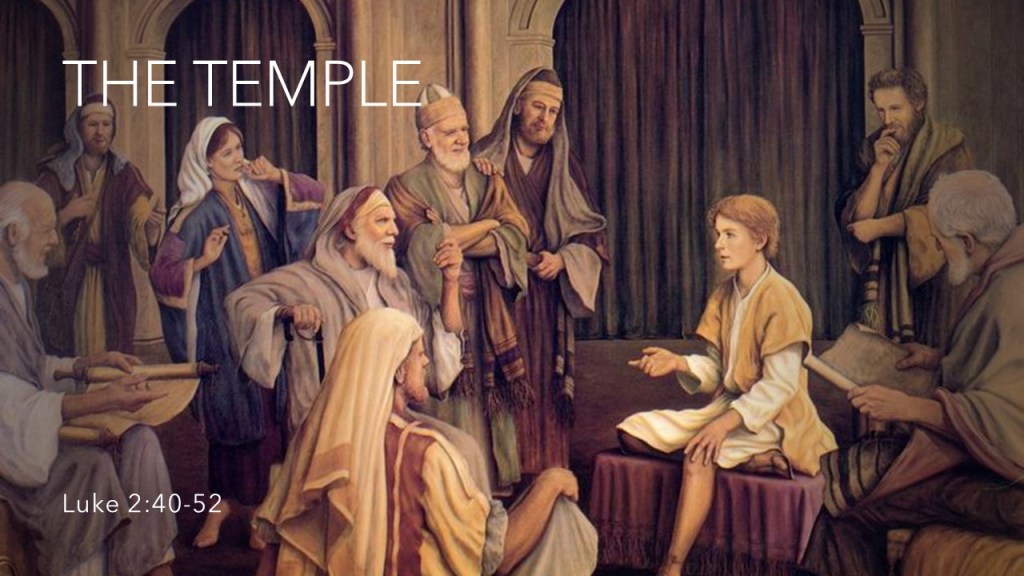
I. Introduction – The Temple
In our class last week, Tommy taught us that we should be prepared for the coming of the Lord. Well, He’s here. And here in Luke 2, we get our only inspired snapshot of Jesus between infancy and adulthood. And we’ll see in just a few short verses something we need to keep together in our minds at the same time:
Jesus is fully human… and Jesus is fully God.
He’s growing like a real boy grows. But He’s also not just a “gifted kid.” He’s the source of wisdom itself.
II. The Setup – The Normal Family Trip… Until It Isn’t
Before we walk through the text together, let’s watch the scene play out.
By the time we reach Luke 2 verse 42, Jesus is 12 years old. We know nothing else about the childhood of Jesus except what we learn about Jesus from other scripture – He was sinless and followed the Jewish law.
According to Jewish law, Jewish adults were to attend three major feasts annually in Jerusalem – Passover, Pentecost, and Tabernacles. And Luke 2:41 says that Jesus’ parents fulfilled Jewish law by attending the feast of Passover. Many left after 2 days, but verse 43 says Mary and Joseph attended the full number of days required. At the conclusion of the festival, it was time to head home.
Most pilgrims would join a caravan for safety and mutual support, as did Mary and Joseph. In these caravans, men usually traveled in one group, women in another. I find it interesting in verse 43 –
and as they were returning, after spending the full number of days required, the boy Jesus stayed behind in Jerusalem, but His parents were unaware of it.
Jesus is no longer described as a Child but not yet described as a Man. He is described as a boy, and I think that may have led to confusion on Joseph and Mary’s part. At the age of 12 or 13, a Jewish boy is moving into adult responsibility. If Jesus is a man, he would caravan with the men, but if he’s a child, He would caravan with the women. Verses 44-45,
Instead, they thought that He was somewhere in the caravan, and they went a day’s journey; and then they began looking for Him among their relatives and acquaintances. And when they did not find Him, they returned to Jerusalem, looking for Him.
A day’s journey out before they noticed He was missing. A parent’s panic is setting in. This isn’t losing a child at Trader Joe’s, unsure which aisle He wandered down. They have put miles and miles between them and where they last saw Jesus. Then there is a second day’s journey back to go look for Him. They must have been frantic – they lost not just a son, but the Son of God.
And yet, God still uses this misfortune for His glory. Verse 46-47,
Then, after three days they found Him in the temple, sitting in the midst of the teachers, both listening to them and asking them questions. And all who heard Him were amazed at His understanding and His answers.
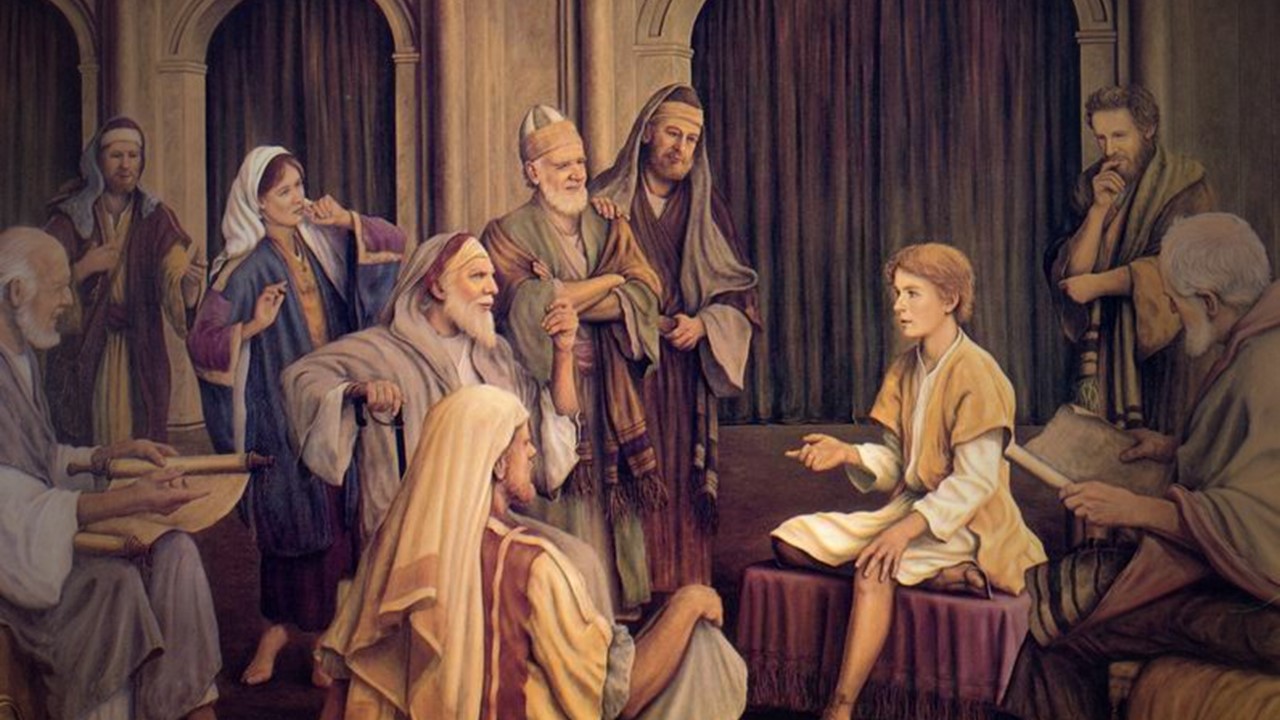
They found Him in the last place you’d expect, and the first place you should have expected: in the temple. He remained at the one place they should have come.
Some significance in this verse; in the synagogues, usually a rabbi sat and the listeners stood. Jesus is sitting. And it’s unlikely Jesus needed additional information about the scriptures, He is probably asking questions to engage, to challenge the rabbis to go deeper in their understanding.
Then in verses 48-49,
When Joseph and Mary saw Him, they were bewildered; and His mother said to Him, “Son, why have You treated us this way? Behold, Your father and I have been anxiously looking for You!” And He said to them, “Why is it that you were looking for Me? Did you not know that I had to be in My Father’s house?”
Mary spoke to Jesus first, asking why He had treated them in this way. Jesus wasn’t being rebellious; the adults simply assumed — and assumptions can carry you a day down the road before you realize what you’ve lost.
Another interesting thing here is the transition from Joseph the father to God the Father. It’s a point worth noting, because Luke is doing something very intentional with Mary’s words and Jesus’ words.
Mary says, “your father and I have been anxiously looking for You.” She’s talking about Joseph — and she’s not wrong to call Joseph “your father” in the ordinary, human sense. Joseph raised Him. Joseph protected Him. Joseph provided for Him. Joseph carried the responsibility of a father in that home.
But Jesus responds, “I had to be in My Father’s house.” And He’s not talking about Joseph.
He’s gently correcting Mary’s perspective. He’s not denying Joseph — but He is distinguishing between Joseph as His earthly father and God as His true Father. And Luke seems to underline that for us: after this, Joseph fades from Luke’s story — but the Fatherhood of God and the identity of Jesus as the Son come forward more and more clearly.
And here’s the part that should humble all of us: Luke tells us Mary and Joseph did not understand what He meant. They were faithful people. They were obedient people. They had responded to angelic messages. They had protected Jesus at real risk to themselves. And yet, even they didn’t fully grasp the depth of what they were raising in their home. You can be faithful and still be learning. Faithfulness does not mean you always understand everything in the moment.
Jesus did not apologize for doing something wrong, for He had not sinned. But then Jesus questions His mother. He asked why they were searching for Him as though the answer should have been obvious.
When Jesus uses the phrase “had to be,” in Greek it carries the sense of divine purpose — the “must” of the Father’s plan — almost, “Didn’t you know this is where I would be found?” Being in the temple, which represented the presence of God to Israel, was the obvious place for God’s Son to be. Jesus was patiently waiting for Mary and Joseph to return for Him. Instead of wandering around the city, He remained at the one place they should have come.
Jesus is twelve — and He’s a real boy in a real family. But even at twelve, He is consciously oriented toward His Father. Not confused about who He is. Not drifting. Not improvising. He’s where He should be.
III. Turning Around – The Last Place You Saw Jesus
Let me pull that thread we mentioned earlier, because it’s not just a clever line — it’s actually in the logic of the passage. Mary and Joseph lose Jesus, and what do they do?
They stop assuming. They stop moving forward. They turn around. They go back. And they find Him in the place that makes the most sense for who He is.
So if you ever feel spiritually dry, or distracted, or dull — if you feel like you’ve “lost Jesus” in your day-to-day life — here’s a simple, practical question that comes right out of Luke’s story:
Where was the last place you clearly saw Him?
Was it when you were sitting with the Word and truly engaged?
Was it when you were praying without multitasking?
Was it in worship with God’s people?
Was it when you were obeying something you knew you needed to obey?

Sometimes the most spiritual thing you can do is not “power through forward.” It’s to turn around and go back to where you last saw Him clearly — to the place you should have expected to find Him.
Discussion Question:
When you feel spiritually “off track,” what is a practical way you can “turn around” and seek Jesus where He is most often found?
IV. Conclusion – Maturity
The life of Jesus was anything but easy. It had plenty of drama. Born of a young woman away from her home and placed in an animal’s food trough, then having to flee the country at the age of two because the King Herod was trying to kill you. Then being left behind at Passover in another city. And how did Jesus grow after all this? Luke 2:52,
And Jesus kept increasing in wisdom and stature, and in favor with God and people.
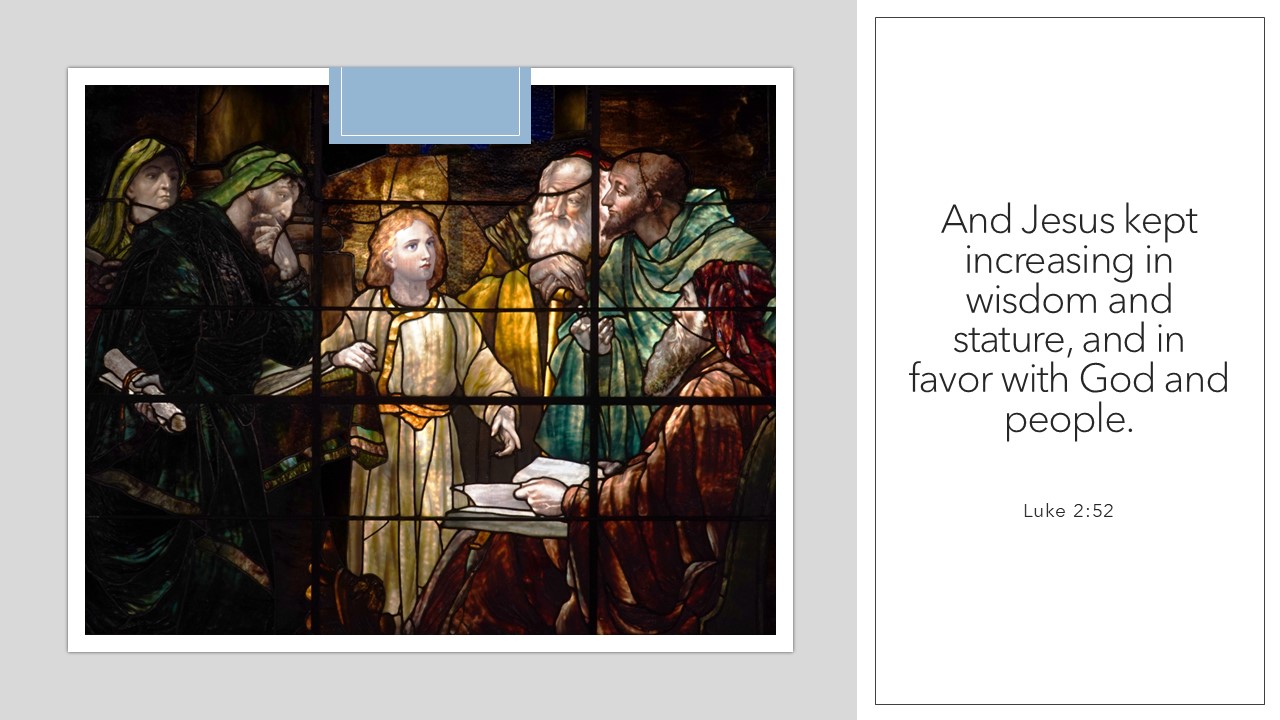
Now that verse is fascinating, because it reminds us again: Jesus truly grew. He increased. He matured. That’s His real humanity.
And yet — He is also the source of wisdom. So how do those fit together?
Here’s the best way I know to say it without getting tangled up: Jesus did not “grow out of ignorance” the way we do. He grew into maturity as a real human being — in stature, in experience, in lived obedience — while never ceasing to be who He is: the eternal Son, the wisdom of God in human flesh.
Spiritual growth doesn’t happen by accident. Mary and Joseph had to turn around. They had to go back. And that’s often what God calls us to do too. When we’ve drifted, the answer is rarely, “Try harder and go faster.” It’s usually, “Turn around. Return to the Word. Return to worship. Return to obedience.” That’s where wisdom is formed — not in a moment of panic, but in a lifetime of returning to the Father’s house.
To God be the glory.

 Chasing the Wind
Leave a comment