
I. Introduction
We are concluding our study of the book of Jeremiah, and we have accompanied this faithful prophet through his life’s journey. Now in the last few chapters, Jeremiah is an elderly prophet, exiled in Egypt. Over the span of forty years, he had delivered God’s message to the nation of Judah. Throughout his life, Jeremiah witnessed the gradual moral and political decline of Judah, culminating in its eventual capitulation to the might of Babylon. The city of Jerusalem fell, the sacred temple was reduced to ashes, the royal palace met destruction, the king was captured and blinded, and the people were led away into Babylonian captivity. Only a remnant remained in Judah where Jeremiah continued his ministry. Yet even this remnant eventually turned away from their faith and left for Egypt. According to Jewish tradition, it was in Egypt that Jeremiah was martyred at the hands of his own people.
The last few chapters of Jeremiah are directed at the neighboring nations of Israel. When Jeremiah was initially called to be a prophet as a teenager, God told him in Jeremiah 1:9-10 –
Then the Lord reached out His hand, touched my mouth, and told me:
I have now filled your mouth with My words.
See, I have appointed you today
over nations and kingdoms
to uproot and tear down,
to destroy and demolish,
to build and plant.
Now the elderly Jeremiah is telling the surrounding nations that the Lord is always in control of both believers and nonbelievers, and now these nations will learn their destinies.
To get the whole picture, we’d also have to look at two other books, those of Ezekiel and Isaiah. Together, these 3 books contain 603 verses, a very lengthy set of passages that Christians today just sort of skip over. But understanding that the Lord was, is and always will be in control is demonstrated in these verses and they are worth studying.
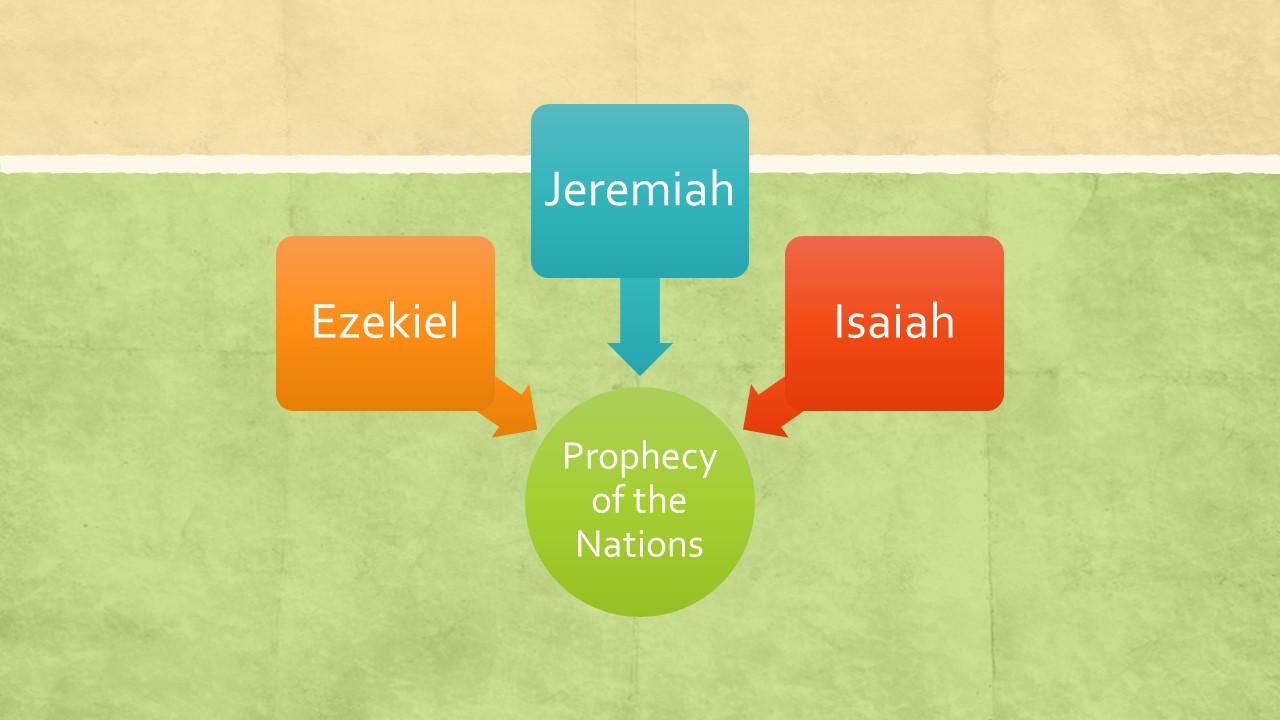
Jeremiah begins with Egypt where he is living at this time and addresses nations far to the east in Babylon, on the other side of the Euphrates River. His messages contain truths with various layers of comprehension and applicability. Initially, there’s the historical, national, or political layer of understanding within this passage. These prophecies pertain to real nations, with God revealing diverse aspects about their fates. Among these nations, four are destined to endure through time and God will restore their fortunes and extend blessings upon them. These four nations continue to exist today. For two other nations, no ultimate blessing is given, but they still persist today without the promise of divine favor. Conversely, God explicitly states that three of these nations shall vanish from the earth and are now just footnotes in the passage of time.
But there’s an additional level of comprehension to these truths. Beyond the historical perspective of these nations’ rise and fall by God’s will, this address to the nations can also symbolize or represent the inner forces at play within each of us. We’ll touch on some of these today.
These nine nations can be categorized into three groups, each with implications for each of us. We’ll start with Jeremiah’s message to Egypt in Chapter 46.
II. Egypt
The prophecy that came to Jeremiah the prophet concerned the army of Pharaoh Neco, the ruler of Egypt, and the defeat at the hands of Nebuchadnezzar, the Babylonian king. This is a pivotal encounter; up until this point, Egypt had been the dominant nation, but Babylon shattered Egypt’s supremacy. Jeremiah foretells the battle, the advance of the Babylonian forces, the collision of these opposing armies, the fierce battle that ensued, and the ultimate defeat of Egypt.

And we see an evaluation of Egypt’s character. Egypt serves as a symbol of the world and its sway over us. For the Israelites, Egypt represented a place of bondage and oppression. They endured the yoke of a malevolent and harsh king who subjugated and maltreated them. But even after their escape, Egypt remained a fond memory for them, a place they yearned to return to. Their nostalgia centered on the comfort, sustenance, and ease of life they experienced in Egypt. This portrayal perpetually stands as an symbol of the world’s temptation to believers — the temptation to conform to its values, attitudes, and pleasures rather than living for the glory of God. A worldliness whose focus is solely towards personal gratification and enjoyment, disregarding living for God’s purpose. This is what Egypt symbolizes in verses Jeremiah 46:7-8:
Who is this, rising like the Nile,
like rivers whose waters churn?
Egypt rises like the Nile,
and its waters churn like rivers.

Each spring, the Nile River swells and inundates its banks, revitalizing Egypt. The prophet uses this to illustrate how the world approaches us — in waves and surges. We may feel that we’ve overcome its influence, but soon enough, it returns to challenge us once more. Repeatedly, throughout our lives as believers on a spiritual journey, the world’s enticements resurface to test, tempt, and attempt to ensnare us, pulling us back into its chains of bondage.
However, another message about Egypt emerges in verses 13-24, where Jeremiah predicts Nebuchadnezzar’s impending invasion of Egypt, an event that occurred after Jeremiah’s death. Here, about Egypt, Jeremiah says in 46:17,
Within this prophecy lies another characterization of Egypt, as expressed in verse 17:
There they will cry out,
“Pharaoh king of Egypt was all noise;
he let the opportune moment pass.”
This description captures the essence of Egypt — and the world. The world thrives on noise, avoids stillness and reflection. It delights in squandering time, perpetually seeking distractions. The world persistently bombards us, urges us to prioritize immediate gratification and indulgence, steers us away from recognizing the path to eventual servitude and enslavement. Consequently, God’s judgment befalls Egypt and the world.
But then verse 26, the Lord says –
“I will hand them over to those who want to take their lives—to Nebuchadnezzar king of Babylon and his officers. But after this, it will be inhabited again as in ancient times.”
After experiencing a decline in national status and a lengthy period of dormancy, Egypt emerges as a sovereign nation once more. God promises to show mercy to Egypt. A similar prophecy in Isaiah 19 even suggests that Egypt will eventually experience healing and divine blessing, with God claiming them as His own.
III. The Philistines
In Chapter 47, a message is directed toward a nation closely entwined with Egypt — the Philistines. The Philistines routinely confronted Israel throughout history. Goliath, whom David defeated, stood as a notable Philistine warrior. These individuals resided along the southern shoreline of the region known as Palestine. In fact, the term “Palestine” finds its origin in the name “Philistine.” Some scholars speculate that their origin might be traced back to Egypt before they inhabited what we now know as Phoenicia or contemporary Lebanon.
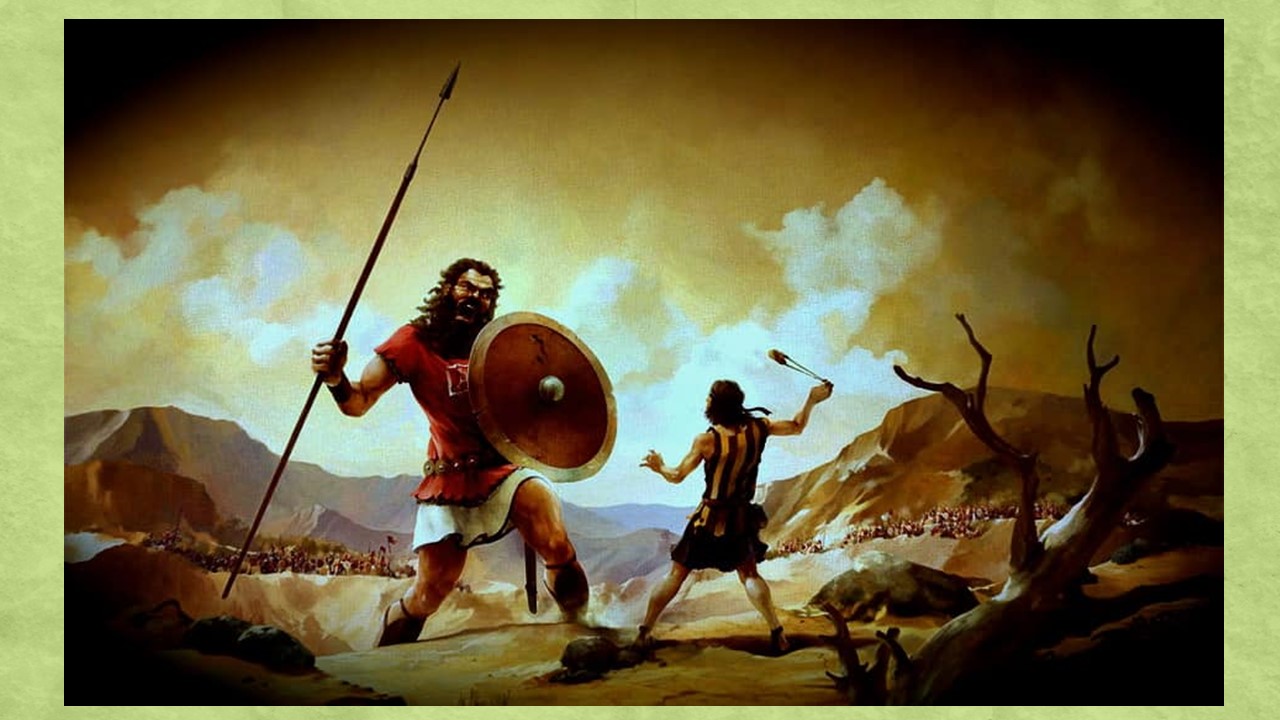
The Philistines inhabited the land of milk and honey, yet refused to honor the God that created it. They represent the individual that resides in world that God created, yet has no relationship with the Lord. Jeremiah’s prophecy predicts the downfall of the Philistines in Jeremiah 47:3-4 –
At the sound of the stomping hooves of his stallions,
the rumbling of his chariots,
and the clatter of their wheels,
fathers will not turn back for their sons,
because they will be utterly helpless
on account of the day that is coming
to destroy all the Philistines,
to cut off from Tyre and Sidon
every remaining ally.
Indeed, the Lord is about to destroy the Philistines,
the remnant of the islands of Caphtor.
The Babylon army marches forward, marking the demise of the Philistine nation. The Philistines were never again to surface among the world’s nations as a sovereign people.
IV. Moab et al
In Chapter 48, we encounter another group of nations. Egypt and Philistia have already represented the world’s hostility towards believers. Now, five nations — Moab, Ammon, Edom, Damascus, and Kedar (or Arabia) — come into focus, and they represent something different. What ties them together is their relationship to Israel. They symbolize what the Bible refers to as “the flesh” — an inherent aspect of our nature, a part of us we’re connected to and can’t escape. Yet, it stands as an enemy to faith, an inner adversary.
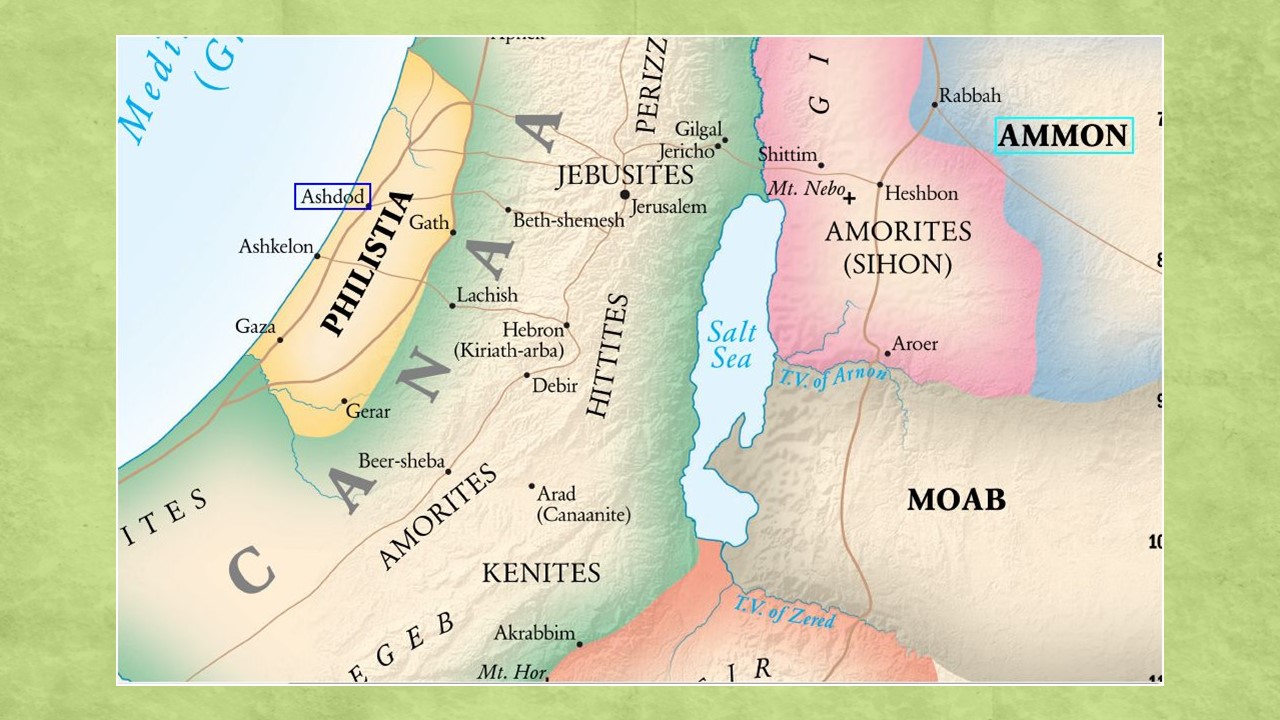
Moab and Ammon take up all of Chapter 48 and the initial six verses of Chapter 49, too much to read here, so we’ll just summarize their downfall. Moab and Ammon were Lot’s descendants through his own daughters. In the account of Sodom and Gomorrah’s destruction, Lot and his daughters fled the city. Subsequently, they made him drunk and lay with him to conceive. Moab and Ammon settled in the present-day land of Jordan — Moab to the east of the Dead Sea, and Ammon north of Moab. Chapter 48 vividly describes the siege of Moab’s cities by Babylon’s advancing forces. Verse 11 captures it:
Moab has been left quiet since his youth,
settled like wine on its dregs.
He hasn’t been poured from one container to another
or gone into exile.
So his taste has remained the same,
and his aroma hasn’t changed.
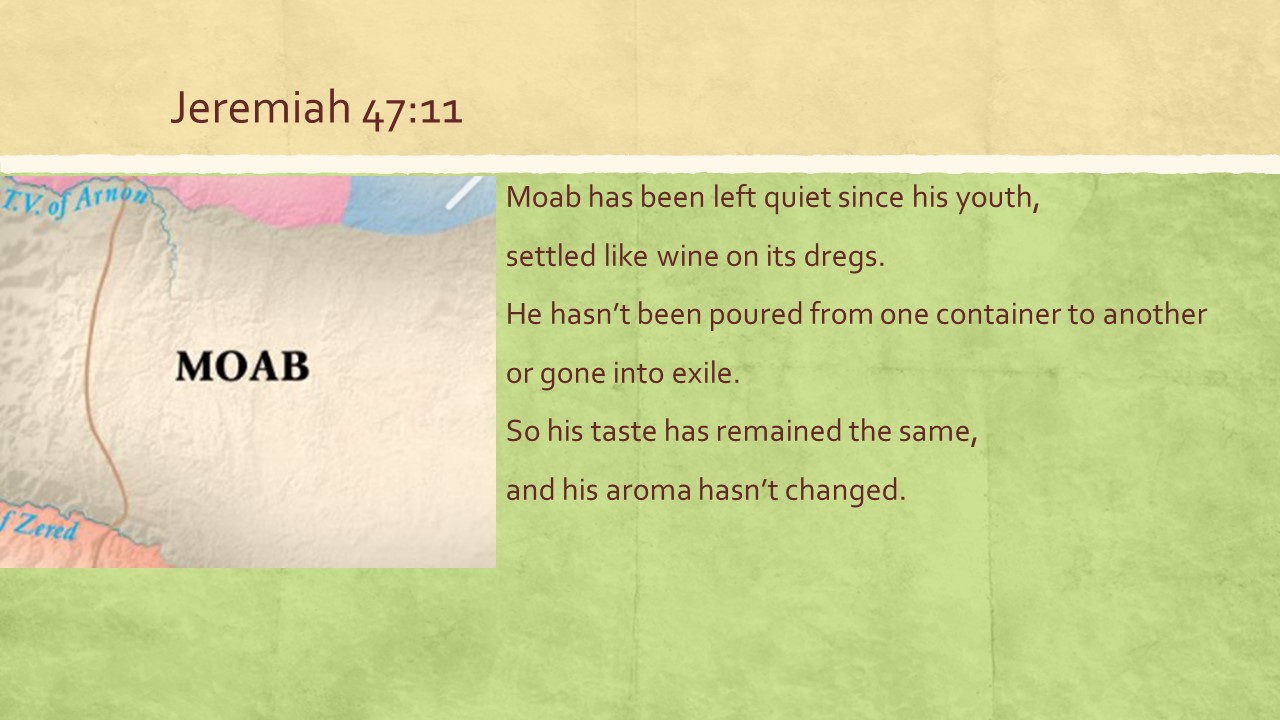
Moab remained off the beaten track, untouched by any conquerors over the centuries. It had never been attacked or “emptied from vessel to vessel,” shifted from conqueror to conqueror, as Jeremiah indicates. It never experienced overwhelming fear. This is what “his taste remains the same” means — the Maobites didn’t have any fear, never experienced terror. Moab was complacent, self-assured, prideful, and self-satisfied. Moab represents the flesh’s confidence and arrogance — the attitude of “everything is fine, nothing will go wrong.” This is an illustration of the attitude within us. Yet God states in 48:12-13:
Therefore look, the days are coming—
this is the Lord’s declaration—
when I will send those to him, who will pour him out.
They will empty his containers
and smash his jars.
Moab will be put to shame because of Chemosh,
just as the house of Israel was put to shame
because of Bethel that they trusted in.
Bethel was the site where Israel worshiped two golden calves. God says He will shake Moab’s confidence, causing upheaval by another nation’s power. The reason is explained in Verses 29-30:
We have heard of Moab’s pride,
great pride, indeed—
his insolence, arrogance, pride,
and haughty heart.
I know his outburst.
This is the Lord’s declaration.
It is empty.
His boast is empty.
Moab is pride, and is always attempting to influence you and me. It’s the ongoing enemy of God — the arrogance of the flesh. Yet, despite eventual judgment, the promise to Moab, as a nation, remains, verse 47:
Yet, I will restore the fortunes of Moab in the last days.
This is the Lord’s declaration.
The judgment on Moab ends here.
Moab is present day Jordan, still a nation today.
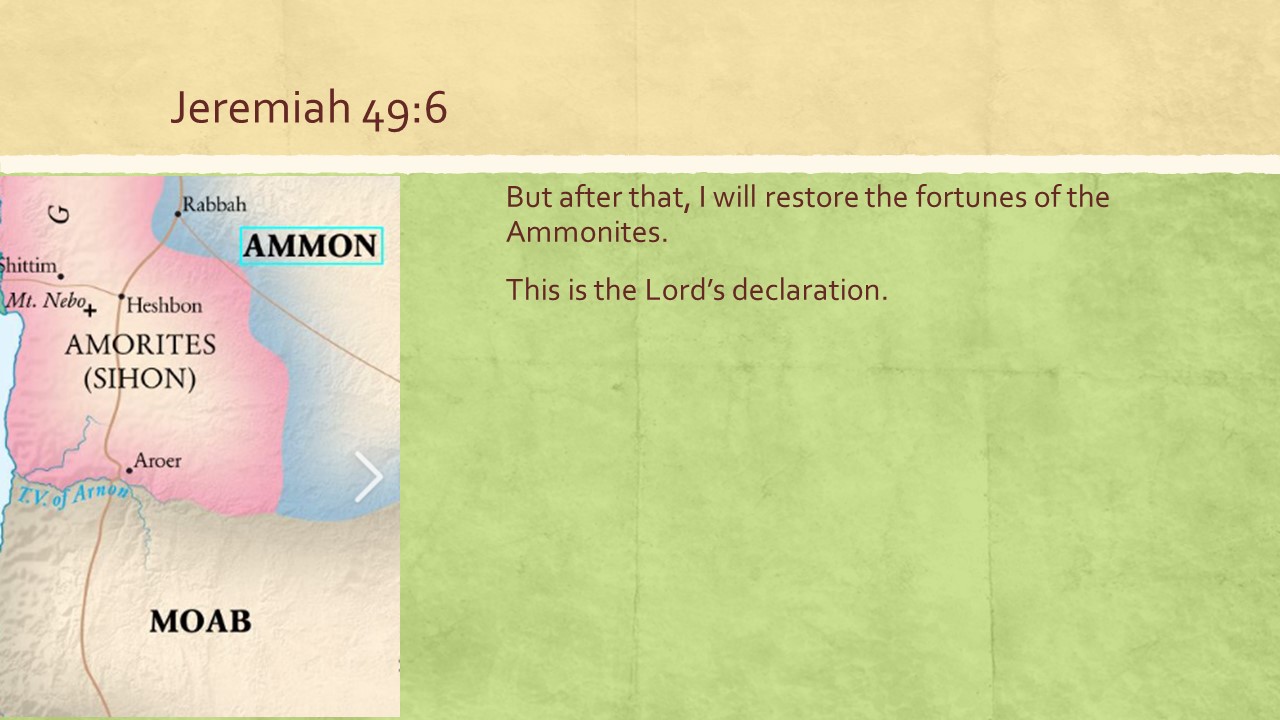
Similar to Moab is Ammon, situated to the north. The present-day capital of Jordan is Amman. Ammon signifies the same as Moab, with an added trait: it’s more assertive and belligerent than Moab. But the Lord also promises in 49:6:
But after that, I will restore the fortunes of the Ammonites.
This is the Lord’s declaration.
The Ammonites endure in the world today.
In Verses 7-22, a prophecy against Edom follows. Edom resided south of the Dead Sea, with Petra, the exquisite city carved from red rock, serving as its capital for centuries. Edom descended from Esau, Jacob’s twin brother. Esau consistently represents the man of the flesh, especially when in opposition to the Spirit. God declared in Malachi 1:2-3
“Jacob I have loved, but Esau I have hated.”
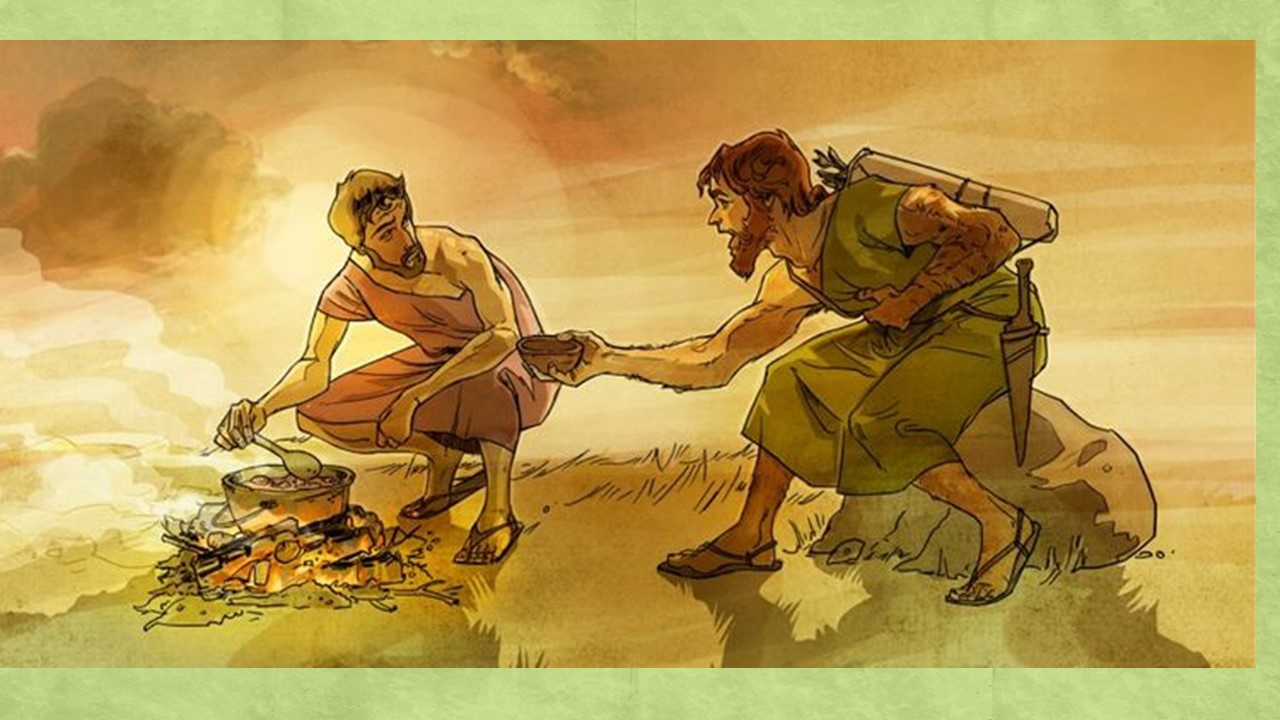
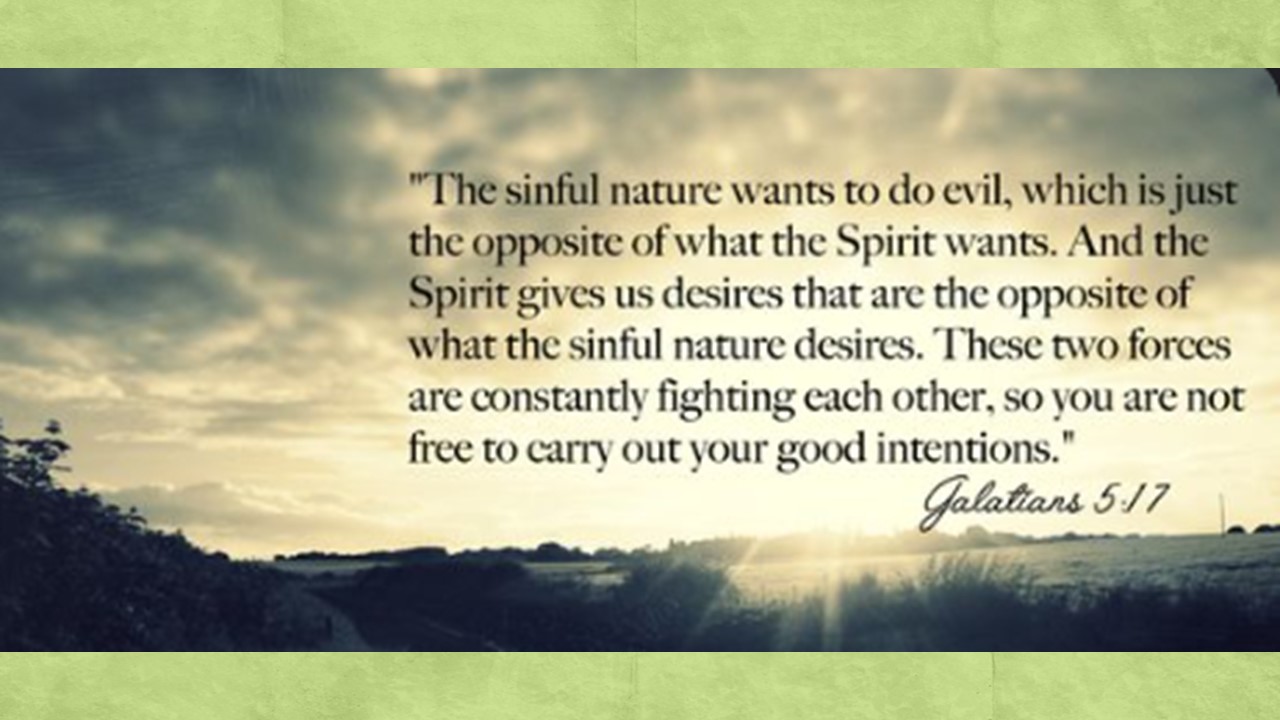
Paul contrasted them in Galatians 5:17:
“For the desires of the flesh are against the Spirit, and the desires of the Spirit are against the flesh; for these are opposed to each other.”
God promises to eradicate Edom completely in Chapter 49, Verse 10:
But I will strip Esau bare;
I will uncover his secret places.
He will try to hide himself, but he will be unable.
His descendants will be destroyed
along with his relatives and neighbors.
He will exist no longer.

The Edomite nation vanished from history’s stage long before Jesus came. Edom has faded into dust, never to reemerge.
The final two nations are introduced from Verse 23 onward: first, Damascus, and then Kedar (Arabia), which designates the Bedouin tribes residing in the desert regions of modern Saudi Arabia. No ultimate promise is given to these nations, though they continue to exist. Yet, judgment befalls them — first, Damascus, and then the Arabian tribes descended from Ishmael, Isaac’s half-brother and Abraham’s son. Consequently, they too are connected to Israel. In vivid language, the prophet describes the destruction as Babylon’s armies approach Damascus in Verses 25-26 as God judges these nations.
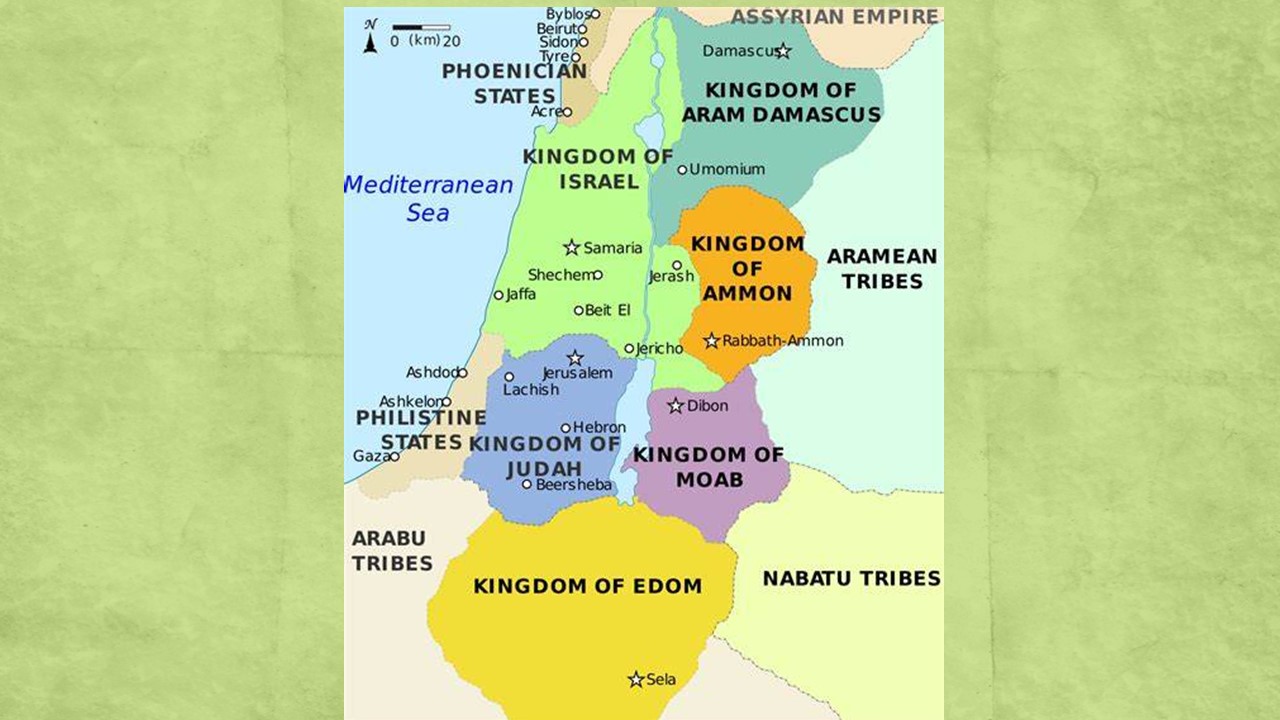
They embody the restlessness of the flesh. These nomads lived in tents, frequently moving, representing the inner restlessness within us. They signify the potential to disturb and unsettle us through that restlessness. Whenever these nations appear in Scripture, they serve as these symbolic reminders. One of the keys to understanding the Word of God is to recognize yourself when you read about these nations. By observing how these nations function on a national level, we can better comprehend our own operation. Thus, the characteristics of the flesh undergo judgment.
Lastly, Elam and Babylon come into the picture. Elam is introduced in the concluding verses of Chapter 49, beginning with Verse 34. During this time, Elam was a Babylonian province, yet Jeremiah singles it out for an important message from God. Verses 34-35 provide the rationale:
The word of the Lord that came to Jeremiah the prophet concerning Elam, in the beginning of the reign of Zedekiah king of Judah.
Thus says the Lord of hosts: “Behold, I will break the bow of Elam, the mainstay of their might;”
Elam is characterized by a bow, referred to as the “mainstay” of Elam. A bow symbolizes the capacity to strike from a distance. Paul describes “the fiery darts of the wicked one” in Ephesians 6:16 — evil thoughts that intrude our hearts and minds without invitation. God announces judgment against Edom, but in verse 39:
“But in the latter days I will restore the fortunes of Elam, declares the Lord.”
Today, Elam corresponds to Iran or Persia and has reemerged as an independent nation, aligning with this divine proclamation.
V. Babylon
Chapters 50 and 51, two of the lengthiest chapters within the book, revolve around the downfall and obliteration of Babylon. It hardly requires my elaboration to convey what Babylon represents. Throughout Scripture, it serves as a symbol for the archenemy of God, referred to in Revelation 12:9 as
“that old serpent the devil”
The devil employs counterfeit religious authority to assert earthly influence, prestige, and power. This is the essence of Babylonianism.
Babylon traces back to the Tower of Babel constructed after the Flood. And why did people build the Tower of Babel? The Genesis 11: said they built it –
“…in order that they might make a name for themselves”
Churches that appeal to the senses or the prosperity of the people instead of the salvation of Jesus Christ exemplify this Babylonianism.
Jeremiah predicts Babylon’s historical overthrow by the Medes and Persians in 50:3:
“For out of the north a nation has come up against her, which shall make her a land of desolation, and none shall dwell in it; both man and beast shall flee away.”

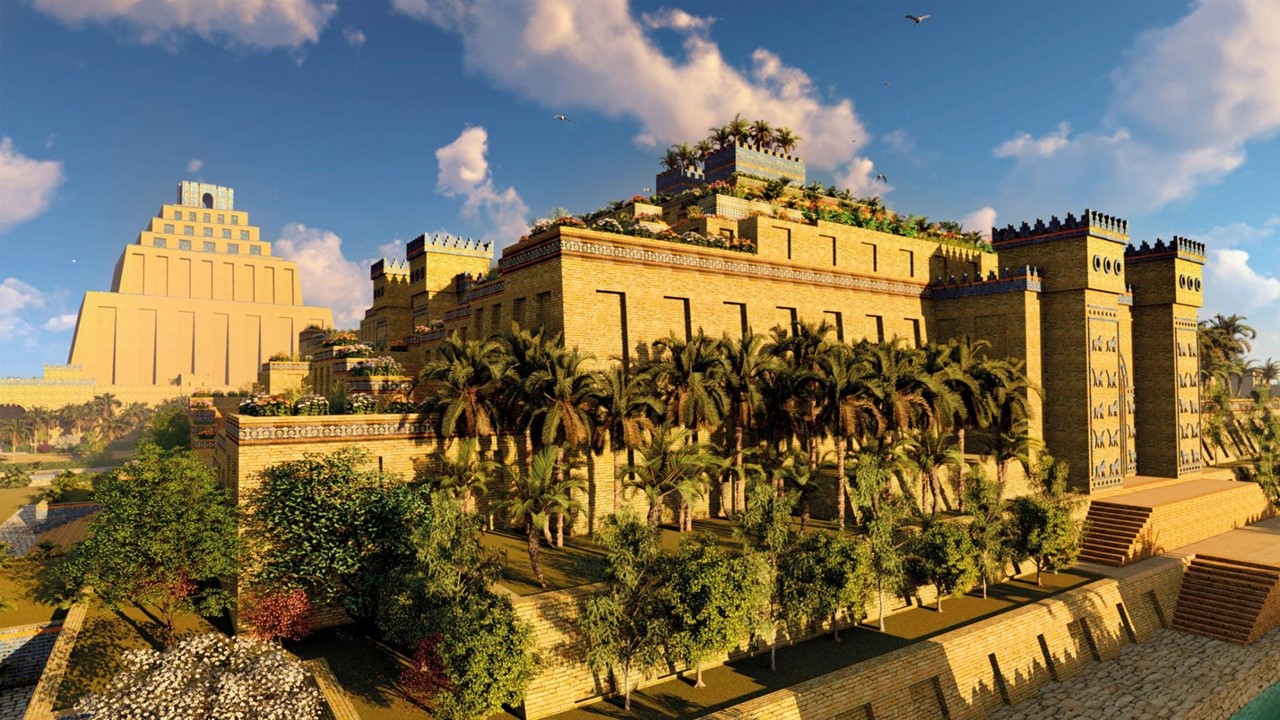
Just as Babylon was the formidable destructive force against Judah, Babylon’s own reckoning must come. Emerging from the north, the Medes and Persians would confront Babylon, dismantling this mighty empire. Despite its towering walls, grand palaces, ornate hanging gardens, immense size, and formidable armies — the paramount global power at the time — when at the pinnacle of its power, God decrees its complete disappearance. Even its very site would be erased from human memory. It would be transformed into “a desolation, and none shall dwell in it.”
Much of Jeremiah 50 describes Babylon is such degrading terms, indicating how much God detests Babylon. In verses 39-40:
“Therefore wild beasts shall dwell with hyenas in Babylon, and ostriches shall dwell in her; she shall be peopled no more for ever, nor inhabited for all generations. As when God overthrew Sodom and Gomorrah and their neighbor cities, says the Lord, so no man shall dwell there, and no son of man shall sojourn in her.”
In the book of Daniel, we learn that King Belshazzar hosted a grand feast, inviting Babylon’s lords to his palace. During their revelry and debauchery, a hand emerged and inscribed a message on the wall. The king was terrified, summoning Daniel to decipher the writing. Daniel informed him that his kingdom would be seized that very night. And that very night, Darius the Mede led his forces into Babylon, resulting in the empire’s fall.
Babylon the great city was vanquished and rendered completely desolate, its location lost to the ages. It was only at the start of the current century that the city’s site was uncovered, revealing its walls and residual remnants. However, true to God’s word, it had transformed into an arid desert and a forsaken place.
VI. Conclusion
And so, this concludes the words of Jeremiah. The final chapter was appended later, chronicling the fall of Jerusalem and the eventual restoration of King Jehoiachin.
What is the resounding message of this book for us? The world and the fleshly desires constantly tempt us, temptations echoed through the ages. But the pronouncement against the nations tells us much about how the Lord will deal with idolatry and pride. God’s Word declares that our Almighty God is greater than our sins and greater than the nations. When we stand in the Word of God, we stand liberated within the midst of the world’s captivity.
These are forces of immense power, orchestrating the unsettling events chronicled in our daily news. However, through unwavering faith, we can traverse through them unscathed. But Babylon’s fall is irrevocable, never to rise again. And in the closing chapter of Romans 16:20 – Paul assures us –
The God of peace will soon crush Satan under your feet. The grace of our Lord Jesus be with you.

Our Lord is the Lord of all over nations and eternity, and His will be done. This is the divine message resounding within the book of Jeremiah.
To God be the glory. Amen.


 Chasing the Wind
Leave a comment