

I. Introduction
The air is filled with the warm aromas of a hearty feast, families gather around tables laden with dishes like roast turkey, sweet potatoes, and green bean casserole. Expressions of gratitude echo through the air during this festive season, as traditions like cranberry sauce and dressing bring family and friends together. Beyond the delightful flavors and cherished customs lies a deeper, universal theme—the spirit of gratitude. Thanksgiving traditions, with their rich history and cultural significance, serve as a reminder of the biblical concept of thanksgiving. Just as families gather to give thanks, we will study and review the roots of gratitude today in the scriptures and its relevance in our lives. I believe Thanksgiving is a spiritual discipline that brings us close to our Lord.
But first, an informal poll:
- cranberry from a can or cranberry from those lumpy berries? I grew up with the can that you opened and it slid out with a “schloop” sound and then you sliced it with a knife. I’m pretty sure I never saw the lumpy berry version until I was an adult.
- stuffing or dressing? Dressing sounds like a better word, very formal for the turkey to get “dressed up.” Stuffing isn’t a real description. It’s just… stuff.

I wonder if King David ever had a discussion on cranberries while in the palace. I’m certain King Solomon didn’t. He was so smart, he just knew the answer. A shame it’s not written into the Proverbs.
Thanksgiving traditions – turkey, cranberry, potatoes, football – transcend time and cultural boundaries. The attitude of thanksgiving is universal, offering a moment of reflection and appreciation for the blessings in our lives. But let’s look past the turkey and the cranberry sauce and look at the concept of American Christian Thanksgiving from a biblical perspective.
A. Origins of Thanksgiving and the American Pilgrims
The roots of Thanksgiving extend beyond the warmth of family gatherings and traditional feasts. Gratitude through a shared communal feast seems to be universal in the human heart. The first Thanksgiving story, 402 years ago, weaves together the Pilgrims of Plymouth Colony and the Wampanoag Native Americans in a shared expression of thankfulness. We go all the way back to 1621 to set the stage.
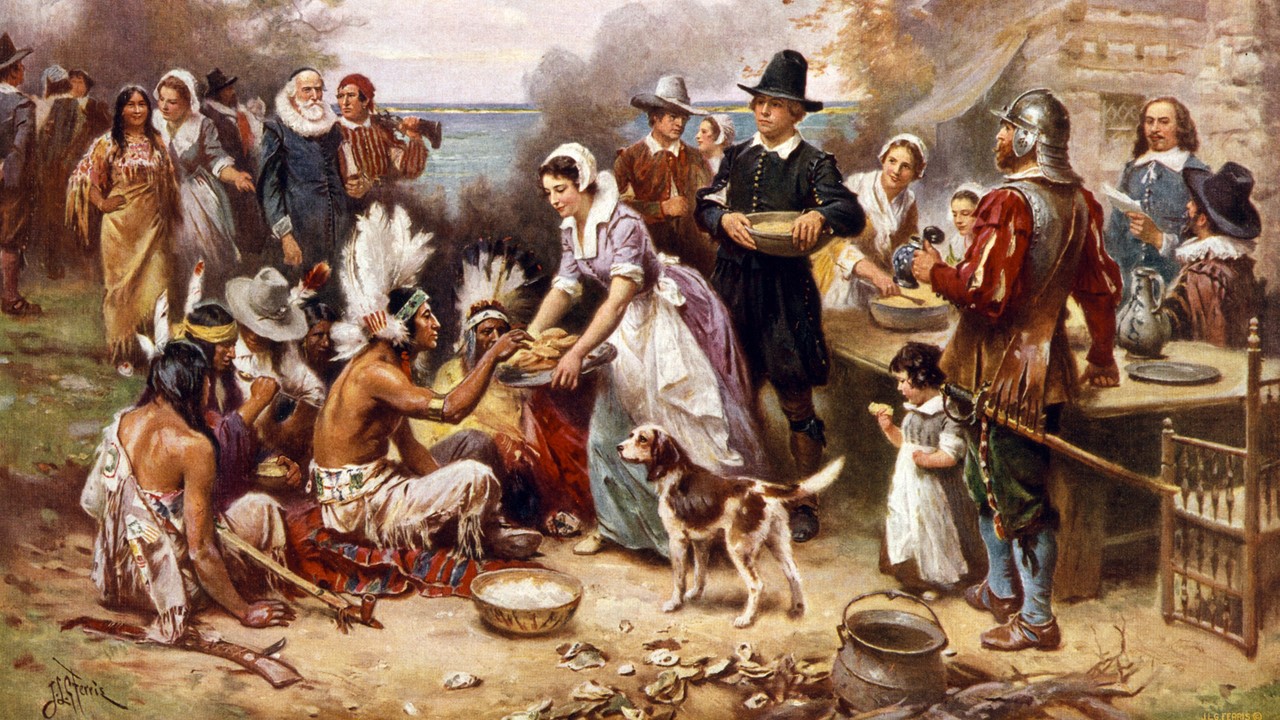
The Wampanoag, led by Chief Massasoit, faced a dramatic decrease in population due to new diseases brought by European traders. Native American tribes were in constant conflict, and the Wampanoag were threatened by conflicts with the Narragansett Tribe to the west and the Pequot Tribe to the south. The Wampanoag brought venison and seafood to the first Thanksgiving feast, contributing not only food but also sharing agricultural knowledge and hunting and fishing techniques.
The American Pilgrims were thankful for religious freedom, liberated from persecution in Europe. They, too, contributed to the first Thanksgiving with pies, puddings, baked goods, and likely wild turkey. Their gratitude for survival and newfound friendships laid the groundwork for centuries of giving thanks for the Lord’s provision in the face of adversity. Both groups found support and protection from each other, something they could be very thankful for.
While American Thanksgiving is a distinctly American holiday, various celebrations of thanksgiving are found across cultures worldwide today. Christians express thanks to our Creator, but God has written the message of thanksgiving on the human heart for all people:
B. Thanksgiving Harvest Festivals Around the World:
- In China, the Mid-Autumn Festival, also known as Zhongqiu Jie (中秋节 or the Mooncake Festival because, well, they eat Mooncakes, brings families together to express gratitude for the harvest and lunar unity. I don’t know what lunar unity is. That the moon is a full moon? There’s a lot of research I did for today’s lesson but I refused to go down the “lunar unity” rabbit hole.

- Pongal (பொங்கல்) is a multi-day Hindu harvest festival celebrated in India, dedicated to the Surya, the Sun God. Each day of the Pongal Festival has a unique name that I’m going to attempt to pronounce even though I don’t speak Tamil but I think it’ll be fun to try, and they are Bhogi Pongal, Surya Pongal, and Mattu Pongal. But some Tamils get all excited and celebrate a fourth day of Pongal known as Kanum Pongal.

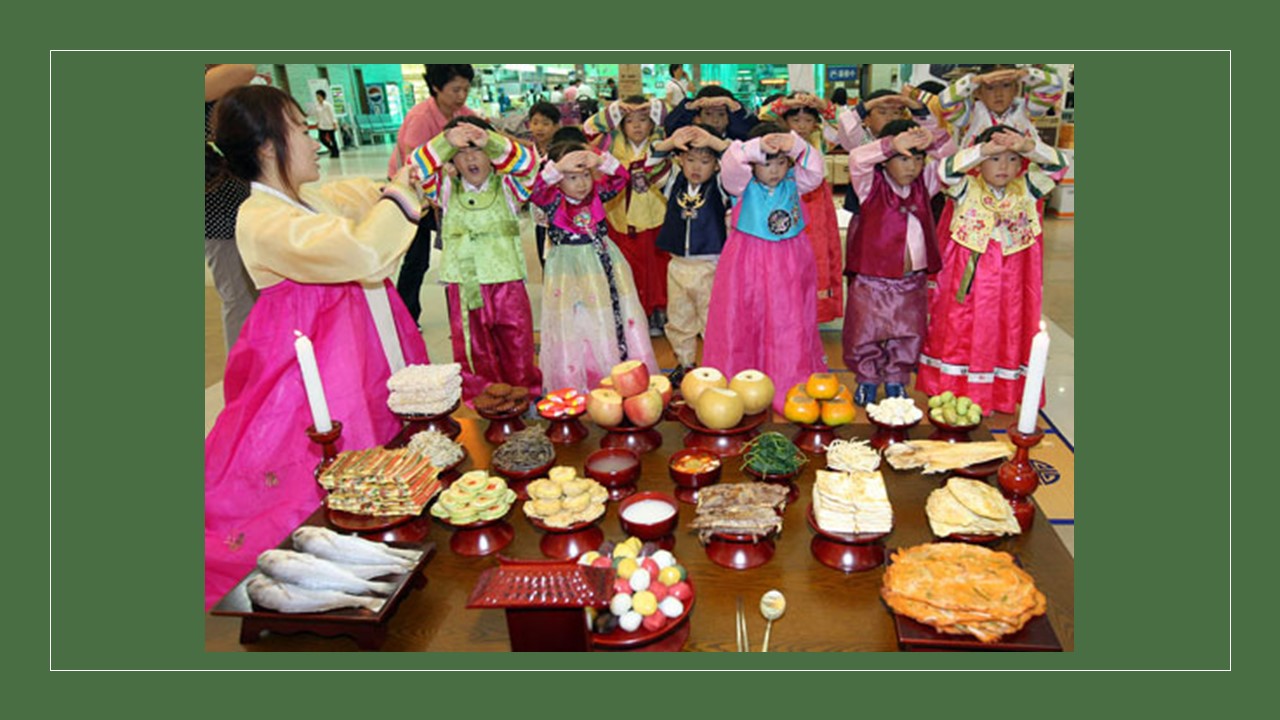
- Chuseok (Korean: 추석) is a major mid-autumn harvest festival and is the biggest traditional holiday in South Korea. As a celebration of the good harvest, Koreans visit their ancestral hometowns and share a feast of Korean traditional food such as songpyeon, yakgwa, fruits like Asian pear and hallabong, rice wines dongdongju. See? That’s why I’m pronouncing these because it’s fun to say dongdongju. Traditions include family visit to the ancestral graves and tidying them up and to prepare the family’s ancestors their favorite meals as an offering. Many scholars believe Chuseok originates from ancient shaman rituals of the harvest moon. In some areas, if there is no harvest, worship rituals are postponed, or in areas with no annual harvest, Chuseok is not celebrated at all.
- Thailand’s Loy Krathong ลอยกระทง is a spectacle of gratitude, where lanterns and decorated baskets are released into waterways to honor spirits and seek blessings.

- Canada also celebrates Thanksgiving, although it is observed on the second Monday of October. It is similar to the U.S. tradition; it involves a family feast and expressions of gratitude for the blessings of the harvest and the preceding year. Not based on the American tradition or the Pilgrims, though.

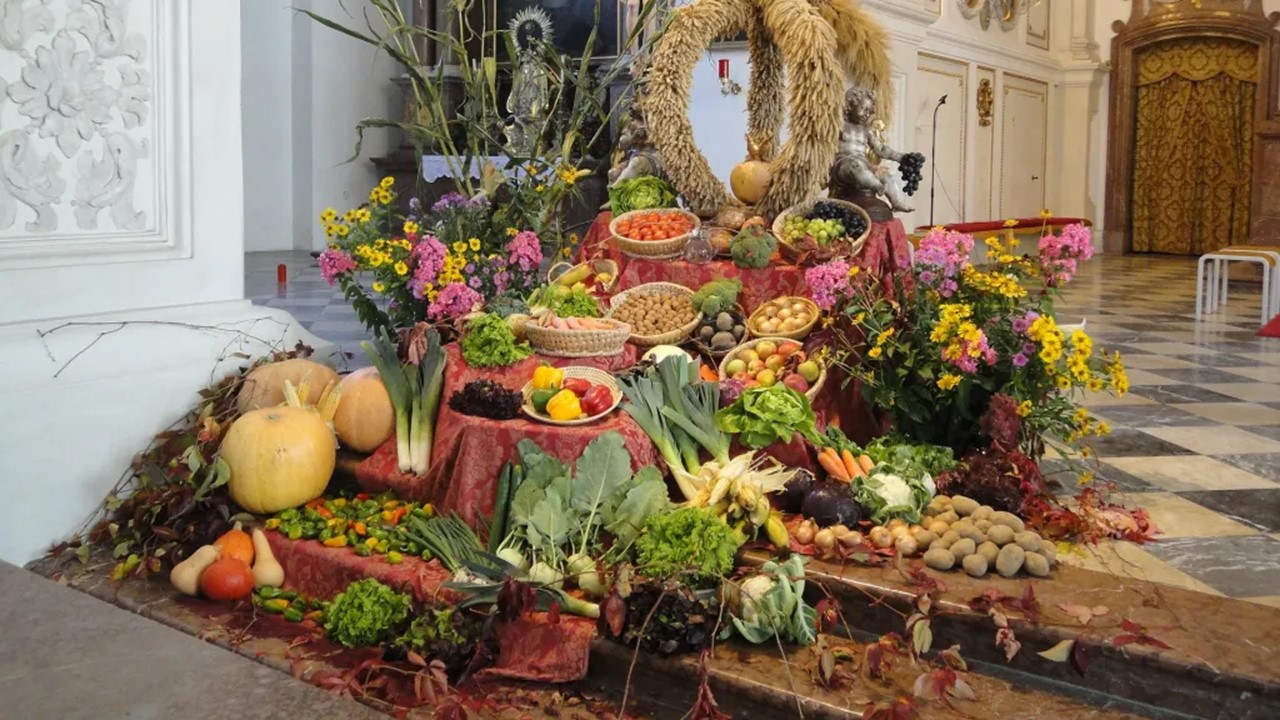
- Across Germany, Erntedankfest, the Harvest Thanksgiving Festival, people come together for church services, parades, and feasts. The church and altar are decorated with crops, vegetables, fruits, and flowers.
- In Judaism, Sukkot, or the Feast of Tabernacles, is a harvest feast that’s grateful to the Lord for His provisions. It was during this feast that Jesus said in John 7:37-38, “If anyone thirsts, let him come to me and drink. He who believes in Me, as the Scripture has said, out of his heart will flow rivers of living water.”

The human heart recognizes the need to give thanks. It is a universal response for all people to give thanks. But God has written that message as a prompt for us to seek Him. When one says, “I am thankful for my life,” who are they thankful to?
II. Historical Roots of Thanksgiving in the Bible
In the rich tapestry of the Old Testament, gratitude and thanksgiving are woven into the very fabric of God’s relationship with His people. There are many verses we encounter that not only emphasize the importance of gratitude but also provide insights into the nature of worship and praise.
Psalm 100:4 – “Enter his gates with thanksgiving and his courts with praise; give thanks to him and praise his name.”
This verse extends an invitation to approach the Lord with a heart replete with gratitude, emphasizing the inseparable link between giving thanks and engaging in worship. Was this word “thanksgiving” in the bible, hundreds of years before the Pilgrims? In fact, I checked on this against the original Hebrew. The Hebrew word is “towdah” and has a variety of meanings – thanksgiving, thanks, praise, adoration, or my favorite, a thank-offering.

1 Chronicles 16:34 – “Give thanks to the LORD, for he is good; his love endures forever.”
This declaration echoes throughout the Old Testament: God is good all the time, and all the time, God is good. This enduring goodness and love from God are foundational reasons for expressing gratitude back to God.
In times of abundance, the Israelites were instructed to acknowledge the Lord’s provision (Deuteronomy 8:10), guarding against forgetfulness and fostering a continual spirit of gratitude.
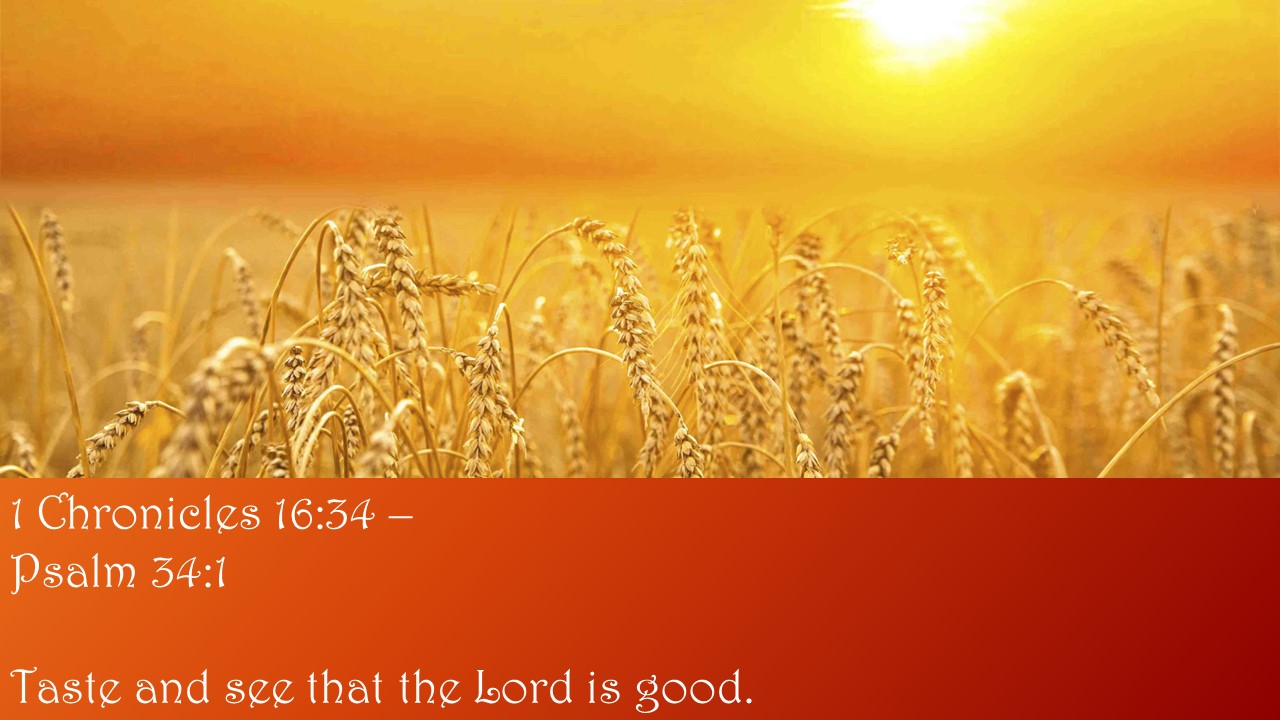
David’s Psalms, particularly Psalm 34:1 that says, “Taste and see that the Lord is good,” reveal a steadfast commitment to praising the Lord under all circumstances. Even in adversity, David exemplifies unwavering gratitude, emphasizing that thanksgiving transcends external conditions.
III. New Testament Teachings on Thanksgiving
In the New Testament, the teachings on gratitude unfold in the life and words of Jesus Christ and the writings of the apostle Paul.
First, let’s look at Jesus’ teachings because, well, Jesus comes first, amen?
The Feeding of the 5,000 (Matthew 14:19-20):
And he directed the people to sit down on the grass. Taking the five loaves and the two fish and looking up to heaven, he gave thanks and broke the loaves. Then he gave them to the disciples, and the disciples gave them to the people. They all ate and were satisfied, and the disciples picked up twelve basketfuls of broken pieces that were left over.

The Last Supper (Matthew 26:26-28):
While they were eating, Jesus took bread, and when he had given thanks, he broke it and gave it to his disciples, saying, “Take and eat; this is my body.” Then he took a cup, and when he had given thanks, he gave it to them, saying, “Drink from it, all of you. This is my blood of the covenant, which is poured out for many for the forgiveness of sins.”

Jesus’ life was a continual expression of gratitude and acknowledgment of God’s sovereignty. He taught that thanksgiving is not confined to abundant circumstances but is a lifestyle reflecting an understanding of God’s goodness and faithfulness.
Apostle Paul’s Emphasis on Gratitude:
The apostle Paul, in his epistles, frequently emphasizes the importance of gratitude.
Colossians 3:17 – “And whatever you do, whether in word or deed, do it all in the name of the Lord Jesus, giving thanks to God the Father through him.”
1 Thessalonians 5:16-18 – “Rejoice always, pray continually, give thanks in all circumstances; for this is God’s will for you in Christ Jesus.”

Paul’s exhortations go beyond the mere act of giving thanks; he advocates for a pervasive attitude of gratitude that permeates every aspect of life. The call to give thanks in all circumstances underscores the transformative power of gratitude, shaping one’s perspective and aligning it with God’s sovereign will.
IV. Thanksgiving as a Spiritual Discipline
Thanksgiving, as portrayed in the Bible, extends beyond a cultural observance or a momentary expression of gratitude. It emerges as a spiritual discipline—a practice that draws believers closer to God and cultivates a heart of worship.
A. Distinguishing Thanking God from Thanking People
It’s important to express gratitude to one another. But when I thank someone for something they’ve given or something they’ve done, I also recognize where the source of that blessing came from. In the realm of gratitude, a vital distinction emerges between expressing thanks to God and extending gratitude to fellow human beings. This understanding enriches the depth and sincerity of our expressions of thanksgiving.
1. God as the Ultimate Source of All Blessings (Hebrews 12:28)
We must recognize God as the ultimate source of all blessings. Hebrews 12:28 states,
“Therefore, since we receive a kingdom which cannot be shaken, let us show gratitude, by which we may offer to God an acceptable service with reverence and awe.”
This recognition forms the foundation of our gratitude, acknowledging that every blessing originates from the benevolence of God.

2. Human Expressions of Gratitude vs. Divine Worship
– Expressing gratitude toward one another is commendable, but it differs significantly from the divine worship directed to God. The Psalms especially exemplify praising and thanking God in a way that transcends earthly circumstances. Psalm 105:1-3 declares,
Oh give thanks to the Lord, call upon His name;
Make known His deeds among the peoples.
Sing to Him, sing praises to Him;
Speak of all His wonders.
Glory in His holy name;
Let the heart of those who seek the Lord be glad.
Here, David intertwines praise and thanksgiving, emphasizing the eternal nature of God’s love and goodness.
B. Christian Thanksgiving vs. Secular Expressions
– Secular expressions of thanksgiving, particularly in the context of a holiday or harvest festival, often center around thanking providence or good fortune for material abundance. Sometime no source at all is given; the people “give thanks” to… I don’t know. The emphasis may be on family, friends, and general well-being without necessarily attributing these blessings to a divine source.
Understanding the distinction between thanking God and thanking people enhances the sincerity of our expressions. Human gratitude, while valuable, remains grounded in the temporal realm. In contrast, divine worship and thanksgiving acknowledge God’s unchanging nature and become an integral part of our spiritual journey.
– In Christian Thanksgiving, the primary focus is on expressing gratitude to God, acknowledging Him as the source of all blessings. Prayers, reflections, and rituals center around recognizing God’s provision, faithfulness, and sovereignty in all circumstances. We may give thanks for material blessings, many of these same blessings are shared by secular people, but Christians have so much more to be thankful for –
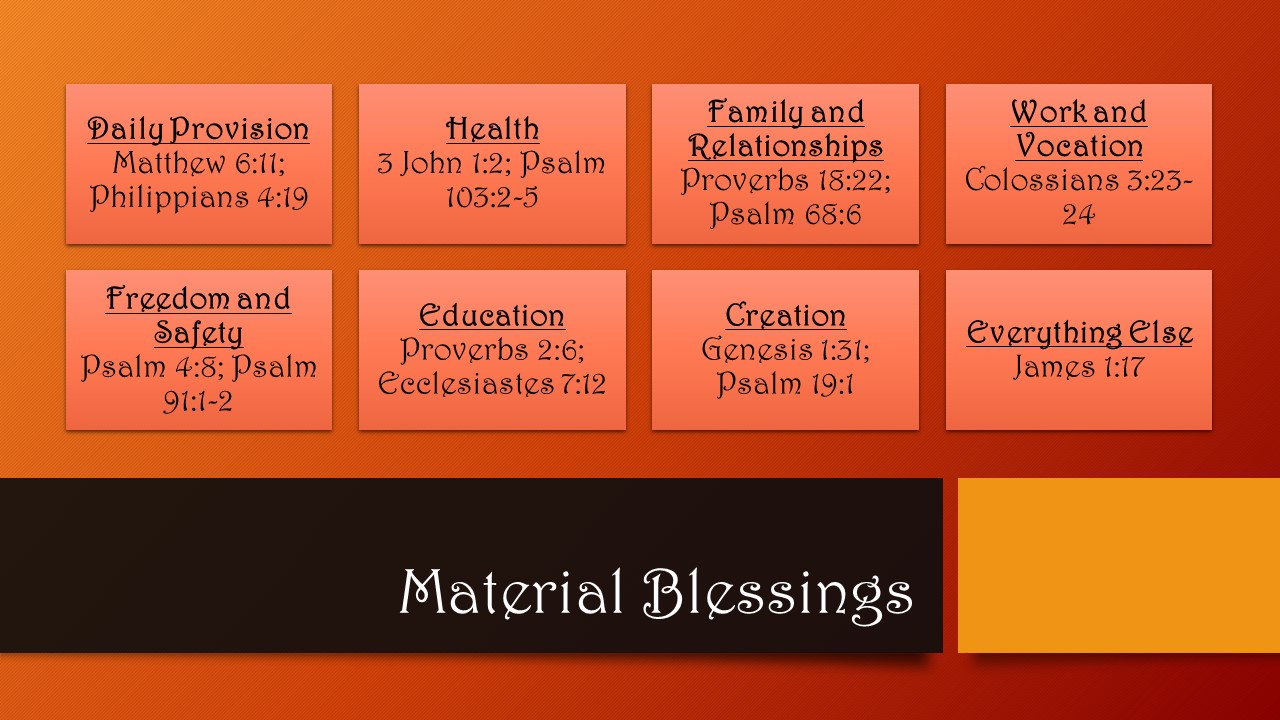
1. Daily Provision: Thank God for providing daily bread, shelter, and the necessities of life (Matthew 6:11; Philippians 4:19).
2. Health: Express gratitude for physical well-being and the ability to enjoy life (3 John 1:2; Psalm 103:2-5).
3. Family and Relationships: Thank God for family, friends, and the relationships that bring joy and support (Proverbs 18:22; Psalm 68:6).
4. Work and Vocation: Express thanks for the ability to work and contribute to society, finding purpose in vocation (Colossians 3:23-24).
5. Freedom and Safety: Thank God for living in a place of safety and for the freedom to worship and live out one’s faith (Psalm 4:8; Psalm 91:1-2).
6. Education: Express gratitude for opportunities to learn and grow intellectually (Proverbs 2:6; Ecclesiastes 7:12).
7. Creation: Thank God for the beauty of creation and the opportunity to enjoy and steward the earth (Genesis 1:31; Psalm 19:1).
8. Everything Else: Thank God for all material things, for ultimately everything was created by the Lord (James 1:17).
But material gifts from the Lord pale next to the Spiritual gifts He so richly pours out on us –
Spiritual Blessings:
1. Salvation: Express profound gratitude for the gift of salvation through faith in Jesus Christ (Ephesians 2:8-9; Romans 6:23).
2. Forgiveness of Sins: Thank God for the forgiveness of sins through the sacrifice of Jesus (1 John 1:9; Psalm 103:12).
3. Holy Spirit: Express thanks for the indwelling of the Holy Spirit, providing guidance and empowerment (John 14:16-17; Galatians 5:22-23).
4. Spiritual Growth: Thank God for the opportunity to grow spiritually and become more Christlike (2 Peter 3:18; Colossians 1:10).
5. God’s Word: Express gratitude for the Bible, God’s Word, which provides guidance, wisdom, and reveals His character (Psalm 119:105; 2 Timothy 3:16-17).
6. Prayer: Thank God for the privilege of prayer and the ability to communicate with the Creator of the universe (Philippians 4:6-7; 1 Thessalonians 5:16-18).
7. Fellowship: Express thanks for the community of believers and the opportunity to worship and fellowship together (Hebrews 10:24-25; Acts 2:42).
8. Hope: Thank God for the hope found in Christ, which transcends circumstances and extends into eternity (Romans 15:13; 1 Peter 1:3-4).
9. Peace: Express gratitude for the peace that surpasses understanding, found in a relationship with Jesus (John 14:27; Philippians 4:7).
10. Eternal Life: Thank God for the promise of eternal life in His presence (John 3:16; 1 John 5:11-12).

As Christians reflect on both material and spiritual blessings, they can cultivate a heart of gratitude for the abundant grace and provision of God in every aspect of life.
C. Recognizing God’s Sovereignty in All Circumstances
Not just good times, but God is sovereign in the bad times. Earlier I said, “All the time God is good, and God is good all the time.” The distinction between thanking God and expressing gratitude to people extends to the profound acknowledgment of God’s sovereignty over all circumstances. This recognition becomes particularly poignant when we examine the experiences of biblical figures facing adversity with unwavering trust and gratitude, we’re just going to look quickly at 3 people –
1. David in the Lion’s Den (Daniel 6)
– The narrative of Daniel in the lion’s den unfolds as a testament to unyielding faith and gratitude amid adversity. When Daniel was faced with the decree that prohibited Daniel from worshipping, Daniel 6:10 says,
Now when Daniel learned that the decree had been published, he went home to his upstairs room where the windows opened toward Jerusalem. Three times a day he got down on his knees and prayed, giving thanks to his God, just as he had done before.

Daniel’s commitment to prayer and thanksgiving, even when faced with a decree that sought to suppress his worship, underscores a profound trust in God’s sovereignty.
2. Job’s Response to Adversity (Job 1:20-22)
– The story of Job, often regarded as a paragon of patience and endurance, provides a profound example of gratitude in the midst of profound loss. After experiencing devastating trials, including the loss of his wealth, health, and even his children, Job’s response is astonishing. Job 1:20-21,
At this, Job got up and tore his robe and shaved his head. Then he fell to the ground in worship and said:
“Naked I came from my mother’s womb,
and naked I will depart.[c]
The Lord gave and the Lord has taken away;
may the name of the Lord be praised.”

3. Lessons from David’s Psalms of Lament
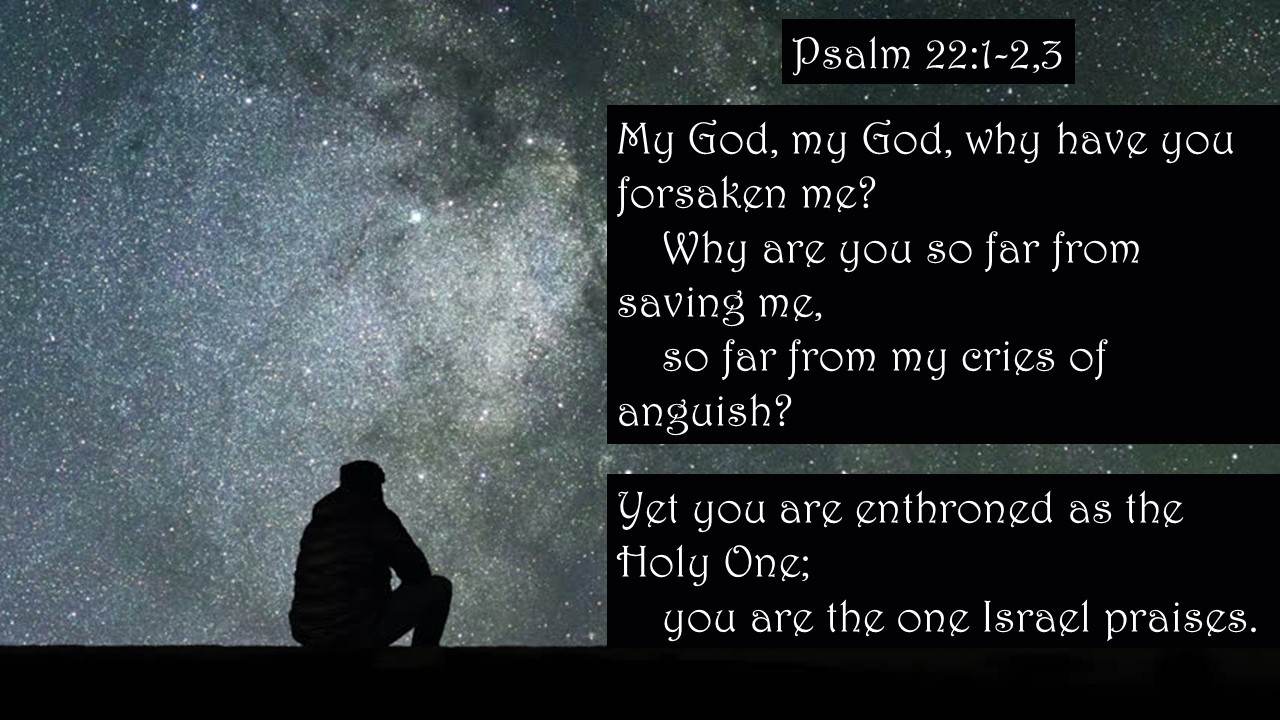
– David, a man after God’s own heart, penned psalms that traversed the spectrum of human emotion. In Psalms of lament, such as Psalm 22 and 69, David’s expressions of distress are intertwined with unwavering trust in God’s sovereignty. David says in Psalm 22:1,
My God, my God, why have you forsaken me?
Why are you so far from saving me,
so far from my cries of anguish?
Is soon followed by verse 3,
Yet you are enthroned as the Holy One;
you are the one Israel praises.
These narratives invite us to consider our own response to adversity. Can we, like Daniel, maintain a spirit of thanksgiving in the face of opposition? Will our hearts echo Job’s proclamation of trust, even when life takes an unexpected and painful turn? We learn much about God’s character when we explore the transformative power of gratitude that extends beyond the realms of earthly blessings.
V. Why Offer Praise and Thanksgiving to God
A. Acknowledging God’s Character and Attributes
The act of offering praise and thanksgiving to God transcends mere ritual or tradition; it is an intentional and transformative engagement with the very character and attributes of God.
1. Psalm 106:1 – “Praise the LORD. Give thanks to the LORD, for he is good; his love endures forever.”
– This psalm encapsulates the essence of acknowledging God’s character. Ascribing goodness and enduring love to the Lord becomes the foundation of our gratitude. In our expressions of thanks, we affirm God’s unchanging nature and steadfast love, creating a profound connection between our hearts and the Lord.
2. Revelation 4:11 – “You are worthy, our Lord and God, to receive glory and honor and power, for you created all things, and by your will, they were created and have their being.”
– The book of Revelation provides a celestial perspective on the worthiness of God to receive praise and thanksgiving. Recognizing God as the Creator and sustainer of all things emphasizes the inherent value of acknowledging His divine attributes. Offering thanks becomes a declaration of God’s worthiness to receive glory, honor, and power.
As we engage in the practice of gratitude, we embark on a journey of intimately knowing and understanding God. It goes beyond a transactional expression of thanks for blessings received; it becomes a relational exchange that draws us closer to the heart of the Divine.
Gratitude is an expression of faith and trust. Biblical passages highlight the inseparable connection between a heart of gratitude and a deep, abiding trust in God. What may we learn about our heavenly Father when we give Him the thanks due Him?
B. Gratitude as an Expression of Faith and Trust
The intertwined nature of gratitude, faith, and trust unfolds as a central theme in the biblical narrative. The Scriptures illuminate the connection between a heart overflowing with gratitude and a steadfast reliance on God’s character and promises.
1. Hebrews 11:6 – “And without faith, it is impossible to please God because anyone who comes to him must believe that he exists and that he rewards those who earnestly seek him.”
– The author of Hebrews establishes an inseparable link between faith and seeking God. Gratitude, as an expression of faith, emerges when we acknowledge God’s existence and trust in His rewarding nature. It is through faith that we earnestly seek God, and in seeking, we discover reasons for heartfelt thanks.
2. Psalm 28:7 – “The LORD is my strength and my shield; my heart trusts in him, and he helps me. My heart leaps for joy, and with my song, I praise him.”
– David’s psalm echoes the sentiment of a heart that trusts in God. Gratitude becomes an outpouring of joy, a song of praise that rises from a heart anchored in trust. The acknowledgment of God as a source of strength and protection fosters a spirit of gratitude that transcends circumstances.
There is an amazing connection between gratitude and faith. We recognize that offering thanks to God is not merely a reaction to favorable outcomes; it is a proactive expression of trust in God’s sovereignty. Gratitude becomes a dynamic force that shapes our spiritual journey, aligning our hearts with the enduring truth of God’s goodness and faithfulness.
So why offer thanks and praise to the Lord? In short,
C. Thanksgiving Pleases God and Encourages Us
The rich tapestry of biblical teachings on gratitude teaches us that the act of giving thanks pleases our God and plays a transformative role in the growth of our Christian character.
The scriptures reveal that giving thanks is not merely a cultural or seasonal observance; rather, it is an intentional and deeply spiritual practice. Numerous passages underscore the pleasing nature of gratitude to God. Psalm 106:1 extols,
“Praise the LORD. Give thanks to the LORD, for he is good; his love endures forever.”
In this act of giving thanks, we actively acknowledge and appreciate the goodness of God, aligning our hearts with His enduring love.
Furthermore, the act of giving thanks is intricately connected to our understanding of God’s character. Returning to James 1:17, it reminds us,
“Every good and perfect gift is from above, coming down from the Father of the heavenly lights, who does not change like shifting shadows.”
When we express gratitude, we recognize that every blessing, whether in times of abundance or adversity, originates from the unwavering and unchanging nature of our Heavenly Father.
In addition to pleasing God, the practice of giving thanks holds transformative benefits for our Christian character. Gratitude is not a passive response to favorable circumstances; rather, it is an active expression of trust in God’s sovereignty. Through moments of abundance, we learn to acknowledge God as the ultimate source of every good gift, fostering humility and a deep sense of dependence on Him.
Conversely, in the face of challenges, gratitude becomes an anchor for our souls. It is a declaration that our trust in God’s faithfulness transcends circumstances. Drawing inspiration from biblical figures who expressed gratitude amid trials, such as Daniel in the lion’s den, we find strength in knowing that gratitude is a powerful testimony of unwavering faith.
In essence, giving thanks is woven into the fabric of the Christian journey. It is a dynamic and transformative practice that not only pleases God but also molds us into individuals whose character reflects the enduring love, faithfulness, and sovereignty of our Heavenly Father. As we navigate the complexities of life, let our hearts resonate with the psalmist’s proclamation, “Give thanks to the LORD, for he is good; his love endures forever.” May our lives be living testimonies of gratitude, drawing others closer to the heart of the One deserving of all praise.
VI. Conclusion: Embracing an Attitude of Thanksgiving
It’s crucial to recognize the transformative power embedded in this spiritual discipline. Our journey today has traversed through the biblical narrative, weaving together principles from the Old and New Testaments, shedding light on why giving thanks is not only pleasing to God but also integral to the growth of our Christian character.
The significance of gratitude in the eyes of God is evident throughout Scripture. From the psalms of David, expressing thanks in moments of distress, to the teachings of Jesus exemplifying gratitude even in times of scarcity, we see a consistent theme—the act of giving thanks pleases the Lord. Psalm 106:1 resounds as an anthem,
“Praise the LORD. Give thanks to the LORD, for he is good; his love endures forever.”

In our expressions of gratitude, we participate in a divine exchange, acknowledging God’s goodness and unwavering love.
Gratitude extends beyond a ritualistic response to blessings or just a simple thanks over roast turkey and television football. It is a deliberate and transformative practice that shapes our Christian character. James 1:17 reminds us that every good and perfect gift comes from above, reinforcing that gratitude is not just a reaction but a proactive recognition of God’s unchanging nature. This understanding molds us into individuals characterized by humility, dependence on God, and a deep trust in His sovereignty.
Our reflections on the pleasing nature of gratitude to God and its transformative impact on our character lead us to an inevitable conclusion. Giving thanks is not confined to moments of joy or abundance; rather, it is a continual offering, a lifestyle that mirrors the enduring faithfulness of our Creator. As we practice gratitude, not as a seasonal observance but as a perpetual act of worship, our lives become living testimonies to the goodness of God.
In the rhythm of life’s ups and downs, the call to gratitude is entwined with an encouragement to trust in God’s sovereignty. The narratives of David in the lion’s den, Job in profound loss, and the consistent theme of God’s unwavering character resound—a reminder that the Almighty is in control. In moments of joy and trial, our trust in God’s sovereign hand becomes the bedrock of our gratitude.
In closing, let’s turn to Ephesians 5:20,
“always giving thanks to God the Father for everything, in the name of our Lord Jesus Christ.”

This verse encapsulates the essence of perpetual gratitude—offering thanks not only for specific blessings but for everything, recognizing that in all circumstances, God is worthy of our praise. May this attitude of continual thanksgiving be woven into the fabric of our lives, transforming us into vessels of gratitude and bearers of God’s eternal love.
Let’s bow our heads and hearts in a unified prayer of gratitude:
Heavenly Father, with hearts brimming with thanks, we stand before You. In joy, we celebrate Your goodness; in trials, we acknowledge Your sovereignty, trusting Your perfect plans. May our gratitude surpass mere responses to blessings; may it be a profound expression of trust in Your unfailing love. In abundance, may we remember the Source of every good gift; in challenges, may gratitude anchor our souls.
May the spirit of thanksgiving saturate every facet of our lives. May this prayer linger in our hearts as we practice gratitude, not as a seasonal offering but a continual offering to the One deserving of all praise.
To God be the glory.


 Chasing the Wind
Leave a comment