
I. Introduction: How Did the Magi Know?
Well, first of all, I’m not your regular teacher, as some of you might have guessed. For those of you who don’t know me, my name is Michael, and for those of you who do know me, my name is also Michael. My wife and I have been part of the Grace community for about half a year now, and I’d like to thank Dave and the other teachers for giving me the opportunity to share today’s bible study.
Back in 2015, I traveled a lot more than I do today, and in December 2015, I found myself in the grand metropolis of Otley, UK. Now in the UK, I don’t know if they know what a warm sunny day is, but that weekend, the rain had stopped. It was still overcast, grey and chilly, but at least it wasn’t raining. I ventured out of my hotel room that weekend and stumbled upon a Victorian Festival. One of the first things I saw was a brass band. Now, I love a brass band, and this one even had a euphonium player. And as luck would have it, I came upon them just as they were ending their set, and I said, “Please just one more song? I came all the way from Texas!” And the leader says, “Ok, 1 more, just for you, do you have a request?”
And, realizing I would give this lesson on the magi 8 years later, I said, “How about, ‘We Three Kings?’” They mumbled to themselves and looked through their songbooks and said, “I think it’s #90.” And I said, “Yes, #90.” As if I knew what page number it was on.
So they gave me this special gift of song that I’d like to share with you:
We might be beginning with a musical selection of “We Three Kings,” but we’re going to go a lot deeper. I hope today isn’t just a musical or geographical journey; I hope to intertwine prophecy, a cosmic battle, and the unfolding of God’s redemptive plan, starting with: What did the Magi know, and how did they know it?
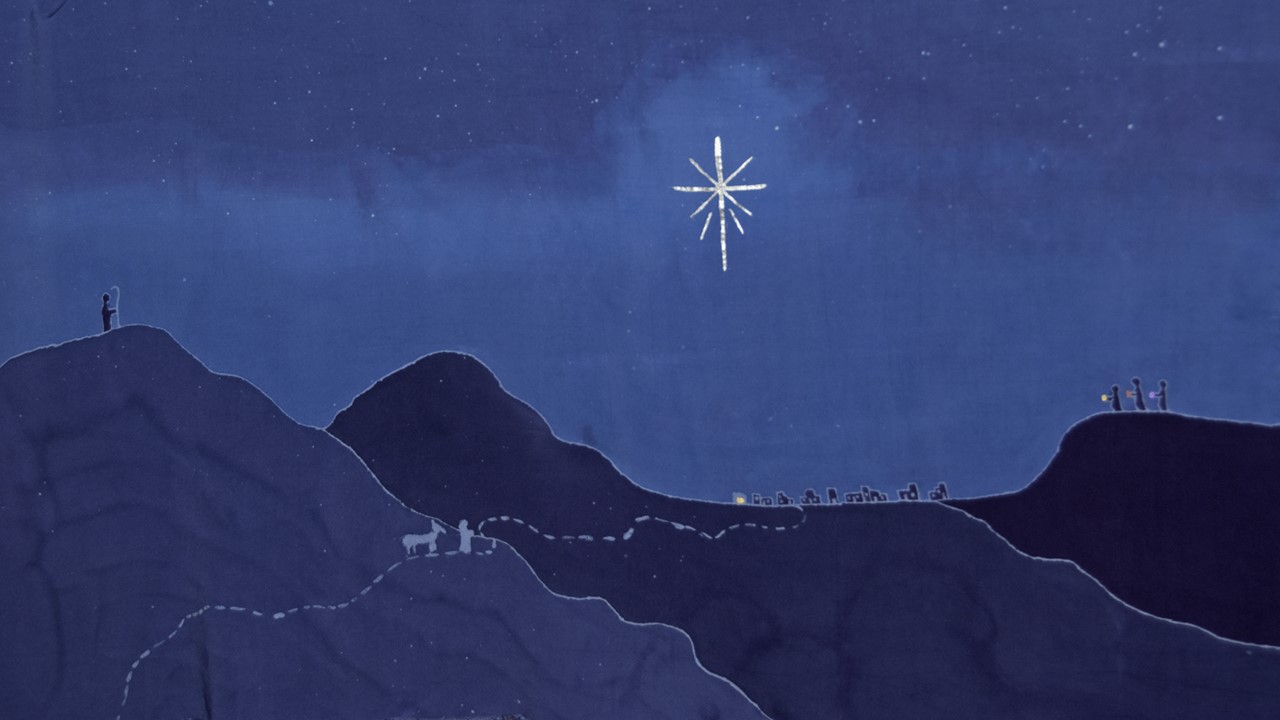
In today’s lesson, we are going to delve into how the Magi’s understanding, deeply rooted in the prophetic scriptures of Daniel and Isaiah, led them to follow the extraordinary star to Jesus. This journey, far more than just a crossing of deserts, symbolizes the revelation of the Messiah to all nations, transcending cultural and geographical boundaries. We will explore how this journey, shrouded in mystery, places the Magi as central figures in the Nativity story, set against a backdrop of a heavenly struggle between God’s redemptive plan and Satan’s attempts to thwart it. This cosmic battle intersects with King Herod’s turbulent reign, adding depth to the struggle. The Magi’s journey, illuminated by the star mentioned in Numbers and the prophecies of Isaiah about nations drawn to the light, beautifully aligns with Old Testament prophecies, showcasing the fulfillment of God’s divine plan. These pivotal moments bridge the Old and New Testaments, highlighting God’s consistent presence in the ongoing story of salvation.
In summary, the Magi’s journey is not just a path to a manger; it’s a saga that connects prophecy, history, and God’s overarching plan for humanity.
Ready? Here we go.
II. Who Are the Magi?
If you have your bibles handy, which you probably should because, after all, this is a bible study, we’re going to spend time in Matthew 2 which is the only gospel that tell us about the magi.
Matthew 2:1-2,
Now after Jesus was born in Bethlehem of Judea in the days of Herod the king, magi from the east arrived in Jerusalem, saying, “Where is He who has been born King of the Jews? For we saw His star in the east and have come to worship Him.”
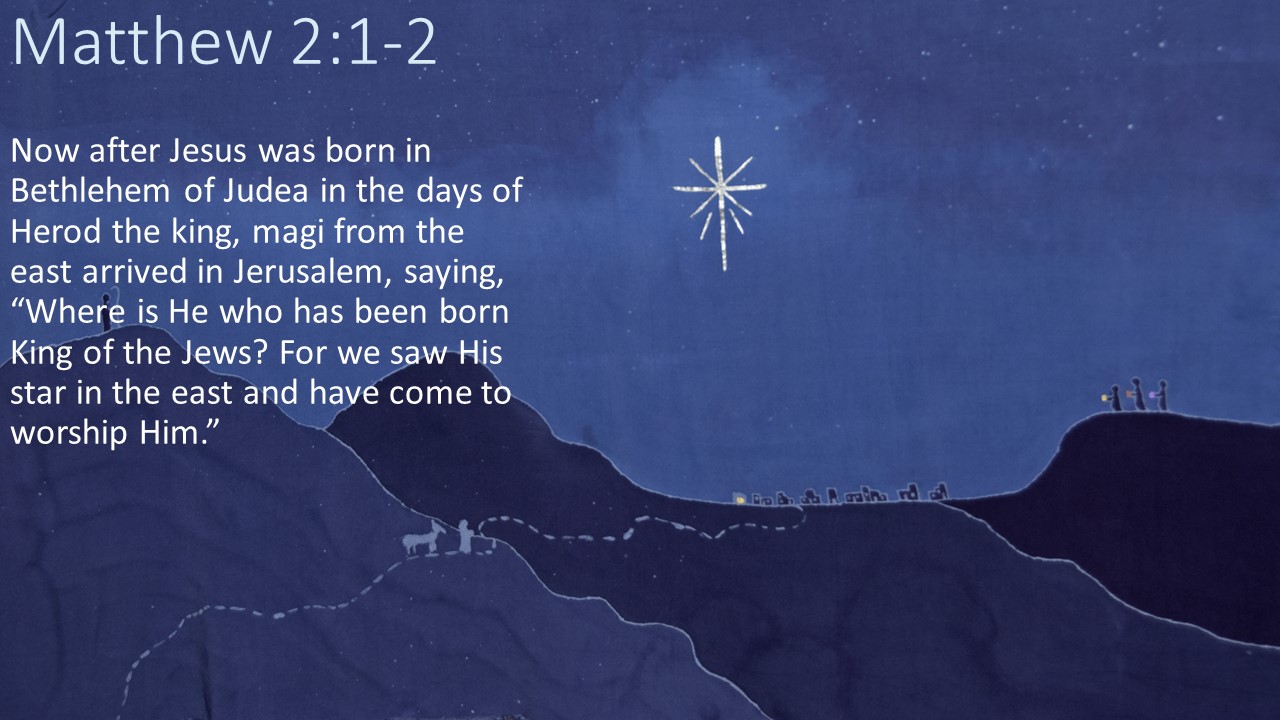
The Magi from the east were enigmatic visitors, guided by a star, and embody the fulfillment of prophecies like Numbers 24:17 which we’ll get into more detail later. The origins of the magi, their numbers, and their names are shrouded in mystery, leaving much to our research, imagination and faith. They brought three gifts – gold, frankincense, and myrrh – and so tradition and songs have led many to assume there were three Magi. In reality, there were likely many more. And although sometimes they are referred to as “kings,” there’s no indication they were rulers of any kind. Early bible studies likely misinterpreted Old Testament prophesies such as Psalm 72:9-11,
Let the nomads of the desert bow before him,
And his enemies lick the dust.Let the kings of Tarshish and of the islands bring presents;
The kings of Sheba and Seba offer gifts.And let all kings bow down before him,
All nations serve him.
The Magi in the Nativity story have a rich and varied history.
In the Greco-Roman world, the term ‘magi’ referred to individuals perceived as intermediaries between the divine and humanity. This interpretation likely influenced how Matthew’s original audience perceived the Magi, understanding them as wise men or scholars with a deep connection to the spiritual realm. In the Greek text of Matthew 2:1-12, the word ‘Magi’ (μάγοι) suggests their Persian origin and roles as learned astrologers or priests.

Fun fact: “magi” is plural. The singular term is “magus.”
In the book of Daniel, the Hebrew term “Magi” is “chakkim” חַכִּים and refers to practitioners of Zoroastrianism, known for their skills in astrology, astronomy, and dream interpretation. Sometimes translated as wizard, enchanters, magicians, or sorcerers.
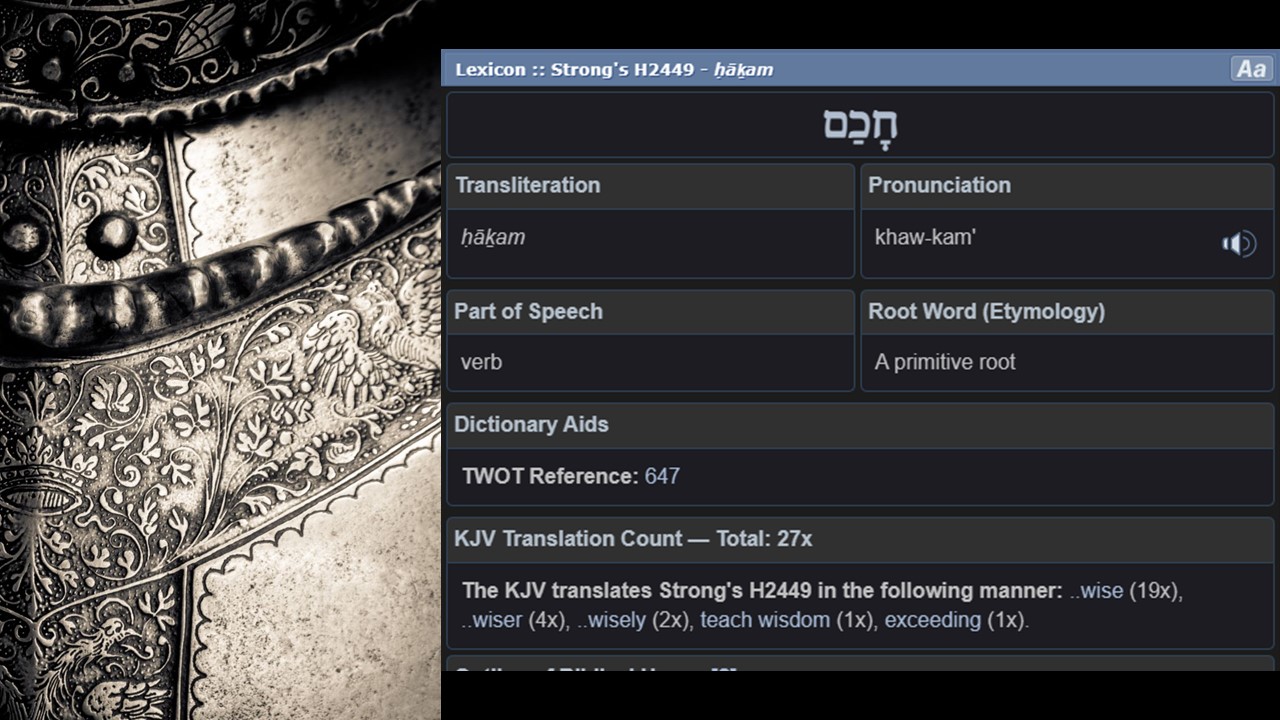
The Book of Daniel, particularly Daniel 5:1, highlights the association of the magi with Persia by naming Daniel as the “Chief of the Magi.”

This scriptural context suggests that the Magi in the Nativity story were likely Zoroastrian priests from ancient Medes or Persia. Their understanding of Daniel’s prophecies, where Daniel himself was highly regarded among the Magi, indicates a knowledge of the coming Messiah. This background sheds light on why the Magi, following a star, journeyed to Jerusalem seeking the newborn King of the Jews during King Herod’s troubled reign.
Early Christian writings and art further illuminate the Magi’s significance. The early Church Fathers viewed their journey as a divine revelation to the Gentiles, and their depiction in early Christian art, often in Persian attire, underscores their foreign origins and the global message of Christ’s birth. This portrayal emphasized their role as representatives of the wider world as Christ for everyone, not just for the Jews.

By 500 AD, commentators had elevated the Magi to the status of kings, and by the twelfth century, they were even given names – Balthazar, Caspar, and Melchior, as depicted in Herrad of Landsberg’s “Hortus Deliciarum.” These names, reflecting diverse cultures and lands, demonstrate the Magi’s growing symbolic importance in Christian tradition. For instance, Chinese Christians believe one of the Magi originated from China.

However, the myth of the Magi as kings was challenged by John Calvin in the 16th century, who denounced the idea in favor of a more accurate and direct translation of the scripture. Despite this, the portrayal of the Magi as kings persists in popular tradition even today.
Also, contrary to myth, these wise men likely didn’t arrive exactly at Jesus’ birth. Considering their likely Persian origins and the considerable distance, scholars suggest their arrival in Jerusalem was about two years after Jesus’ birth, reflecting a journey of faith and dedication.
III. The Significance of the Magi’s Gifts
The magi brought 3 gifts which is why tradition considers them the 3 magi. What were the gifts of the Magi? Not that 1905 O. Henry story I once wrote a high school essay on, you know the story of the young wife who sells her hair to buy a platinum chain for her husband’s gold family heirloom watch, only to find he had sold the watch to buy a set of expensive ornamental hair combs.
No, the gifts of the magi are listed in Matthew 2:11 –
And when they were come into the house, they saw the young child with Mary his mother, and fell down, and worshipped him: and when they had opened their treasures, they presented unto him gifts; gold, and frankincense and myrrh.
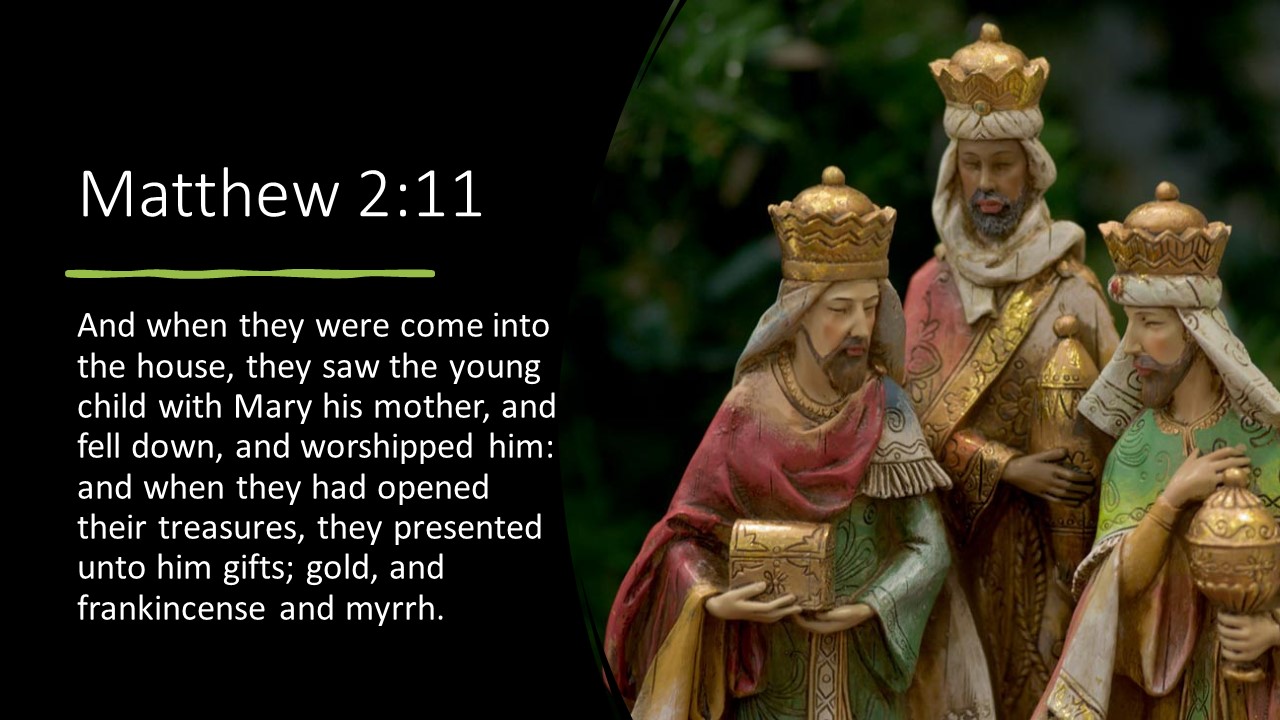
These are not just material offerings, but symbols rich in meaning, each painting a vivid picture of Jesus Christ’s identity and mission. The magi provided their gifts to the young baby, a wealth of abundance. When we see Christmas scenes of The Three Wise Men, they’re often shown holding a small decorative container with a gift. It’s likely, though, that the magi brought substantially more – they certainly wouldn’t travel over a thousand miles just to provide samples. No, they brought gifts for the King of Kings. Scholars note that later, when Mary and Joseph fled to Egypt, this wealth surely sustained them during their exile.
1. Gold: The Symbol of Divine Kingship
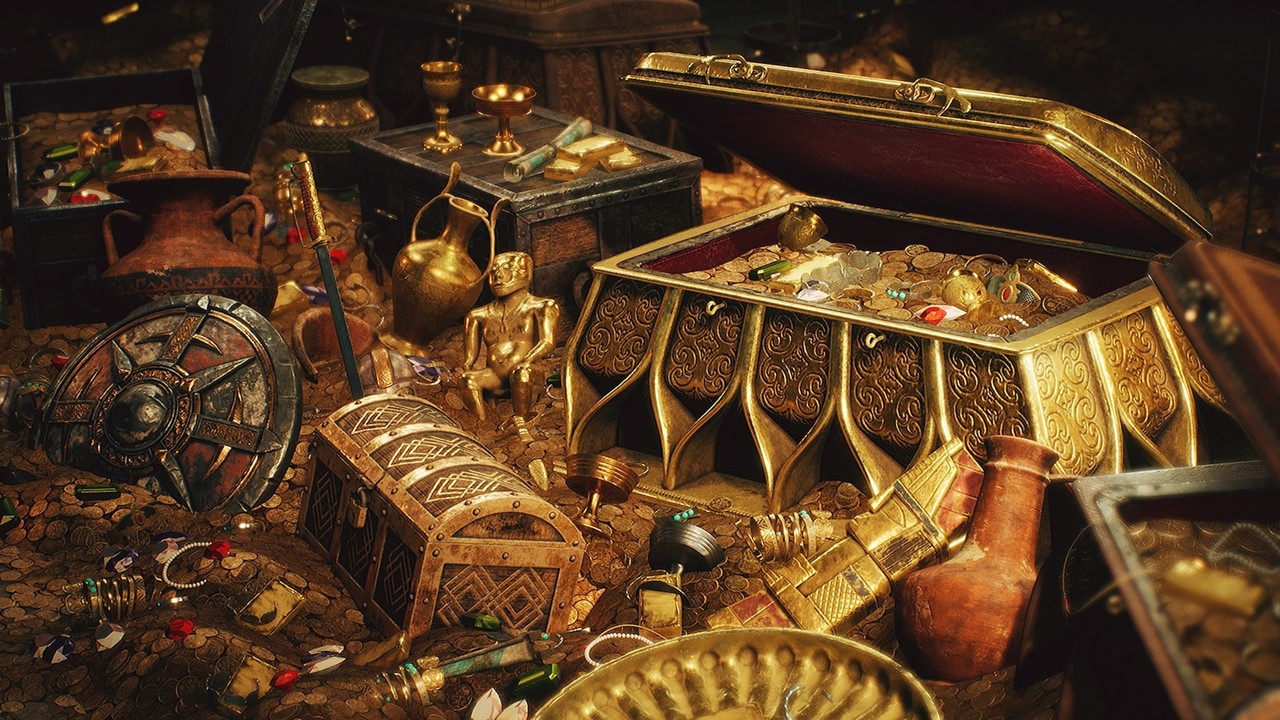
Gold certainly makes sense as a gift. Gold is a gift fit for a king, and the magi recognized Christ the newborn as the rightful King of Israel. Jesus traced His lineage to David and Abraham, just as scripture prophesied. And Christ certainly was the rightful king of the Jews, but the book of Matthew illustrates these magi as giving the gold to the newborn baby. It’s as if Matthew wants to make sure we understand, as the magi did, that Jesus was born a king.
The gift of gold, a traditional emblem of wealth and royalty, was a powerful acknowledgment of Jesus as the divine King. Throughout Scripture, gold is associated with divinity and majesty, often used in sacred spaces like the Tabernacle to signify God’s holy presence. By offering gold, the Magi were fulfilling prophecies such as Psalm 72:14-15 –
He will rescue their life from oppression and violence, So may he live, and may the gold of Sheba be given to him; Let them bless him all day long.
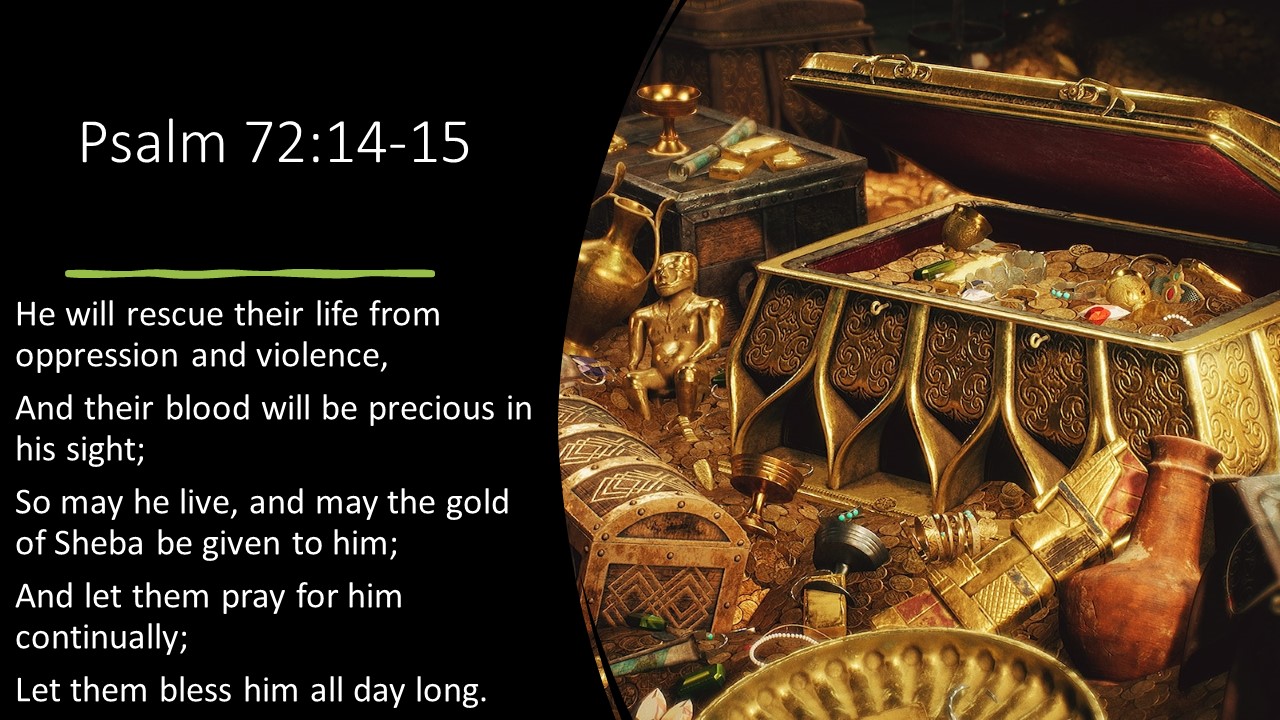
and Isaiah 60:6 which we’ll also address later, which spoke of kings bringing gifts of gold to the anointed ruler. This gift symbolizes Jesus’ sovereignty and divine authority, highlighting His role as the King of Kings.
2. Frankincense: A Symbol of Priesthood and Sacrifice

The gift of frankincense, presented by the Magi to the infant Jesus, holds a special place in the tapestry of our faith. Traditionally used in Jewish worship and sacrifices, this aromatic balm symbolizes prayers and offerings lifted to God. Its role in the Magi’s gifts is deeply symbolic, signifying not only the acknowledgment of Jesus’ divinity but also His unique role as our eternal High Priest. In the sacred rituals of the Temple, frankincense was burned to create a pleasing aroma for the Lord. Similarly, its inclusion in the Magi’s offerings emphasizes Jesus’ priestly role, as He bridges the gap between humanity and the divine. This gift resonates with the prophecy of Psalm 110:4 –
The Lord has sworn and will not change His mind,
“You are a priest forever
According to the order of Melchizedek.”
Our Messiah is an eternal priest, echoed in Hebrews 2:17
Therefore, He had to be made like His brethren in all things, so that He might become a merciful and faithful high priest in things pertaining to God, to make propitiation for the sins of the people.
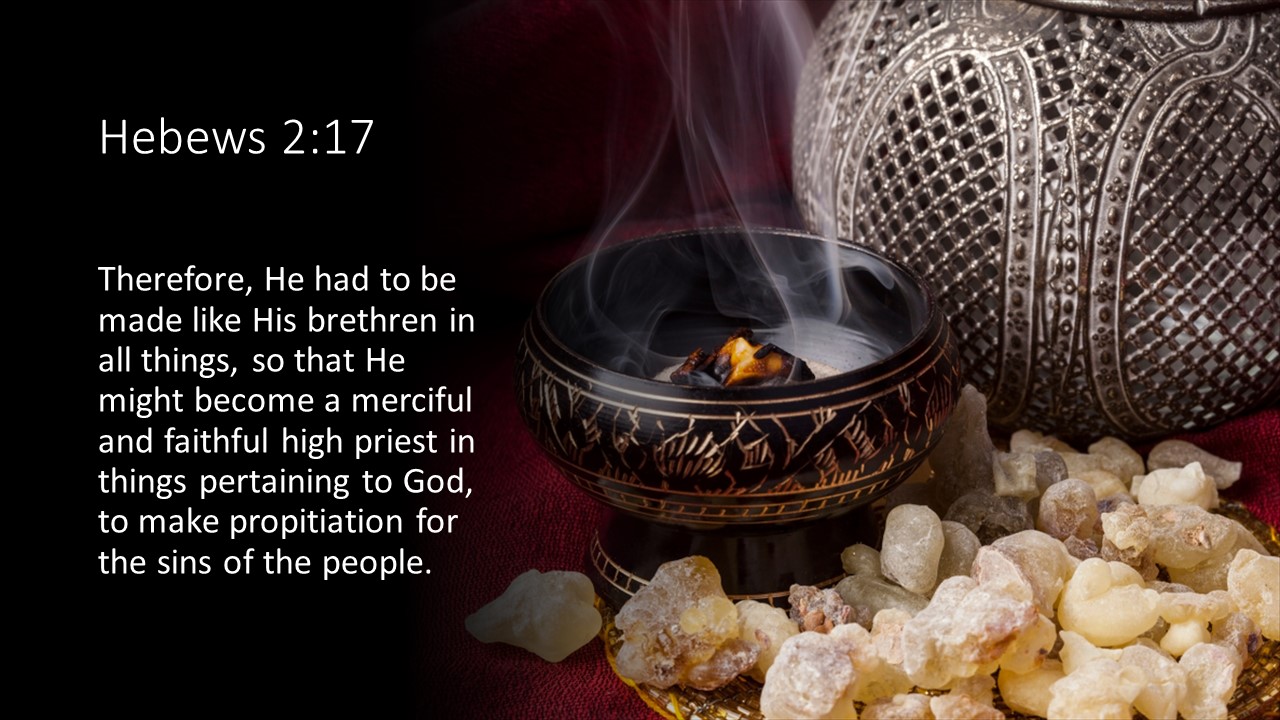
Jesus is our merciful and faithful high priest in service to God, that He might make atonement for the sins of the people. The magi worshipped Jesus as divine while at the same time Herod was trying to destroy Him. This contrast characterizes much about the life of Jesus. Some, like the magi, worship Jesus as Lord. Others, like Herod, seek His destruction.
The gift of frankincense thus becomes a symbol of the dual nature of Jesus’ mission on earth – a mission that embodies His divine nature, and one that challenges and overturns the earthly powers, as exemplified by Herod’s hostility. In this simple yet profound gift, we find a reflection both the sacred and the sacrificial aspects of Jesus’ life and work.
Which brings us to the third gift.
3. Myrrh: The Emblem of Suffering and Redemption

Myrrh is an odd gift for a baby. Myrrh is aromatic resin, traditionally used in burial rites. Why give myrrh, a sumbol of death, to a newborn baby?
The gift of myrrh stands as a stark and prophetic symbol. This was presented to Jesus as an infant, foreshadowing the sacrifice He was destined to make. Myrrh, in its very essence, speaks to the heart of Christ’s mission on earth – a mission marked by His self-giving love and ultimate sacrifice.
From the outset, Jesus’ purpose was clear: to give up His life as a ransom for many, as stated in Matthew 20:28. This purpose is further illuminated in John 12:27, where Jesus, contemplating His impending crucifixion, acknowledges the weight of the hour for which He came into the world. The inclusion of myrrh among the gifts of the Magi thus becomes a deeply symbolic act, honoring not just His birth but more significantly, His impending death.
Myrrh’s role in burial practices of the time highlights the most human aspect of Jesus’ life – His mortality. Its use as an analgesic during His crucifixion, as mentioned in Mark 15:23, further symbolizes the physical suffering He endured. Through the gift of myrrh, the Magi prophesied the most pivotal aspect of Jesus’ earthly journey: His crucifixion and burial. This is a reminder of the profound truth of the Incarnation: God taking on flesh, experiencing human pain, and triumphing over death.
In the gift of myrrh, we find an amazing reminder of why we celebrate Christ’s birth with such reverence and joy. It is not merely the birth of a child we commemorate, but the arrival of our Savior, who was born to die for our sins. The story of the Magi, therefore, is intrinsically linked to the larger narrative of Christ’s life – a narrative that finds its true meaning in His sacrificial death and triumphant resurrection. The myrrh reminds us of the immense love and sacrifice embodied in the person of Jesus Christ.

When viewed together, these three gifts provide a comprehensive portrayal of Jesus Christ. Gold signifies His royal divinity, frankincense His priestly intercession, and myrrh His redemptive suffering. Together, they weave a complete picture of Jesus: as a King establishing His spiritual kingdom, as a Priest mediating between God and humanity, and as a Savior sacrificing Himself for redemption. These gifts are not just historical artifacts but enduring symbols of the deep theological truths about Christ’s identity and His redemptive work. Through their journey and offerings, the Magi worshiped the infant Jesus and unveiled the profound mysteries of His divine mission, leaving a legacy that continues to inspire and guide us in our spiritual journey.
IV. The Prophetic Tapestry Behind the Magi’s Journey

Where did the magi come from? As we look into the journey of the Magi, we uncover a rich tapestry of prophecy and scriptural insight guiding their path. Their pursuit, steeped in an understanding of Isaiah’s and Daniel’s prophecies, reveals a profound convergence of celestial signs and divine revelation. Let’s start with Isaiah.
In Isaiah’s prophecies, we find key passages that likely influenced the Magi’s understanding:
Isaiah 9:6-7: A Child is Born
For a child will be born to us, a son will be given to us;
And the government will rest on His shoulders;
And His name will be called Wonderful Counselor, Mighty God,
Eternal Father, Prince of Peace.
There will be no end to the increase of His government or of peace,
On the throne of David and over his kingdom,
To establish it and to uphold it with justice and righteousness
From then on and forevermore.
The zeal of the Lord of hosts will accomplish this.

This prophecy speaks of a child destined to be a “Wonderful Counselor, Mighty God,” promising a reign of peace and justice. This universal message aligns with the Magi’s recognition of Jesus as a King for all nations.
Isaiah 11:1-5: The Root of Jesse
Then a shoot will spring from the stem of Jesse,
And a branch from his roots will bear fruit.
The Spirit of the Lord will rest on Him,
The spirit of wisdom and understanding,
The spirit of counsel and strength,
The spirit of knowledge and the fear of the Lord.
And He will delight in the fear of the Lord,
And He will not judge by what His eyes see,
Nor make a decision by what His ears hear;
But with righteousness He will judge the poor,
And decide with fairness for the afflicted of the earth;
And He will strike the earth with the rod of His mouth,
And with the breath of His lips He will slay the wicked.
Also righteousness will be the belt about His loins,
And faithfulness the belt about His waist.
Describing a leader from Jesse’s lineage, under whom righteousness and peace would prevail, this prophecy resonates with the Magi’s quest for the “king of the Jews,” hinting at their awareness of the importance of the Davidic lineage.
Isaiah 60:1-6: Nations Coming to the Light
“Arise, shine; for your light has come,
And the glory of the Lord has risen upon you.
“For behold, darkness will cover the earth
And deep darkness the peoples;
But the Lord will rise upon you
And His glory will appear upon you.
“Nations will come to your light,
And kings to the brightness of your rising.
“Lift up your eyes round about and see;
They all gather together, they come to you.
Your sons will come from afar,
And your daughters will be carried in the arms.
“Then you will see and be radiant,
And your heart will thrill and rejoice;
Because the abundance of the sea will be turned to you,
The wealth of the nations will come to you.
“A multitude of camels will cover you,
The young camels of Midian and Ephah;
All those from Sheba will come;
They will bring gold and frankincense,
And will bear good news of the praises of the Lord.
This passage talks of nations and kings bringing gifts of gold and incense, emphasizing the welcoming of Gentiles in the Messiah’s realm. The Magi’s journey embodies this divine revelation, as foretold by Isaiah.
2. Insights from the Book of Daniel
The Book of Daniel, especially chapters 7-12, is filled with visions and prophecies that might have shaped the Magi’s understanding:
First, Daniel’s prophecy, specifically the segment known as the Seventy Weeks (Daniel 9:24-27). This prophecy isn’t just a mere timeline; it’s a divine blueprint foretelling the coming of the Messiah, the Anointed One. The Magi, those wise scholars of old, studied this prophecy, trying to understand the wisdom of Scripture.

Daniel 9:24-26 tells us of a specific time frame, a period of ‘seventy weeks’ set aside for some crucial events in God’s plan. Now, as we already know, in biblical terms, a ‘week’ represents a period of seven years. So, when we talk about ‘seventy weeks,’ we’re really looking at 490 years (70 times 7). During this time, God planned to accomplish several things: finishing transgression, putting an end to sin, making atonement for iniquity, bringing in everlasting righteousness, sealing up the vision and prophecy, and anointing the Most Holy Place.
The prophecy starts ticking from a specific moment: the issuing of a command to restore and rebuild Jerusalem. This event is recorded in the book of Nehemiah 2:5, when Artaxerxes Longimanus issued a decree in 445 BC. From that point, the prophecy outlines a timeline leading up to the Messiah’s arrival and His eventual sacrifice.
Daniel 9:25 gives us the breakdown: from the decree to rebuild Jerusalem to the arrival of ‘Messiah the Prince’ would be ‘seven weeks and sixty-two weeks.’ That’s 69 weeks in total, or 483 years. This period leads us right up to the triumphal entry of Jesus into Jerusalem, a momentous event we commemorate on Palm Sunday.
The prophecy then speaks of the Messiah being ‘cut off,’ a term indicating His death. Sir Robert Anderson, in his book “The Coming Prince,” meticulously details this timeline, showing how it pinpoints the exact time of Jesus’ crucifixion. This book, now in the public domain, offers an in-depth exploration of this timeline.
Now, the Magi, with their understanding and calculation, could have deduced the approximate time of the Messiah’s birth. Knowing that priestly service began at the age of 30 (Numbers 4:43) and considering God’s promise of a faithful priest (1 Samuel 2:35), they could infer that the Messiah would be over 30 years old at the time of His ‘cutting off.’ By counting backward from the predicted date of His death, they could estimate His birth date.
Other prophecies –
– **The Prophecy of Genesis 49:10**

– The birth of Christ partially fulfills the prophecy in Genesis 49:10, which speaks of the scepter not departing from Judah until the rightful ruler appears.
The scepter shall not depart from Judah,
Nor the ruler’s staff from between his feet,
Until Shiloh comes,
And to him shall be the obedience of the peoples.
Micah 5:1-5, which foretold the Messiah’s birth in Bethlehem
Now muster yourselves in troops, daughter of troops;
They have laid siege against us;
With a rod they will smite the judge of Israel on the cheek.
But as for you, Bethlehem Ephrathah,
Too little to be among the clans of Judah,
From you One will go forth for Me to be ruler in Israel.
His goings forth are from long ago,
From the days of eternity.”
Therefore He will give them up until the time
When she who is in labor has borne a child.
Then the remainder of His brethren
Will return to the sons of Israel.
And He will arise and shepherd His flock
In the strength of the Lord,
In the majesty of the name of the Lord His God.
And they will remain,
Because at that time He will be great
To the ends of the earth.
This One will be our peace.
So there’s a lot of prophecy that told the magi who they were looking for and when they should be looking for them. But where should they be looking?
Matthew 2:1-2 –
Now after Jesus was born in Bethlehem of Judea in the days of Herod the king, magi from the east arrived in Jerusalem, saying, “Where is He who has been born King of the Jews? For we saw His star in the east and have come to worship Him.”

Some translations, like the King James, say “for we have seen his star in the east.” That’s not phrased very well, because it wasn’t the star that was in the east, it was the magi who were from the east. Literally, the scripture doesn’t say “east” it says “from the rising of the sun”.
What was this star (ἀστήρ) they followed?
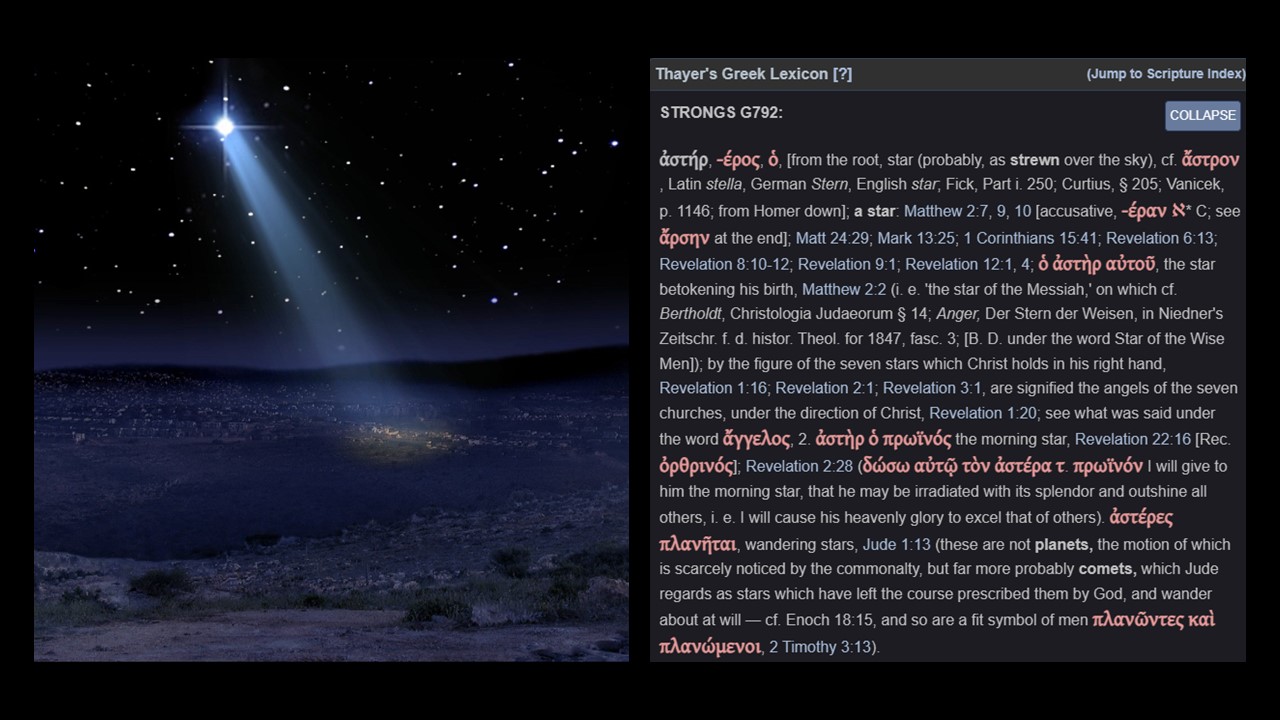
Some sources say it might have been an angel, but that’s not likely or the scripture would have said it was an angel. Some are of the opinion it was the light or glory of God which shone about the shepherds, or perhaps a comet which tradition had appeared at the birth or death of some illustrious person. But I think a star still makes the most sense, a new and unusual miracle from God the Father to mark the birth of His Son. It fulfils prophecy, such as in Numbers 24:17 which says
there shall come a star out of Jacob, and a sceptre shall rise out of Israel.

The journey of the Magi, intertwined with the prophecies of Isaiah and Daniel, highlights the intricate connection between divine revelation and human pursuit. Their interpretation of the star as a sign of the Messiah’s birth demonstrates the merging of various cultural and religious threads in their acknowledgment of Jesus as the Messiah. Language, prophecy, and divine guidance come together in the Magi’s story, affirming the Messiah’s global mission to seek the newborn king and God’s plan for salvation.
V. Satan’s Attempts to Prevent the Birth of Christ
But all is not well in the world that Satan rules. From the earliest chapters of Genesis and continuing through the birth of Christ, Satan has made relentless attempts to thwart God’s plan for redemption.
Satan’s strategy to disrupt God’s plan begins with the first children of Adam and Eve. In Genesis 4:1, Eve gives birth to Cain, believing him to be the promised seed. However, Satan, understanding Abel’s role in the lineage leading to Christ, manipulates Cain to murder Abel, an early indication of his efforts to derail the divine promise.

Satan’s influence permeates humanity, leading to widespread corruption as seen in Genesis 6. The only righteous family left, Noah’s, becomes the vessel through which God preserves the human race. This pattern of corruption and divine intervention recurs at the Tower of Babel, where God confounds human languages to prevent a unified rebellion against His will.

The promise of a Redeemer is renewed through Abraham, as confirmed in Galatians 3:16. Despite Sarah’s initial barrenness, which we can conjecture as Satan’s handiwork, God miraculously enables her to conceive Isaac, continuing the Messianic line.

The pattern of barrenness and divine intervention repeats with Isaac and Rebecca, as Rebecca conceives Jacob, who is chosen to carry forward the Messianic lineage. Esau’s hostility towards Jacob further illustrates Satan’s attempts to disrupt this lineage.

Satan’s strategies become more aggressive, as seen in Pharaoh’s decree to kill male Hebrew infants, echoing the future decree of Herod. Yet, God raises Moses to deliver Israel. Similarly, during a dire moment in Judah’s history, Joash is hidden in the temple, preserving the royal line from complete annihilation.

In the book of Esther, Satan uses Haman to plot the destruction of the Jewish people. God’s providence works through Esther and Mordecai to avert this calamity, ensuring the survival of the lineage from which the Messiah would come.

As the time of Christ’s birth approaches, Satan’s efforts intensify. The journey of Mary to Bethlehem, triggered by Caesar Augustus’s decree, is fraught with danger, potentially another of Satan’s schemes to prevent Christ’s birth. Then, Herod’s brutal decree to kill infants in Bethlehem epitomizes Satan’s ruthless attempts to destroy the Messiah.

In this narrative of salvation, we see the unfolding of a cosmic battle between the forces of evil and God’s unwavering commitment to His plan of redemption. From the early struggles in Genesis to the miraculous birth of Jesus, each event reflects the ongoing conflict and God’s sovereign power to overcome evil, fulfilling His promise of a Savior.
VI. Herod’s Attempt to Kill the Newborn King
But Satan isn’t finished. What he tried to do in centuries past, now he’ll attempt to do throuhg King Herod. We began in Matthew 2:1 –
After Jesus was born in Bethlehem in Judea, during the time of King Herod, Magi from the east came to Jerusalem
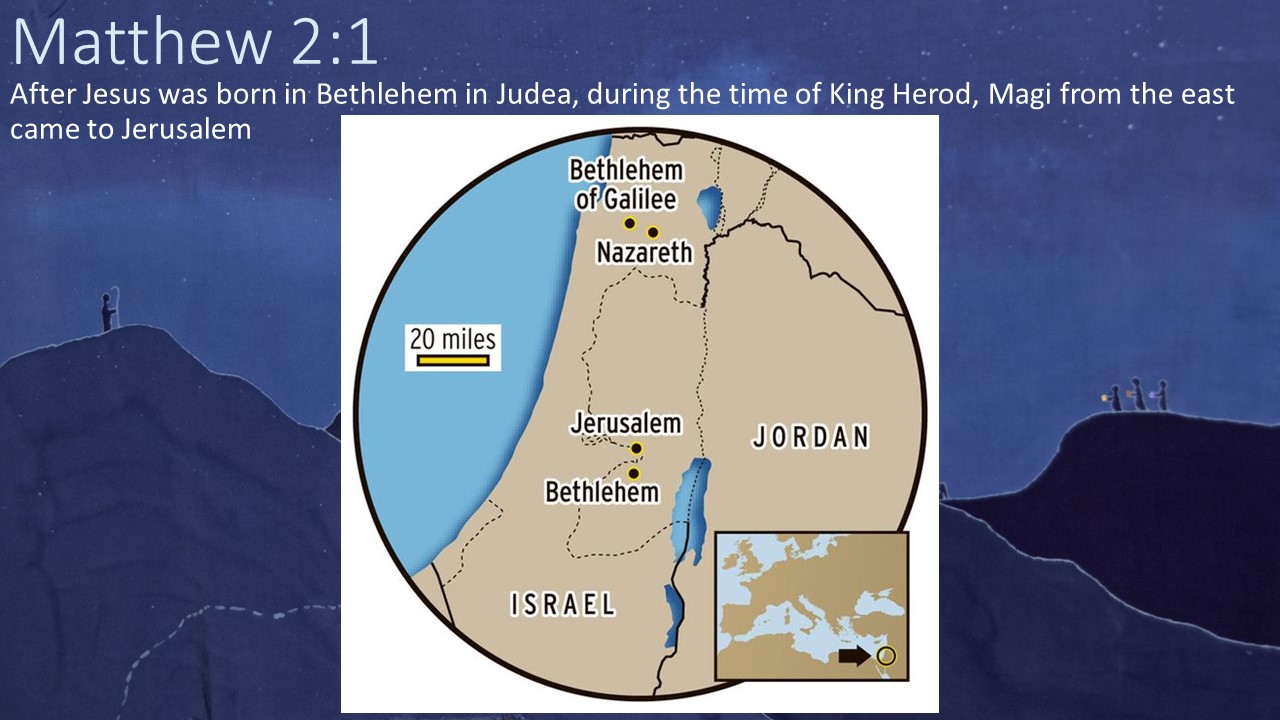
Did you know there are actually two towns named Bethlehem? There is a Bethlehem in the tribe of Zabulon that is mentioned in Joshua 19:15, and it’s not the same as the town of Bethlehem in Judea which is located about 6 miles from Jerusalem.
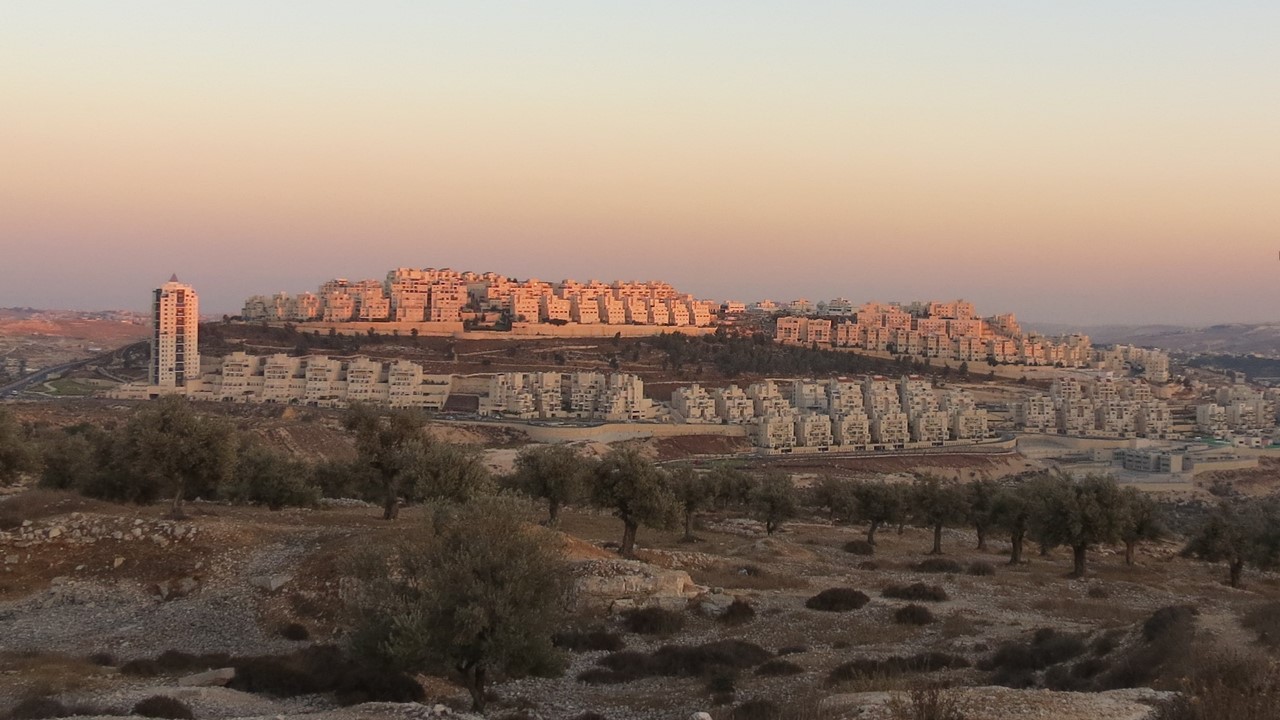
When I visited Israel 12 years ago, I didn’t go into Bethlehem, but I did get a chance to photograph it from a distance. It’s primarily a Palestine town now, and I understand that over the centuries the original site was destroyed and rebuilt several times. Today, the church doesn’t resemble the humble beginnings of our Lord. What I find most interesting about the land of Bethlehem is that this land was used for raising sheep. During Passover, Jews would select the best lambs to offer as a sacrifice at the Temple of Jerusalem.

This was during the time of King Herod – this is Herod the Great or Herod the Ascalonite, the son of Antipater. It’s interesting to me that he wasn’t completely Jewish, his ancestors were Edomites whose ancestors had converted to Judaism, and Herod was raised as a Jew. The lineage of Jesus is crucial to history and our salvation. Observant Jews today study certain rabbis who can trace their lineage to the tribe of Levi so they can say they came from “good stock”. Herod did not have such good lineage.

He was born around 74 B.C. and through a series of political manipulations with the Romans was appointed King of the Jews around 40 B.C. His dedication to the Jewish faith was always questioned, so he married a Jewish woman named Mariamne, but Herod already had a wife named Doris and a young son Antipater who were banished after his second marriage. Herod’s lifestyle was condemned by the observant Jews, but Herod had a habit of executing those who opposed him, including several members of his own family, including his second wife Mariamne. He ruled Jerusalem with the support of Rome for 37 years, and Jesus was born in the 35th year of Herod’s reign.
There was a remarkable atmosphere of anticipation that enveloped the world during the time of Jesus’ birth. Not just a sentiment confined to a small region; it was a widely held expectation that rippled across nations. The Roman historian Suetonius wrote about it around the time Jesus was born, noting, “There had spread over all the Orient an old and established belief that it was fated at that time for men coming from Judea to rule the world.” This wasn’t an isolated observation. Another Roman historian, Tacitus, echoed this anticipation, recording that there was a strong conviction that the east, particularly Judea, was destined to become powerful and that rulers from this region would eventually govern the entire world.

Even the Jewish historian Josephus, known for his detailed accounts in the Jewish Wars, confirms this prevailing belief among the Jewish people. He reports that around the time of Christ’s birth, there was a prevalent expectation among the Jews that a ruler would soon emerge from their land to reign over the entire earth. This collective anticipation among various cultures and historians points to a significant truth: the birth of Jesus was not just an ordinary event, but the fulfillment of a long-awaited promise, a promise that resonated not only within the confines of Judea but across the world.
We can pick up the story here after Jesus was born and the Magi from the East came to Jerusalem.
Matthew 2:3,
When King Herod heard this he was disturbed, and all Jerusalem with him.

Herod knew he had no legitimate right to be the king of the Jews, and fiercely defended his power, and a threat to Herod’s power also brought fear to Jerusalem for the power struggle that would ensue. The birth of Christ partially fulfilled the prophecy in Genesis 49:10,
The scepter will not depart from Judah, nor the ruler’s staff from between his feet, until he comes to whom it belongs and the obedience of the nations is his.
Herod was not of the tribe of Judah, so the scepter of the king did not belong to him.
Matthew 2:4-6
When he had called together all the people’s chief priests and teachers of the law, he asked them where the Messiah was to be born. “In Bethlehem in Judea,” they replied, “for this is what the prophet has written:
“‘But you, Bethlehem, in the land of Judah,
are by no means least among the rulers of Judah;
for out of you will come a ruler
who will shepherd my people Israel.’”

This prophecy is from Micah 5:2, and they’re explaining to Herod that this prophecy has already come true, and that magi are here to pay homage to Him. Herod likely gathered the priests and rabbis of the Sanhedrin, and in the NIV Herod sounds very nice, he asked them politely where Christ the Messiah would be born. I think it’s more of a demand; Herod is the chief of the Sanhedrin with a history of executing people he doesn’t like, and Herod wants to know if there’s any validity to this threat.
Matthew 2:7-8
Then Herod called the Magi secretly and found out from them the exact time the star had appeared. He sent them to Bethlehem and said, “Go and search carefully for the child. As soon as you find him, report to me, so that I too may go and worship him.”
I don’t think Herod’s being honest here, just sayin’. Herod meets with the magi privately and interrogates them for intel. No doubt he did this away from the Sanhedrin, for the Sanhedrin would understand exactly why Herod wants to know the time and place of the birth of Christ. He would understand that Jesus may be as old as two years old now, given the length of the journey from Persia.
Did I mention earlier that Bethlehem is only about 6 miles away? Don’t you think it’s odd that Herod know the fulfillment of prophecy is just a short distance, yet he sends nobody with the magi. Herod certainly didn’t want the Jews to know what the magi already did, that the king of the Jews was born. The Jews in Herod’s palace were likely to set up the newborn king as the new king of the Jews with the intention of overthrowing Herod.
Matthew 2:9-10
When they had heard the king, they departed; and, lo, the star, which they saw in the east, went before them, till it came and stood over where the young child was. When they saw the star, they rejoiced with exceeding great joy.
To me, it’s interesting that the Jews, though they knew prophecy, did not accompany the magi. Did the Jews even know the magi had been born? This passage seems to indicate that the star had reappeared – that “lo” in verse 9 is an expression of surprise and joy. The magi were gentiles from east of Israel, and no doubt overjoyed to have this star lead them to the child. The birth of the child is the first noel; the star itself is the first GPS navigation system.
Herod was not overjoyed; we read later in this chapter that the magi didn’t return to Herod has he had commanded, and Herod, furious that the magi didn’t identify the specific child he was looking for, ordered every child in Bethlehem under the age of two to be slaughtered. Herod’s order to massacre the male infants of Bethlehem, known as the Massacre of the Innocents, was a direct reaction to his fear. This event tragically aligns with Jeremiah’s prophecy about Rachel weeping for her children, symbolizing the relentless spiritual warfare surrounding Christ’s birth.
The evil of men and the horrors they commit to maintain their so-called grasp of power for a few more years is appalling. The magi, we’re told in Matthew 2:12,
And having been warned by God in a dream not to return to Herod, the magi left for their own country by another way.
That last line is meaningful to me. We all meet Jesus, and once we meet Him, we go another way. We are not the same.
The Christmas tradition of exchanging gifts probably is influenced by the story of the magi, but the real story of Christmas is not about the gifts of the magi or the gifts we give to one another, but the gift of God’s only son. When God gave us Jesus, He gave us everything Heaven had to give. Ephesians 1:3 says that God has blessed us with *every* spiritual blessing in Christ, like a special Christmas package that contains every blessing of God.
VII. Conclusion: The Lasting Impact of the Magi’s Journey
What did we learn today? It started with a simple question in Matthew 2:1-2,
“Where is He who has been born King of the Jews? For we saw His star in the east and have come to worship Him.”

The Magi, those wise scholars of East, embarked on a journey that was guided not just by a star, but by a rich understanding of prophecy and divine timing. They knew who they were seeking: the promised Messiah. They knew what they were looking for: the King of the Jews, the Savior of the world. They understood when to look, discerning the times through the study of Scripture. They knew where to find Him, guided to Bethlehem as foretold by the prophets. And they knew why they were searching: to worship Him who was born King of Kings and Lord of Lords. They brought gifts – expensive gifts – of gold, frankincense, and myrrh, symbolizing Jesus’ divine kingship, His priestly role, and His redemptive death.
In contrast, many in the town, including the religious leaders, missed the birth of the Savior. They were not actively looking, nor were they attuned to the signs and prophecies that pointed to His arrival. This serves as a reminder to us today. The Savior has already come; the greatest gift has been given. We know the who, what, when, where, and why. Christ Jesus, born in Bethlehem, came to save us from our sins, fulfilling the prophecies and offering Himself as the ultimate gift of love and salvation.
As we celebrate Christmas and the birth of Jesus, let us be like the Magi, actively seeking Jesus in our lives. James 4:8a says,
Come near to God and he will come near to you.
Jesus wants to be found by each and every one of us. We don’t need a star to guide us; we have the complete revelation of God in the Bible. In its pages, we find the story of Jesus, His teachings, His sacrifice, and His resurrection. We have the testimony of prophets, apostles, and countless believers through the ages. And we have the presence of the Holy Spirit, who guides and teaches us as we walk in faith.
And as we find Him, let us worship Him with the same reverence and joy as the Magi did. For in finding Jesus, we find the true meaning of Christmas.
For the unspeakable gift of His Son, may our hearts be filled with the wonder and joy of the first Christmas, and may the love of Christ be with us always. The story of the Magi inspires us to seek Jesus with the same dedication and to worship Him with the same reverence. Their journey encourages us to embrace Jesus Christ, recognizing Him as the fulfillment of every promise and the beacon of salvation for all humanity.
To God be the Glory, amen.

 Chasing the Wind
Leave a comment