
I. Introduction
Last week in 1 Peter 2:13-17, Peter challenged believers to demonstrate humility and respectful submission to all forms of human authority. Now, Peter shifts from general principles to specific, practical examples, beginning with one of the most difficult and sensitive contexts of submission: servants and their masters.
In 1 Peter 2:18-25 today, Peter addresses household servants – slaves – urging them to submit to their masters with all respect, not only to kind leaders but even to harsh ones. This instruction was given in a culture where slavery was widespread. There were an estimated 60 million slaves in the Roman Empire. Many early Christians were slaves, and Peter speaks into their situation. By respecting even unfair masters, comparable today to difficult employers or authorities, Christian servants could honor God’s name and bear witness through their humble conduct. Peter’s teaching continues the theme of submission for the Lord’s sake (see 1 Peter 2:13) – a radical call to endure hardship righteously as part of our Christian testimony.
II. Submission and Servanthood
Peter begins by addressing servants directly. 1 Peter 2:18 –
Slaves, in reverent fear of God submit yourselves to your masters, not only to those who are good and considerate but also to those who are harsh.
The Greek word for slaves here is “oiketai,” referring to household servants, possibly slaves or free workers closely tied to a household. Historically, this verse was tragically misused to justify slavery, particularly in 18th and 19th century America. Slaveholders claimed it was biblical for enslaved people to submit to masters as a divine endorsement of slavery. One prominent example is the 1850 work by Thornton Stringfellow, a Southern minister who argued biblically in defense of slavery, suggesting that verses calling for servants to submit to masters demonstrated divine approval of the institution. However, this misuse contradicts the broader biblical message emphasizing the inherent dignity and worth of all people, as seen clearly in passages like Galatians 3:28:
There is neither Jew nor Greek, there is neither slave nor free, there is neither male nor female; for you are all one in Christ Jesus.
Peter’s instruction was intended to teach early Christians how to live honorably in a harsh, unjust world—not to condone or perpetuate oppression. Furthermore, Paul explicitly advocated for slaves to seek freedom when possible – 1 Corinthians 7:21-23 –
Were you called as a slave? Do not let it concern you. But if you are also able to become free, take advantage of that. For the one who was called in the Lord as a slave, is the Lord’s freed person; likewise the one who was called as free, is Christ’s slave. You were bought for a price; do not become slaves of people. Brothers and sisters, each one is to remain with God in that condition in which he was called.
The apostolic teaching of the New Testament consistently promotes justice, equality, and the humane treatment of all people, entirely contrary to the abuses of slavery practiced in 19th-century America.
Peter instead is calling people to embrace whatever role God has created for them. Each of us is uniquely created by God with specific identities, roles, and purposes. Authentic freedom and fulfillment are found when we accept and live faithfully into the role God has assigned to us, even if it brings discomfort, challenge, or sacrifice. Modern ideology of transgenderism and progressivism, on the other hand, asserts that individual can reject the roles and identities given to them by their Creator and instead define our own role. In other words, pride. Trying to rewrite God’s individual plan for each of us is the surest way to struggle, unhappiness, and ultimately failure in this life and the next. Attempting to rewrite one’s God-given identity isn’t genuine freedom, but rather an act of rebellion against the very nature of our created existence. True freedom lies in embracing—not resisting—the role God designed specifically for us, trusting that even in suffering or difficulty, God’s purpose is revealed and fulfilled in ways beyond our understanding.
We might resist the idea of submission because it feels unjust or uncomfortable, but Peter, encourages us to see submission—even in harsh circumstances—as a meaningful way to embrace the role God has placed us in. Instead of passively enduring difficulty, we actively choose submission out of reverent trust, recognizing that God often shapes us profoundly through the roles—and trials—He allows us to experience.
Discussion: How does “made in God’s image” inspire us to treat one another? How do we embrace the role God created for us and for others?
III. Commendable Suffering
Peter expands on why submission matters, 1 Peter 2:19-20:
For it is commendable if someone bears up under the pain of unjust suffering because they are conscious of God. But how is it to your credit if you receive a beating for doing wrong and endure it? But if you suffer for doing good and you endure it, this is commendable before God.
Peter introduces the idea of “commendable” suffering – the kind of suffering that finds favor with God. The Greek word translated as “commendable” is χάρις (charis), often translated as “grace,” indicating that such suffering is a demonstration of God’s favor and brings with it divine approval. This type of suffering occurs precisely because the believer has chosen obedience to God over conformity to worldly expectations.
Not all suffering falls into this category. Peter helps us distinguish between three types of suffering, clarifying what God values:
- Justified Suffering (Deserved Consequences): This is the pain or discipline we experience as a direct result of our own sin or wrongdoing. If we do wrong and suffer punishment for it, that is simply justice at work, not something that earns us any spiritual credit. Enduring consequences for our mistakes, while perhaps necessary, is not what Peter calls “commendable” – it’s expected, since we brought it on ourselves.
- Self-Inflicted Suffering: This refers to hardships we impose on ourselves unnecessarily – for example, harming our own bodies or taking on extreme ascetic practices in an attempt to earn God’s favor. Peter implies that such self-made suffering is not pleasing to God. God isn’t looking for us to manufacture pain for ourselves like a “monastic hermit” flogging his body. There’s no virtue in suffering itself when we cause it by our own misguided actions or fanaticism.
- Commendable Suffering (Unjust Suffering for Doing Good): This is the suffering God commends – when we endure unfair treatment, persecution, or pain even though we have done nothing wrong. Peter says “if when you do what is right and suffer for it and you endure it, this finds favor with God”. In other words, patiently enduring injustice because of our conscience toward God is praiseworthy. This kind of suffering is commendable because it echoes Jesus’ own example of innocence enduring cruelty. It demonstrates faith in God’s justice (since we don’t retaliate or despair) and a commitment to righteousness no matter the cost. Suffering for doing good, with a trusting attitude toward God, is “grace” in God’s sight (v.19) – an act of worship and obedience.

Peter’s clarification is important: suffering in itself isn’t automatically virtuous. Only when we suffer for the sake of Christ or for doing right – and bear it with godly patience – does it become “thankworthy” before God. If we suffer due to our own faults, we should repent, and if we invent our own suffering, we gain nothing. But if we undergo hardship for Christ, God sees and favors that enduring faith.
Discussion: Can you think of a time when you or someone you know endured unjust treatment for doing the right thing
Can you name an example of justified, self-inflicted, or commendable suffering?
IV. Christ, Our Example
Peter next points us to Jesus Christ as the ultimate model for how to handle unjust suffering, 1 Peter 2:21-23:
To this you were called, because Christ suffered for you, leaving you an example, that you should follow in his steps. ‘He committed no sin, and no deceit was found in his mouth.’ When they hurled their insults at him, he did not retaliate; when he suffered, he made no threats. Instead, he entrusted himself to him who judges justly.
Peter draws directly from Isaiah 53, describing the Jesus Christ as the ultimate model for how to handle unjust suffering.
Early Christians understood the word “example” to mean a writing-copy or stencil that children trace when learning to write. Similarly, we are called to trace the letters of our lives over the template of Jesus’ life. He set down footsteps of patient suffering, and we are to follow “step by step” in those footprints.
What did Jesus do? Jesus was completely innocent, yet He suffered false accusations, insults, and ultimately crucifixion. Instead of responding with anger or revenge, Jesus entrusted Himself to God the Father who judges justly. True strength in suffering is shown by self-control, truth, and trust in God, rather than fighting back or despairing.
Throughout Scripture, God has given us numerous examples of individuals who endured suffering precisely because they were faithful to Him. The prophet Jeremiah faithfully proclaimed God’s message to Judah, warning the people of impending judgment and calling them to repentance. Yet, instead of honoring his courage, the people mocked, imprisoned, and mistreated him (Jeremiah 20:2; 38:6). Likewise, the apostles Peter and John, as recorded in Acts 5:40-41, were flogged by Jewish authorities simply because they preached in the name of Jesus. Remarkably, they left rejoicing, considering it a privilege to suffer disgrace for Christ.
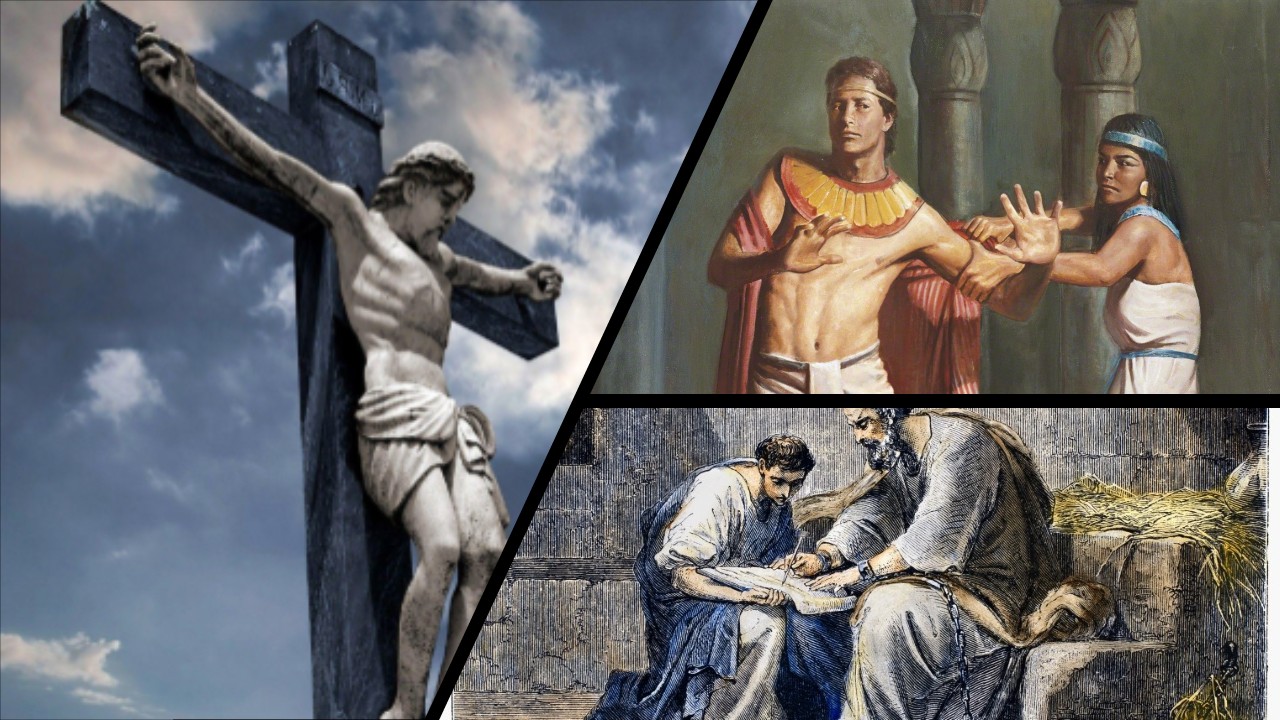
We also see commendable suffering in the experiences of Joseph in Genesis. Joseph did nothing wrong when he refused the advances of Potiphar’s wife, choosing integrity over temptation. His reward was imprisonment under false accusations (Genesis 39:6-20). Yet Joseph faithfully endured, believing that God’s purposes were being worked out through his suffering. His steadfastness was ultimately vindicated, as God used Joseph’s faithfulness and endurance to preserve the lives of countless people during a devastating famine.
In the New Testament, the Apostle Paul also provides a powerful testimony of commendable suffering. He endured beatings, shipwrecks, imprisonment, and intense persecution for preaching the gospel, yet continued to serve Christ joyfully (2 Corinthians 11:23-30). Paul expressed clearly in Philippians 1:29 that suffering for Christ is not merely an unfortunate circumstance but a privilege:
For it has been granted to you on behalf of Christ not only to believe in Him but also to suffer for Him.
Even today, believers around the world continue to suffer commendably for their faith. In places where Christianity is heavily restricted, like China, Iran, or North Korea, believers courageously gather for worship despite the risk of arrest, imprisonment, or worse. Modern Christians who lose job opportunities, relationships, or endure ridicule simply for standing firm in their biblical convictions also reflect this commendable suffering.
Ultimately, as Paul reminds us in Philippians 3:10, believers who patiently endure suffering for righteousness partake in the “fellowship of His sufferings,” becoming more closely united with Christ. This is not meaningless suffering, but a sacred participation in the redemptive work and life of our Savior.
Discussion Question: What is your natural reaction to being treated unfairly by someone in authority? How does Peter’s instruction challenge that reaction?
V. By His Wounds, We Are Healed
Peter continues in verse 24:
He himself bore our sins in his body on the cross, so that we might die to sins and live for righteousness; ‘by his wounds you have been healed.’
In 1 Peter 2:24, the phrase “by His wounds you have been healed” has sparked considerable discussion among theologians. The Greek word for “healed” used here is ἰάομαι (iaomai), meaning to cure, heal, or restore. This term appears consistently in the New Testament in contexts describing physical healing of disease or disability (for instance, Matthew 8:8, Luke 8:47), but it also conveys a broader meaning that points toward spiritual healing and restoration.
Peter directly quotes Isaiah 53:5 to illustrate that Jesus’ suffering had a redemptive purpose: “He Himself bore our sins in His body on the tree, so that we might die to sins and live to righteousness; by His wounds you have been healed”. Christ’s wounds bring us spiritual healing – the forgiveness of sins and the power to live a new life. Though our own suffering cannot atone for sin as Christ’s did, when we suffer for doing right we are participating in the pattern of Christ. We learn obedience and humility through what we endure, just as Jesus “learned obedience through what He suffered.” Hebrews 5:8 says this about Jesus’ suffering –
Although He was a Son, He learned obedience from the things which He suffered.
Importantly, Jesus’ story did not end in defeat: God vindicated Him through the Resurrection. In the same way, we endure present injustices knowing that God will ultimately vindicate the righteous. We can persevere without revenge because we trust God’s perfect justice and timing.
In short, Peter emphasizes eternal healing as central, secured by Christ’s sacrifice on the cross, but this eternal healing profoundly shapes our temporal lives as we walk faithfully through the challenges of this world.
VI. Jesus, Our Shepherd and Overseer
Peter concludes in verse 25 by quoting Isaiah 53 again:
For you were like sheep going astray, but now you have returned to the Shepherd and Overseer of your souls.
Sheep often wander, vulnerable to danger. Spiritually, we too easily stray from God’s protection, but through Christ’s sacrifice, we have returned to Him.

In verse 25, Peter describes Jesus as the Shepherd and Overseer of our souls, again echoing Isaiah 53. Jesus, our suffering Savior, is also our Shepherd – He watches over us, especially in our trials. His experience on the cross assures us that He understands our pain and will guide us through it. A shepherd leads his flock to safe pastures, guards against predators, and searches for those who wander astray (John 10:11-15). Jesus, as the Good Shepherd, knows each of us personally and is deeply invested in our spiritual well-being. He nurtures, restores, and guides us, gently and patiently drawing us back when we stray.
The title Overseer, on the other hand, conveys authority, vigilant supervision, accountability, and oversight. An overseer is tasked with responsibility, evaluation, correction, and the preservation of order and purpose. While a shepherd emphasizes relational warmth, an overseer emphasizes structured care, leadership, and the responsibility of guiding a community toward a specific goal.
Peter deliberately places these two titles together to reveal the complete nature of Christ’s leadership in our lives. Jesus is not only a compassionate Shepherd who personally tends to our spiritual and emotional needs, but also a wise and just Overseer who holds authority over our lives, instructing and correcting us according to God’s eternal plan. These two roles complement each other beautifully, reassuring believers that Jesus leads us with both grace and truth, mercy and righteousness, compassion and discipline.
Thus, in our suffering or uncertainty, we find both gentle comfort and firm guidance in Christ. The Shepherd draws close to us in our pain, offering personal healing and restoration. The Overseer ensures that we remain on the path God has intended for us, safeguarding our spiritual health through accountability and instruction. Together, these dual roles assure us that we are never abandoned to wander aimlessly. Instead, we are lovingly guided, watched over, and cared for by the One who both intimately understands us and sovereignly oversees our souls.
Peter’s encouragement is clear: suffering does not mean abandonment by God. Rather, through suffering, we draw closer to Christ, who intimately understands unjust treatment and who lovingly guides us through it.
VII. Conclusion: Following Christ Through Suffering
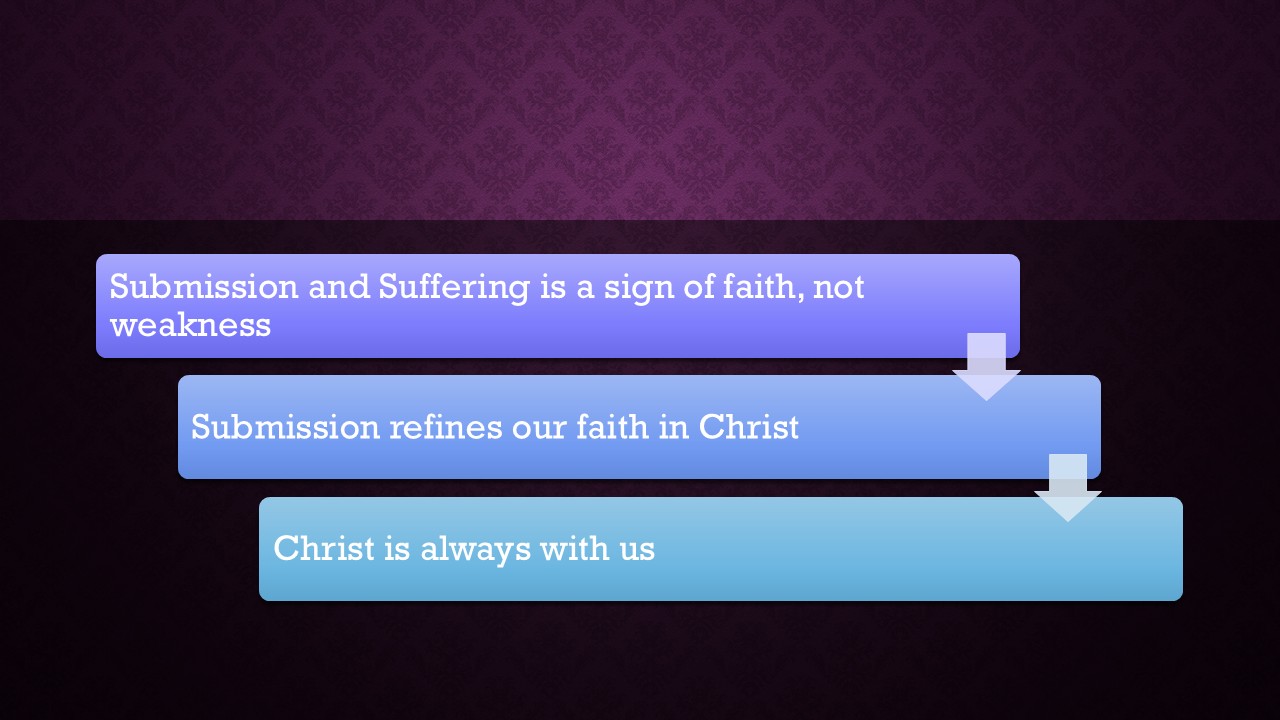
In 1 Peter 2:18-25, we’ve learned that submission and suffering, when done in imitation of Christ, is not weakness but spiritual strength. Suffering unjustly is never easy, yet Peter calls us to respond patiently and faithfully, following the example of Jesus who endured mistreatment without retaliation. When we respond this way, we not only deepen our personal relationship with Christ but also provide a powerful testimony of His transformative power at work within us.
The best summary and purpose I found of our scripture today is actually in James 1:12:
Blessed is the one who perseveres under trial because, having stood the test, that person will receive the crown of life that the Lord has promised to those who love him.

As we face injustice, trials, or unfair treatment, this promise offers encouragement. Our suffering is not meaningless; it has purpose, significance, and an eternal reward. The “crown of life” symbolizes the ultimate affirmation from God Himself, granted to those who persevere faithfully through hardships.
We can trust through all difficulties that Christ, our Shepherd and Overseer, guides and watches over us closely. He understands our pain, strengthens our endurance, and promises that our faithful perseverance will ultimately lead to lasting joy and glory in His presence.
To God be the Glory.

 Chasing the Wind
Leave a comment