
I. Introduction
In our lifelong journey, we all want to be better than we are.
We want to be healthier. We want to be taller. We desire deeper social connections, greater financial stability, more meaningful friendships, and perhaps even a nicer car.
And once we become Christian, we want to be a better Christian. But I sometimes think we equate being a better Christian with being a better person. And then we look around at all the perfect people in church and think, “I wish I could be like them, but there is so much garbage and filth in my past, I can never be as good as they are.”
But that perception is flawed. The truth is that Christians are not inherently better people simply because we have Christ; rather, we are blessed because Christ has us. Christ did not suffer, die, and rise again merely so we could make modest improvements to our existing selves. He conquered death to make us entirely new creations—fully transformed, reborn, and eternally alive.
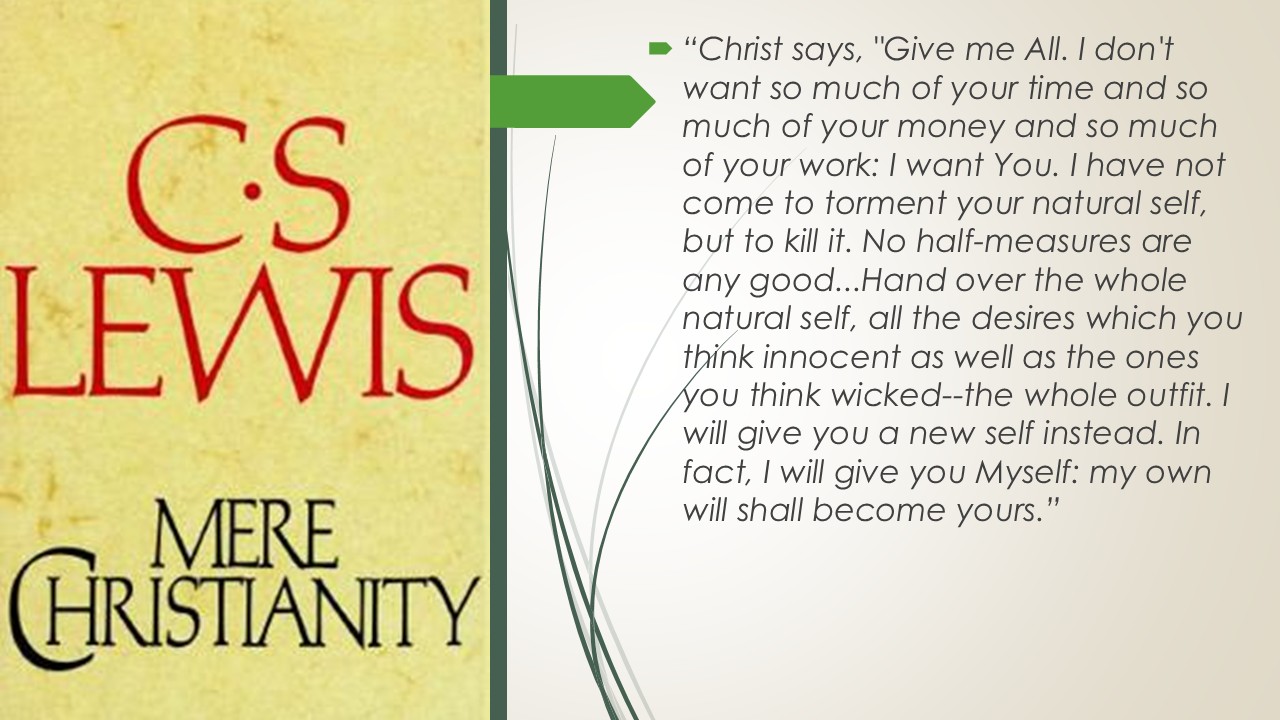
C.S. Lewis captures this idea in his book “Mere Christianity” when he says,
“Christ says, “Give me All. I don’t want so much of your time and so much of your money and so much of your work: I want You. I have not come to torment your natural self, but to kill it. No half-measures are any good…Hand over the whole natural self, all the desires which you think innocent as well as the ones you think wicked–the whole outfit. I will give you a new self instead. In fact, I will give you Myself: my own will shall become yours.”
Being a better Christian, therefore, involves wholly embracing and living out the resurrection power of Christ that has already transformed us.
Peter continues his writing to the early church in 1 Peter 4, talking to those who have recently given their lives to Christ. There is an initial transformation of the young Christian occurring; how they one lived as enemies of God and slaves to their own sin, but now chose to be slaves of Christ and begin their eternal lives. Their eternal lives begin, not after death of the body, but the death of the old life. We are “born again” into a new family.
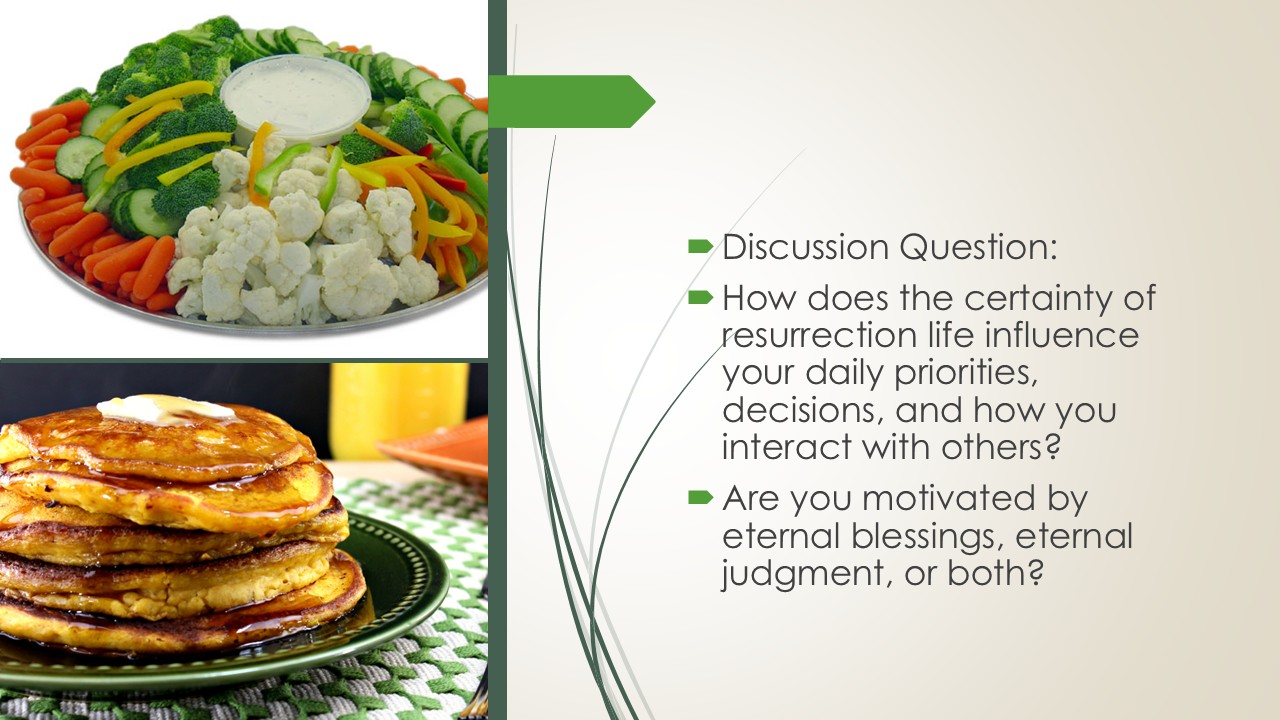
But this can be a difficult transition; some new Christians may look back at their old lives and see their old friends partying and enjoying their old sin. Let’s face it; sin is fun. Satan doesn’t entice us to the dark side with healthy vegetables. He entices us with pumpkin cream cheese pancakes.


Let’s begin with the first part of our scripture today. We are in 1 Peter 4, and we have 6 verses to cover.
II. We Are Done with Sin, 1 Peter 4:1
1 Peter 4:1,
Therefore, since Christ suffered in his body, arm yourselves also with the same attitude, because whoever suffers in the body is done with sin.
The chapter begins with “therefore” and when you see a “therefore,” we have to ask ourselves what it is there for. This refers back to 1 Peter 3:18 which describe the life of Christ,
For Christ also suffered once for sins, the righteous for the unrighteous, to bring you to God. He was put to death in the body but made alive in the Spirit.
This was the purpose of Christ, to save lost sinners like you and me. Christ’s suffering was not meaningless; it secured our forgiveness and gave us new life in three powerful ways:
- Fulfillment of the Law: Christ perfectly fulfilled Old Testament sacrificial requirements as the spotless Lamb of God. His sacrifice ended the need for further sacrifices.
- Propitiation: Second, Christ died as a propitiation for our sins. I confess I heard this term for years before I finally studied it, and it’s just a big word for a simple concept. The bible says that God is a righteous and holy God, and God will not allow sin to go unpunished. It’s not in His holy nature to say, “well, boys will be boys, I think I’ll let that one slide.” No, God is a holy and righteous God, and God will punish every sin. The wrath of God is a terrifying righteous thing. And over the centuries, man has certainly given God plenty to be angry about. None of us are innocent; Romans 3:23 says all have sinned and fallen short of the glory of God. The Good News, the gospel itself, is that this wrath has already been satisfied when Jesus was put to death on the cross. The wrath of God was satisfied when God’s own son was put to death. That is what propitiation is – God’s wrath, satisfied, so that we may have reconciliation and peace with God.
- Substitutionary Atonement: A guilty man cannot take the punishment for anther guilty man. Each must serve their own. Jesus, perfectly sinless, had no punishment of His own, and He took upon Himself the punishment we deserved, granting us His righteousness in exchange for our guilt. As God, Jesus can take away the sins of you and me. Jesus can take away the sins of the world.
So this first “therefore” in 1 Peter 4 is powerful. The resurrection of Christ stands as the ultimate victory over sin and death, obtaining a righteousness we cannot achieve on our own. Peter urges us to “arm yourselves” (Greek: ὁπλίζω, hoplizó), emphasizing spiritual readiness and vigilance. This attitude encourages us to fully embrace our resurrected identity and decisively renounce our sinful past. Because Christ has conquered sin, we now have the power and authority to declare ourselves finished with sin’s control.
Therefore, we should arm ourselves, we should put on the whole armor of God, and put our sinful past behind us. We are done with sin. I say again, we are done with sin.
Peter goes on in 1 Peter 4:2,
As a result, they do not live the rest of their earthly lives for evil human desires, but rather for the will of God.
Believers are encouraged to live with a purpose, to view our remaining earthly lives through the lens of eternity. Peter contrasts two ways of living—pursuing human desires versus pursuing God’s will. The transformation in Christ redirects our ambitions from temporary pleasure to eternal purpose. The radical shift away from past sinful habits marks the authenticity of a believer’s faith and spiritual maturity.
And as Peter said in verse 4:1, we are done with sin. We are done with sin.
Discussion Question:
What does it look like in practical terms to live “for the will of God” instead of for human desires? How has this looked different in your life before and after coming to Christ?
We might be done with sin, but sin might not be done with us. Our old lives, our old friends, our old decisions, our old life choices want to follow us. 1 Peter 4:3,
For you have spent enough time in the past doing what pagans choose to do – living in debauchery, lust, drunkenness, orgies, carousing and detestable idolatry.
But we are done with sin, and we have armed ourselves in the Armor of God, have we not? Our old friends are still living that life, and our old friends are surprised when we say we are done with sin. And when we say, “no thanks, I have a new life in Christ,” they taunt us, they heap abuse on us. Call us names and ridicule us.
Peter explicitly describes the lifestyle that his readers have left behind. He lists specific sins common in pagan cultures, emphasizing the extensive moral corruption from which believers have been redeemed. By explicitly naming these behaviors, Peter underscores the distinct and clear break required for believers, reinforcing the seriousness of their commitment to Christ.
1 Peter 4:4,
They are surprised that you do not join them in their reckless, wild living, and they heap abuse on you.
Choosing resurrection life inevitably brings social repercussions. Old friends and acquaintances might react negatively, confused or even hostile toward our changed behaviors. The Greek term “heap abuse” (βλασφημοῦντες, blasphēmountes) vividly describes the ridicule and hostility believers face. Even amid such external pressures and internal struggles, our new identity in Christ stands firm, overshadowing our past failures and protecting us from condemnation.
And let’s be honest – when that taunting and name-calling comes from friends, it’s hard. But the worst part is that the words echo in our old sinful selves, and we taunt and ridicule ourselves. “Of course I’m not good enough to hang with those perfect Christians and their perfect spouses and their perfect 3.2 children. I’m a drunkard, carouser, idolater. Don’t they know what I’ve done?” We put ourselves in a self-induced purgatory, too good to be with our old sinful friends, but not good enough to be with our new perfect Christian friends.
That’s Satan’s lies. Our God is bigger than that. Our God is bigger than any sinful thing we have ever done. Our God is omniscient, seeing into our black sinful hearts. Our God is omnipotent and brought His wrath upon our sin and utterly destroying it, separating us from our sin as far as the east is from the west. Our God saw the worst we had to offer, and yet loved us so much and decided we were worth saving. He sent His son to die for those sins so we don’t have to live them anymore. We are free of that past. And I don’t mean just the past from 20 years ago, but the past all they up to this morning until the moment you walked into this class. You are an adopted child of the God, the Creator of All. Your past is gone, yesterday is a closed door and you don’t live there anymore.
You see, we look in the mirror and we see what we have done. But God looks at us, and He sees what He has done. He has done a miracle in us.
Discussion Question:
Do you ever feel the draw of your old life calling you? Old friends, familiar temptations, personal weakness? (If you do, it encourages other believers that may feel the same.) How do you “arm yourselves” against that old life?
III. Judgement Day, 1 Peter 4:5-6
Our primary motivation for living our new eternal lives is gratitude and thanksgiving for what the Lord has done for us while we were still yet sinners.
Amazing grace, how sweet the sound that saved a wretch like me. We know that Judgement Day is coming. 1 Peter 4:5,
But they will have to give account to him who is ready to judge the living and the dead.
Peter turns from social repercussions to eternal consequences, reminding believers that all will ultimately face God’s judgment. God’s impartiality means everyone will be held accountable. Resurrection Sunday underscores God’s ultimate victory over injustice and sin, assuring believers that our final vindication rests with God. For believers, vindication means that despite earthly misunderstanding, ridicule, or persecution, we will ultimately be recognized and rewarded by God Himself, our faithful and righteous judge. Christ, our resurrected Lord, is our advocate, securing our eternal destiny and declaring us righteous in God’s eyes through His sacrifice. In contrast, non-believers face impending judgment without such advocacy if they continue to reject God’s grace.
1 Peter 4:6
For this is the reason the gospel was preached even to those who are now dead, so that they might be judged according to human standards in regard to the body, but live according to God in regard to the spirit.
The preaching of the resurrection gospel brings eternal life, transcending physical death. Although believers may have been judged harshly by worldly standards, their spiritual life is secure in Christ. Peter reassures believers that death does not annul the promises of God but rather fulfills them, ensuring eternal life with Him.
Discussion Question:
How does the certainty of resurrection life influence your daily priorities, decisions, and how you interact with others?
Are you motivated by eternal blessings, eternal judgment, or both?
The truth is, sin doesn’t disappear overnight. Even though we are new creations in Christ, the habits and temptations of our old lives don’t always vanish. We often ask ourselves, “If I’m saved, why do I still struggle with this?” The answer is: we are still being sanctified—daily transformed as we walk in obedience.
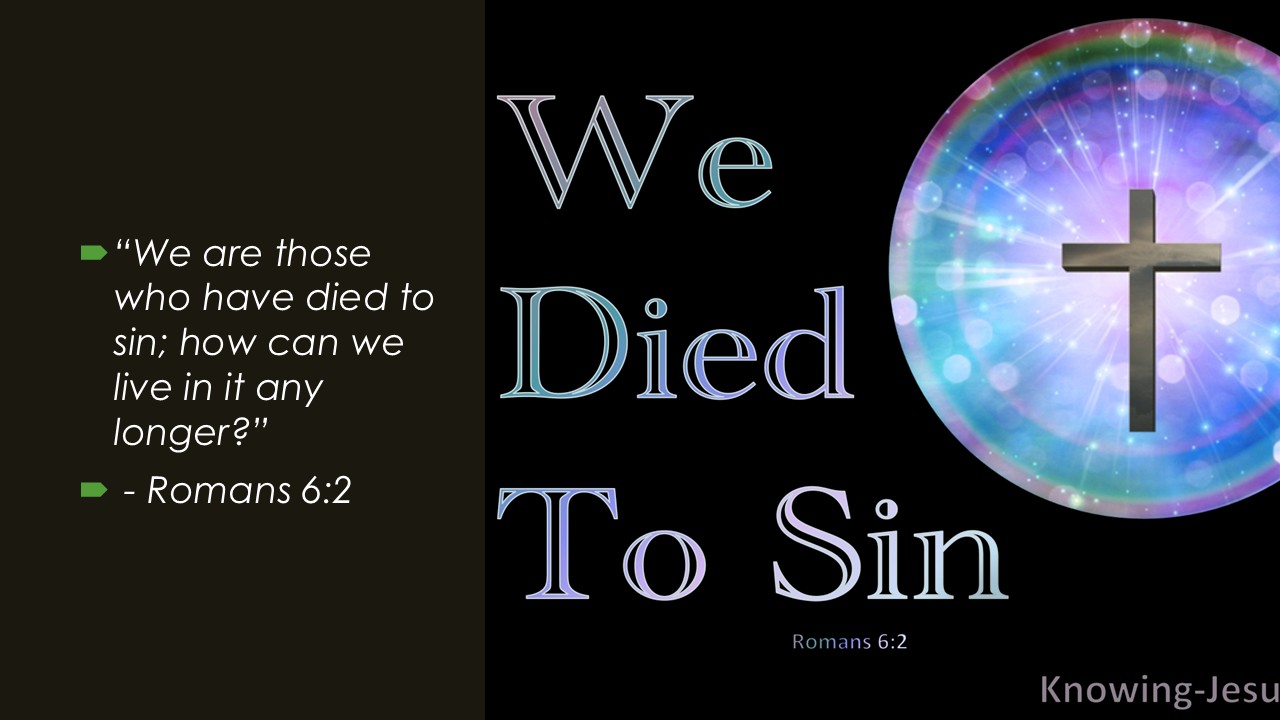
Romans 6:1-14 offers powerful instruction on this struggle. Paul writes in Romans 6:2,
“We are those who have died to sin; how can we live in it any longer?”
He explains that through baptism, we are united with Christ in His death and resurrection. Our old self was crucified with Him so that the body ruled by sin might be done away with.
Paul urges us in Romans 6:12-13,
“Do not let sin reign in your mortal body so that you obey its evil desires… offer yourselves to God as those who have been brought from death to life”.
That’s our call—to remember who we are, count ourselves dead to sin and alive to God, and present every part of ourselves for righteousness.
Peter reminds us that judgment is coming, and with it, eternal reward or loss. This eternal truth changes how we live now. Paul says in Colossians 3:1-4:
“Set your hearts on things above… not on earthly things. For you died, and your life is now hidden with Christ in God.”
This eternal mindset reframes our decisions, our relationships, and even our suffering. We live not for this world, but for the One to come.
IV. Conclusion
Our sanctification process is to be a better Christian daily. We look in that mirror and see what we’ve done or what we’ve said, but God sees what He has done. We want those two visions to be the same; we want to see what God sees. And we cannot do this on our own, for we battle daily with our sinful nature and the principalities of this world.
Some days, I hate to admit, that old sinful nature is going to get the upper hand briefly, and we are going to say or do something that hurts somebody. It will be unloving because we didn’t fill ourselves up with goodness, and we will reflect badly on ourselves and be a poor ambassador for Christ.
But that is not the end of the story. Because Christ is risen, we do not walk in defeat—we walk in victory. Even when we stumble, His grace picks us up. Even when we falter, His Spirit empowers us to press on. We are not defined by our worst moment, but by His greatest one—the empty tomb. We are forgiven, redeemed, and continually transformed into His image. As Paul reminds us in Philippians 1:6, “He who began a good work in you will carry it on to completion until the day of Christ Jesus.”
So let us live for God, because God died for us.
To God be the glory.

 Chasing the Wind
Leave a comment