I. Introduction
Initial Discussion: Do you ever get discouraged? What situation have you been in that discouraged you—job loss, health issues, family matters?
When my last company a few years back started downsizing, the days were discouraging. I said goodbye to co-workers daily. They stop by my office, shake my hand, say it’s been nice working together, and do I know anybody that’s hiring. As hard as it is to say goodbye, it pales next to being the person that’s leaving the company. I know, I’ve been there.
How do you manage during difficult times? As a church and as a class, we teach reliance on the Lord through good times and bad, but how do you do that when you’re wondering where God is in your life. He made promises to his people, didn’t He? Well, where is He when life feels upside down?
We don’t have to look far to find reasons for discouragement today. We see instability in the economy, corruption in politics, war and unrest around the world, and moral confusion in our culture. Families are breaking down, churches are struggling, and Christian values often seem ignored or even ridiculed. Just like in the days of the psalmist, we too are tempted to ask, Where is God when the wicked seem to be in charge?
Today we turn to Psalm 125, where we’ll see how the Lord provides strength in troubled times. Last week in Psalm 62 we studied how God gives personal rest for our souls in the midst of trouble. Psalm 125, however, shifts the focus. It is what scholars call a community psalm—it speaks not just to the individual’s heart but to the entire covenant people of God. It addresses the discouragement God’s people feel together when injustice seems to prevail, when the righteous suffer under the rule of the wicked, and when it looks as though God is absent.
But this psalm reminds us that God is never absent. He is always at work—both in our troubled souls and in the corrupt circumstances we find ourselves living through. He surrounds His people then, and He surrounds His people now.
II. Trust in the Lord
Those who trust in the LORD are like Mount Zion,
which cannot be shaken but endures forever.
As the mountains surround Jerusalem,
so the LORD surrounds his people, both now and forevermore.
The scepter of the wicked will not remain over the land allotted to the righteous, for then the righteous might use their hands to do evil.
Do good, O LORD, to those who are good, to those who are upright in heart.
But those who turn to crooked ways the LORD will banish with the evildoers.
Peace be upon Israel.
The psalm begins: “Those who trust in the Lord…” The Old Testament gives us several ways to describe our relationship to God:
- We are to fear Him, recognizing that God has both the authority and the right to punish sin.
- We are to love Him, embracing His mercy and grace that make us His children.
- We are to know Him, walking in personal intimacy with Him and learning His ways.
- And here, we are called to trust Him, to rest confidently in the reality that no matter what our circumstances look like, He is in control.
The Hebrew word for “trust” (בָּטַח, bāṭaḥ) carries the sense of reliance, confidence, and security. It is not passive but active confidence that God’s promises are reliable.

Old Testament Examples of Trust
- David and Goliath (1 Samuel 17): While the entire army trembled, David trusted God to give victory. His trust was not in sword or spear but in the Lord’s name.
- Hezekiah and the Assyrians (2 Kings 18–19): Surrounded by the vast Assyrian army, Hezekiah prayed to God rather than surrendering to fear. God struck down the enemy in one night.
- Israel in the wilderness (Numbers 13–14): When the spies returned from Canaan, most refused to trust God’s promise, focusing instead on the giants in the land. Their failure to trust kept an entire generation out of the Promised Land.
These examples remind us that trust is not theoretical. Trust determines whether we step forward in obedience or shrink back in fear.
Trust Echoed in Scripture
God’s Word consistently reinforces the call to trust Him:
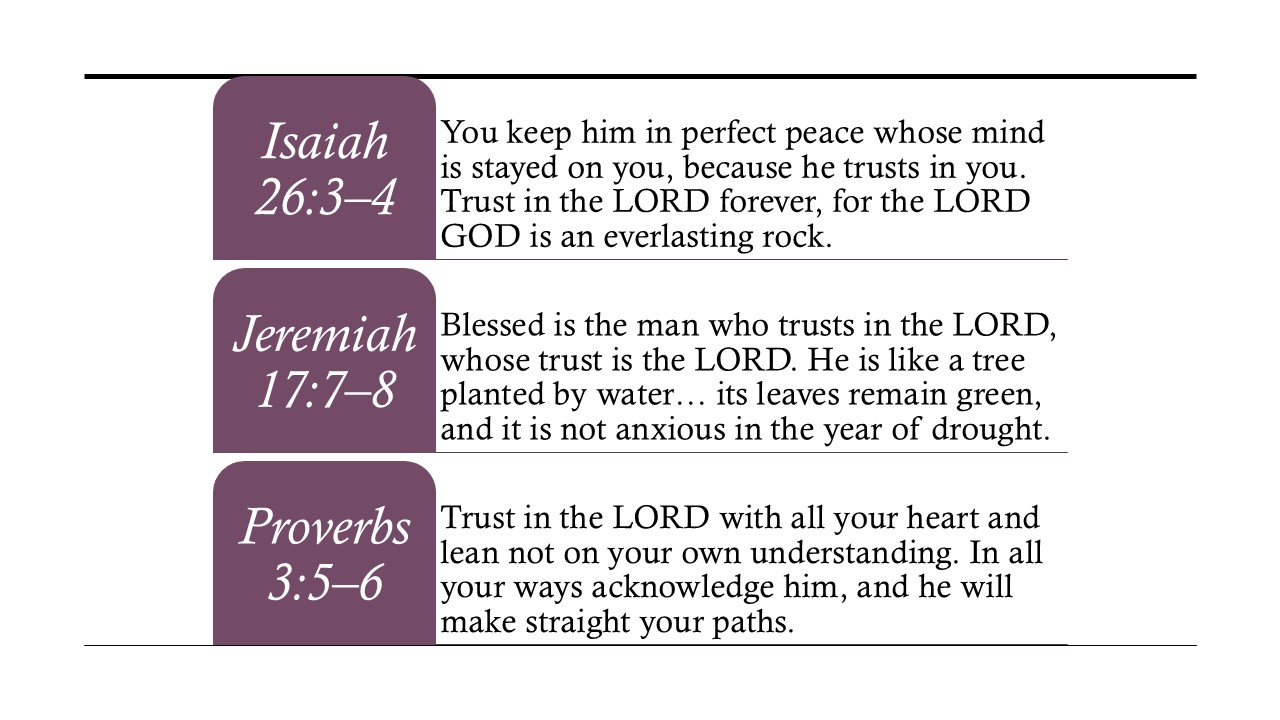
- Isaiah 26:3–4: “You keep him in perfect peace whose mind is stayed on you, because he trusts in you. Trust in the LORD forever, for the LORD GOD is an everlasting rock.”
- Jeremiah 17:7–8: “Blessed is the man who trusts in the LORD, whose trust is the LORD. He is like a tree planted by water… its leaves remain green, and it is not anxious in the year of drought.”
- Proverbs 3:5–6: “Trust in the LORD with all your heart and lean not on your own understanding. In all your ways acknowledge him, and he will make straight your paths.”
Misplaced Trust
The challenge, then, is not whether we will trust—it’s what we will trust. People often lean on:
- Money and possessions — financial security that can disappear overnight.
- Politics and leaders — governments rise and fall, and even the best leaders disappoint.
- Health and strength — our bodies are frail, subject to sickness and age.
- Ourselves — self-reliance works only until life brings something we cannot control.
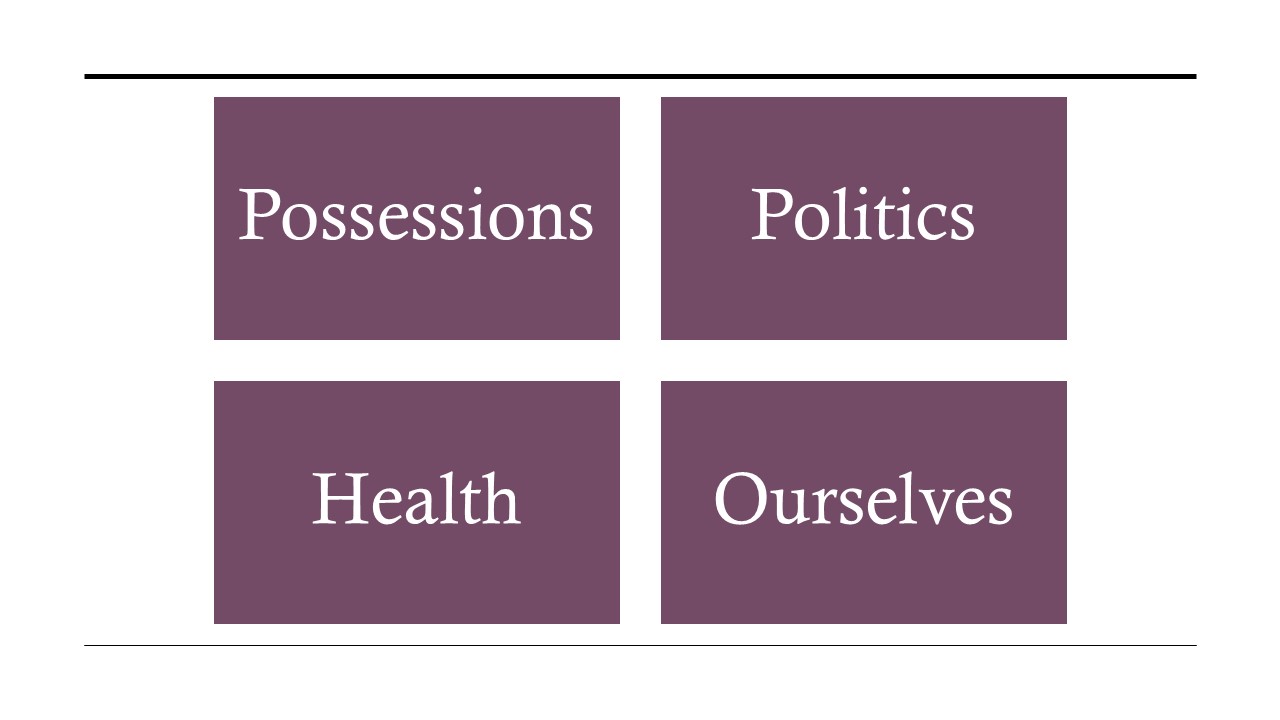
Psalm 125 reminds us: trust in the Lord alone is unshakable. Everything else will fail us.
Trust in Hard Times
Do we only trust the Lord in good times? What about when circumstances unravel? Does hardship mean God has stopped being trustworthy?

To answer that, consider the testimony of Louisa Stead. In the late 1800s, Louisa, her husband, and daughter were enjoying the beach at Long Island, New York, when they heard a young boy crying for help in the water. Louisa’s husband ran to rescue him, but in panic the boy dragged him under, and both drowned. Louisa and her daughter were left without a husband and father. Out of that tragedy, Louisa penned words that still echo today:
’Tis so sweet to trust in Jesus, just to take Him at His word,
Just to rest upon His promise, just to know, “Thus saith the Lord.”

Louisa and her daughter later became missionaries in South Africa, and she lived the rest of her life leaning on the Lord. Her story reminds us: trust is not tested in easy days, but in the hardest ones.
Trust in the Promise of Christ
It is the Lord’s will that His people place their trust in Him. Jesus echoes this in John 14:1–3:
“Do not let your hearts be troubled. Trust in God; trust also in me. In my Father’s house are many rooms; if it were not so, I would have told you. I am going there to prepare a place for you. And if I go and prepare a place for you, I will come back and take you to be with me that you also may be where I am.”

Trust is rooted in promise. Jesus doesn’t ask His disciples to trust blindly; He anchors their trust in His word and His future return.
Trust in Daily Struggles
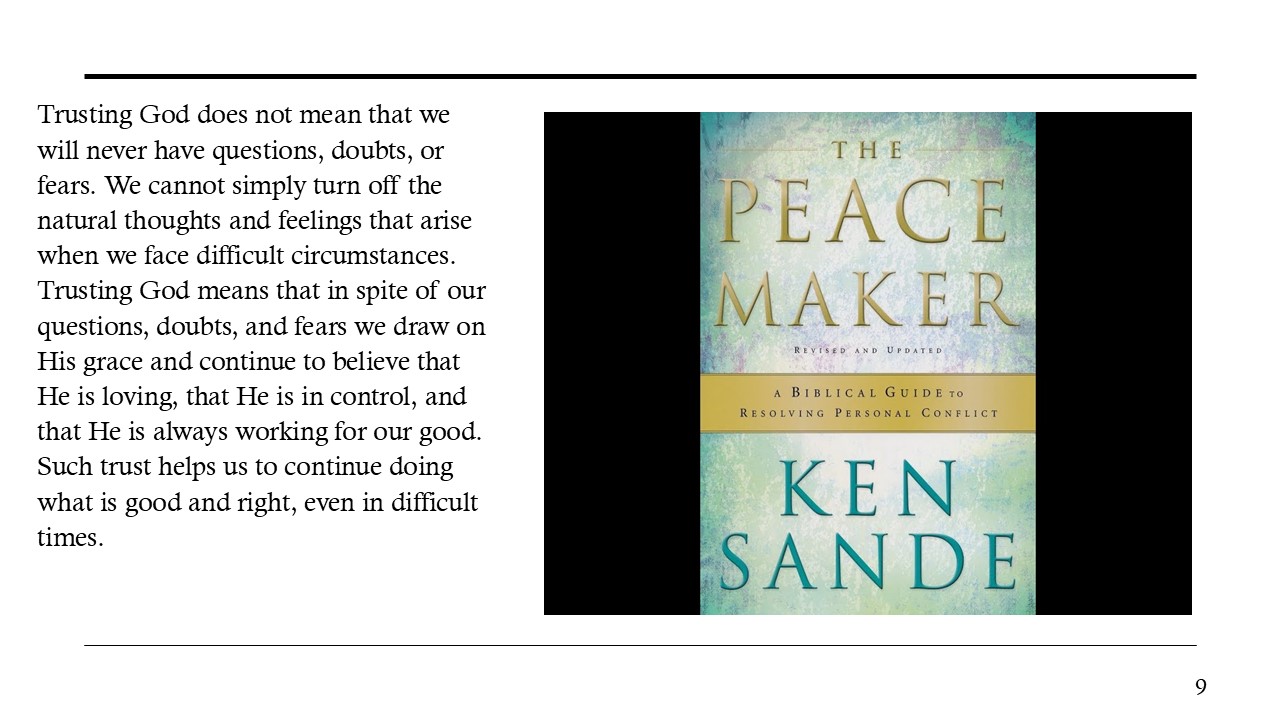
One author puts it this way in The Peacemaker, a Christian guide to resolving conflict:
“Trusting God does not mean that we will never have questions, doubts, or fears. We cannot simply turn off the natural thoughts and feelings that arise when we face difficult circumstances. Trusting God means that in spite of our questions, doubts, and fears we draw on His grace and continue to believe that He is loving, that He is in control, and that He is always working for our good. Such trust helps us to continue doing what is good and right, even in difficult times.”
This is the heart of Psalm 125: to trust God even when wicked rulers seem to dominate, even when life is unfair, even when we do not understand.
Discussion question: When life feels unfair, what helps you shift your trust back to God instead of yourself or others?
III. The Lord Protects
Psalm 125:1-2 tells us that God’s people—those who place their trust in Him—are like Mount Zion, and God Himself is like the mountains surrounding it. Mount Zion, in fact, is not a particularly large hill. It rises only modestly in Jerusalem, yet it is encircled by higher ridges on nearly every side.
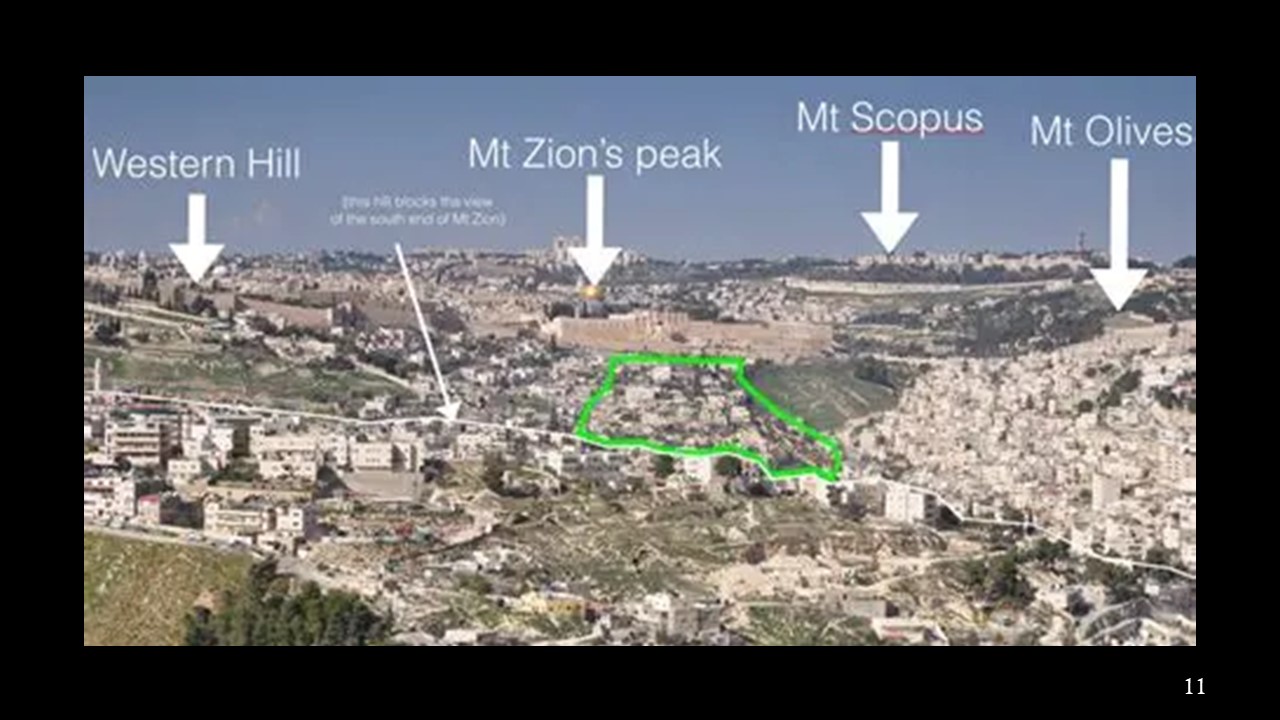
- To the east stands the Mount of Olives, a long ridge towering over the Kidron Valley.
- To the north lies Mount Scopus, which provides a commanding view of the city.
- To the west and south, other ridges shield Jerusalem from approach.
Travelers approaching the city must pass through those protective mountains, and only once they are inside the ring of hills can they see Zion itself.
That is how the Lord surrounds His people. We are not trapped in a prison—God does not fence us in or remove our freedom. But when we choose to walk in His will, we experience His protection like mountains that shield the city. The troubles that enter our lives are only those permitted by the Lord, for His purposes.
Why This Matters
This is important because it reframes how we view hardship. Whatever we face, God remains in control. Even when trials come, He is still protecting us from countless other dangers we never even see. His protection is constant, seen and unseen. Nothing touches us apart from His sovereign hand.
Think of a child playing outside in a fenced yard. The child may stumble, scrape a knee, or trip over a rock—but the fence keeps out wild animals or speeding cars. In the same way, God surrounds His people. We may still face scrapes and bruises, but He shields us from dangers we never even knew were there.
Historical Reminder: God’s Discipline
In the time of Nehemiah, when this psalm was likely written, Jerusalem had already been overrun by the Babylonians. Why would God allow His own city to be conquered? The answer is clear in the prophets: Jerusalem had given itself over to sin, and the Lord desired something better for His people.
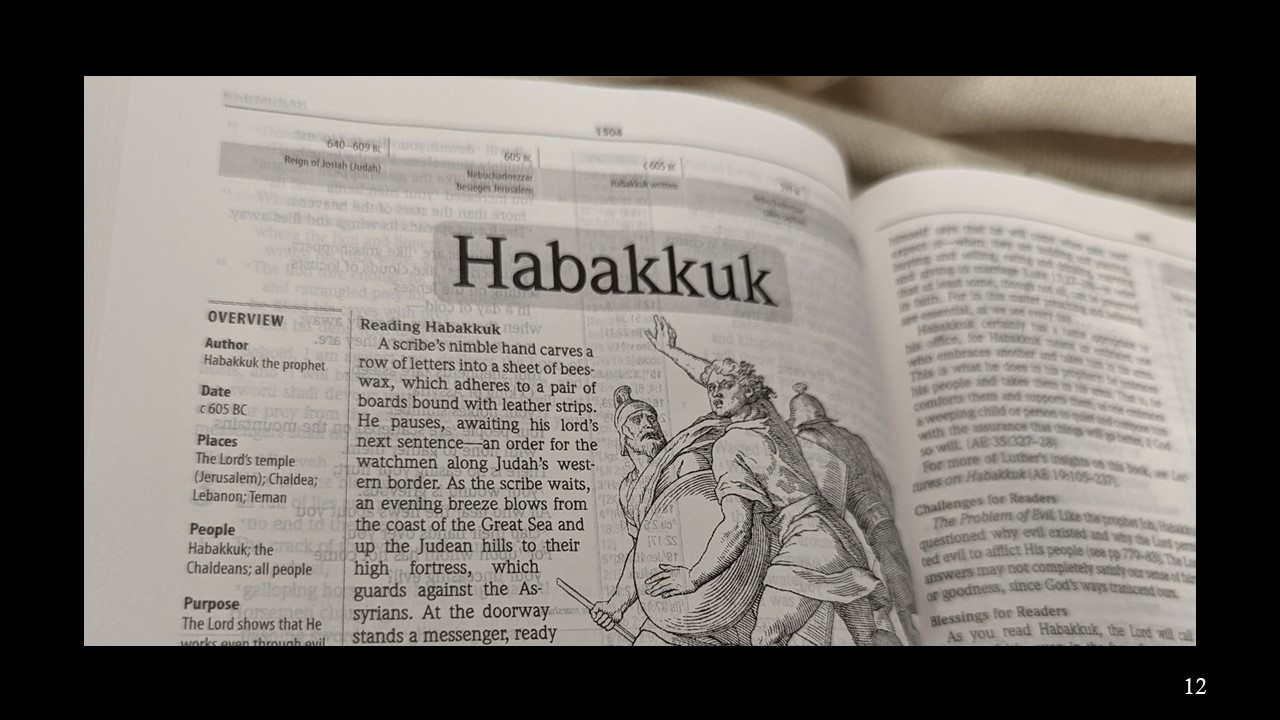
I’m reminded of the prophet Habakkuk. In chapter 1, Habakkuk cries out to the Lord, “why do I have to look at all this injustice? Why do you tolerate wrongdoing? The wicked rule the righteous.” And the Lord answers, “I’m going to do something amazing – I’m raising up the wicked Babylonians to crush Jerusalem.” And Habakkuk is like, “Wait… what?” He cannot imagine that God would use a wicked nation to punish His own people.
Yet by the end of the book, Habakkuk comes to a new perspective. In chapter 3 he declares:
“Though the fig tree does not blossom, nor fruit be on the vines,
the produce of the olive fail, and the fields yield no food,
the flock be cut off from the fold, and there be no herd in the stalls,
yet I will rejoice in the LORD; I will take joy in the God of my salvation. God, the LORD, is my strength.” (Habakkuk 3:17–19)
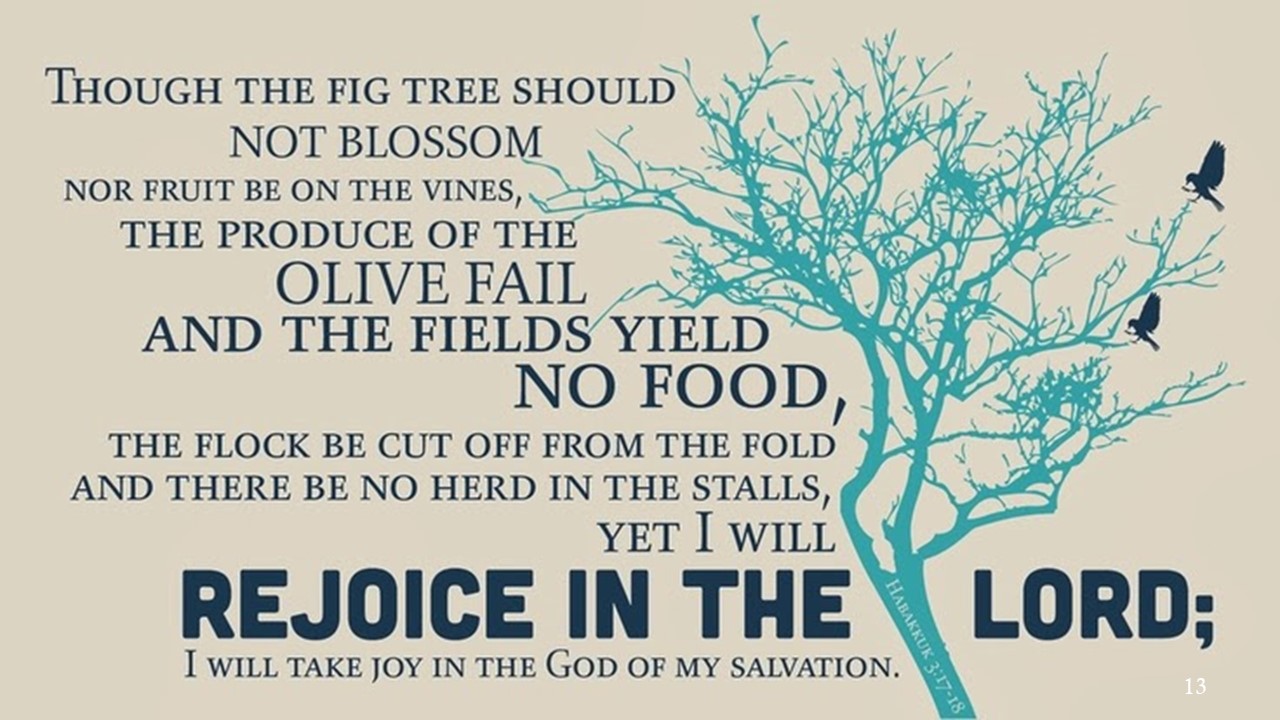
Habakkuk moves from despair to trust, because he realizes that God’s purposes are bigger than his understanding.
Israel’s Cycle (and Ours)
The Old Testament repeatedly shows Israel’s cycle of relationship with God, a cycle that mirrors our own:
Sin –> Defeat –> Repentance –> Deliverance –> Sin

Israel sinned through pride, stubbornness, disobedience, and ingratitude. God used defeat to break their pride. Repentance led to deliverance. Deliverance produced gratitude—but also spiritual laziness, and soon the cycle repeated. And yet, through it all, God never abandoned His people. Even in discipline, He surrounded them.
The Temporary Rule of the Wicked
Psalm 125:3 reminds us that “the scepter of the wicked will not remain over the land allotted to the righteous.” The “scepter of the wicked” refers to the rule of evil over God’s people. God knows this must be temporary. If wickedness were allowed to last indefinitely, the righteous themselves might be tempted—or even pressured—to join in doing evil.
This is a critical truth: God limits evil. He may permit it for a season, but He never allows it to rule without end.
God’s Perfect Judgment
In His perfect timing, God will set everything right. Verse 4 promises that He will do good to the upright in heart, while verse 5 warns that those who turn aside to crooked ways will be banished with the evildoers.
This separation of the righteous from the wicked may take place within our lifetime, or it may only be fully revealed at the end of time. But either way, the outcome is certain: God is in control, and His justice is never absent.
New Testament Echoes
The imagery of being “surrounded” carries forward into the New Testament.
- Hebrews 12:1 — “Since we are surrounded by so great a cloud of witnesses, let us run with endurance the race set before us.” God surrounds us with faithful examples.
- Romans 8:31–39 — Paul reminds us that nothing—neither trouble nor hardship, persecution nor powers, nor anything else in creation—can separate us from the love of God in Christ Jesus our Lord.

God’s people have always been surrounded—by mountains, by witnesses, by His unbreakable love.
Discussion question: How does knowing that God both limits evil and promises to judge perfectly change the way you endure trials or injustice in your own life?
IV. Conclusion
So, how do we apply this psalm to our lives? When evil people seem to be in control, should we be discouraged? The answer is no. We must remember that our trials are never wasted—they are given to us for a purpose.
The Lord allows trials in our lives, and they come in many forms. Sometimes they are small—a leaky refrigerator or a flat tire. Sometimes they are big—the loss of a job or a financial crisis. And sometimes they feel overwhelming—the death of a loved one or a devastating diagnosis.
Yet through every kind of trial, one truth holds steady: God is in control. He allows us to walk through difficulties not because He is indifferent, but because He is far more concerned with our character than with our comfort. Trials are the chisels God uses to mold us into the people He wants us to be. We can either resist His work and struggle, or we can yield to His hand and grow in trust.
What Do Trials Teach Us?
- Faith. Trials purify and strengthen our faith for God’s glory.
1 Peter 1:6–7: “These have come so that your faith—of greater worth than gold, which perishes even though refined by fire—may be proved genuine and may result in praise, glory and honor when Jesus Christ is revealed.” - Patience. Trials produce perseverance that matures us in Christ.
James 1:2–4: “The testing of your faith develops perseverance. Perseverance must finish its work so that you may be mature and complete, not lacking anything.” - Obedience. Trials remind us of the value of God’s Word.
Psalm 119:71–72: “It was good for me to be afflicted so that I might learn your decrees. The law from your mouth is more precious to me than thousands of pieces of silver and gold.” - Discipline. Trials are the loving discipline of a Father.
Hebrews 12:5–6: “The Lord disciplines those he loves, and he punishes everyone he accepts as a son.” - Sanctification. Trials set us apart, shaping us in holiness.
Hebrews 12:10–11: “God disciplines us for our good, that we may share in his holiness… it produces a harvest of righteousness and peace for those who have been trained by it.” - Lessons. Trials teach us dependence on God’s provision.
Deuteronomy 8:2–5: God led Israel through the wilderness “to humble you and test you… to teach you that man does not live on bread alone but on every word that comes from the mouth of the LORD.” - Humility. Trials remind us of our smallness before God’s greatness.
Romans 11:33–36: “Oh, the depth of the riches of the wisdom and knowledge of God! How unsearchable his judgments, and his paths beyond tracing out!” - Trust. Trials strip away self-reliance so that we learn to lean fully on God.
2 Corinthians 1:8–9: “This happened that we might not rely on ourselves but on God, who raises the dead.”

Peace in the Midst of Trouble
Yes, that’s the point: we trust God to protect us, and He allows trials precisely to strengthen that trust.
I’ll be honest—I don’t know if I will ever be able to thank God for the trials themselves. They are unpleasant, painful, sometimes traumatic, and often life-changing. But I can learn to thank Him for what He produces through them: character, faith, patience, humility, and a deeper trust in Him.
The psalmist closes, “Peace be upon Israel.” The Hebrew word שָׁלוֹם (šālôm) is far richer than our English word “peace.” It means wholeness, completeness, well-being, harmony. It is the fullness of life as God intends it. This peace is not the absence of trouble but the assurance of God’s presence and protection in the middle of trouble.

And the New Testament shows us its fulfillment in Christ. After the resurrection, when His disciples were hiding behind locked doors, Jesus stood among them and said, “Peace be with you” (John 20:19). In John 14:27 He had already promised, “Peace I leave with you; my peace I give to you. Not as the world gives do I give to you. Let not your hearts be troubled, neither let them be afraid.”
The peace promised in Psalm 125 is the peace fulfilled in Jesus Christ. Through Him we have reconciliation with God, the indwelling of the Spirit, and the confidence that nothing can separate us from His love.
Bringing It Full Circle
So we end where we began. Life is discouraging. Jobs are lost. Leaders fail. Evil seems to triumph. But the psalmist reminds us: God surrounds His people like the mountains surround Jerusalem. Evil may rise, but its scepter is temporary. Trials may come, but they are not wasted—they are God’s chisels shaping us into His likeness.
Therefore, we can say with the psalmist: “Peace be upon Israel.” And we can say with confidence today: Trust in the Lord. For He surrounds His people both now and forevermore.
To God be the glory. Amen.

 Chasing the Wind
Leave a comment