I. Introduction
Sometimes when I study, I get a plot, like in the Book of Jonah or Exodus or Acts. I enjoy studying it, the plot, the life lesson, the historical significance, the miracles, and the fishing lessons.
But Psalms is usually hard for me. I read today’s scripture and thought, “It’s a book about praise. How am I going to find a complete lesson here? There’s no plot, no life lesson, just praise.”
That was my first reaction. And it was wrong. Once I actually sat down with Psalm 150, it became obvious: this isn’t a filler psalm—it’s a final summons. When I sit down to truly study the Word, I find out it’s not all about me. I have to learn that lesson almost every week, and you’d think I’d catch on. It’s never about me. It’s always about the Lord.
Today’s scripture is only 6 verses long. Not a single person is mentioned, no historical cities, no leaders or kings, no narrative, no character conflict. Let’s begin with a simple reading, and then, during our study today, we will see where we are led. Psalm 150, and let’s read it together:
1 Praise the Lord.
Praise God in his sanctuary;
    praise him in his mighty heavens.
2 Praise him for his acts of power;
    praise him for his surpassing greatness.
3 Praise him with the sounding of the trumpet,
    praise him with the harp and lyre,
4 praise him with timbrel and dancing,
    praise him with the strings and pipe,
5 praise him with the clash of cymbals,
    praise him with resounding cymbals.
6 Let everything that has breath praise the Lord.
Praise the Lord.


This Psalm is the final Psalm in the book of Psalms.  Psalms addresses our joys and our sorrows, our tears and our trials, our pains and our pleasures.  Our life is full of difficulties that our Lord knows full well.  Just like in the book of Revelation that tells us at the end of time we will all be praising the Lord, the book of Psalms ends with praise, because of and despite our joys and sorrows.
Psalm 150 is the final Psalm, full of praise and hallelujahs, and inspires to mobilizes us and all of creation to praise the Lord God. It’s a crescendo, a peak, the final Psalm that implores us to give unreserved adoration, praise, gratitude, and awe. And while it is short, it is not vague: it tells us where to praise, why to praise, how to praise, and who should praise.
Discussion Question:
Why do you think the book of Psalms ends with praise?
We have some luxury of time to spend in our chapter today since it’s only 6 verses, so we’re going to study each verse one by one, because I believe we have much to learn about praise from Psalm 150.
II. Psalm 150:1a, Praise the Lord
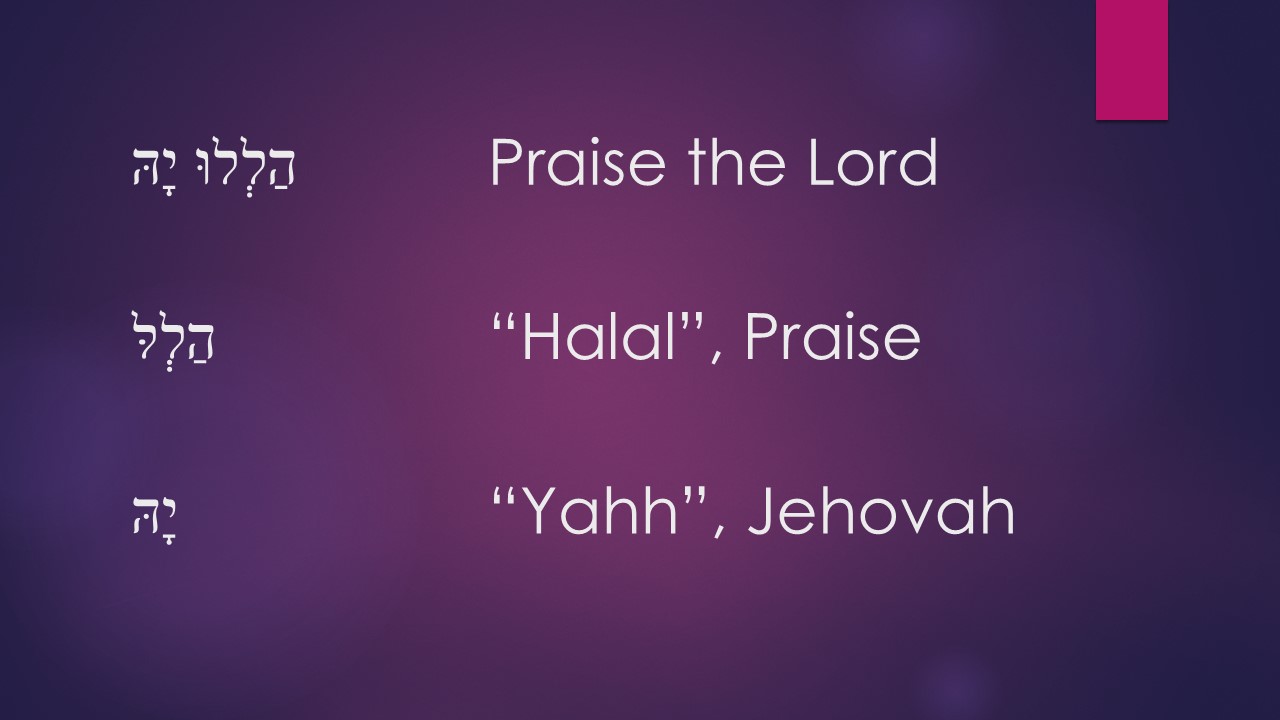
Let’s start with the verse 1, “Praise the Lord,” but let’s switch to Hebrew for a moment, because oddly enough we’re going to spend a lot of time just on the first word of this Psalm. The first word is “הַלְלוּ יָהּ”and I understand if you don’t recognize it at first, but you will. It’s made up of two parts –
- הָלַל, pronounced “halal.” This is a verb which means “praise”, but it has several other meanings that illustrate what praise is. It also means to shine, to flash forth light, to be boastful, and to act madly like a fool. It can also carry the idea of celebrating, boasting in, or speaking of someone with joyful intensity—praise that isn’t half-hearted or restrained. In other words, go all out, give it everything you have.
- יָהּ, pronounced “Yahh.” This is a contraction, a shortened version of the covenant name “Yahweh,” the proper name of the one true God, the name revealed to Moses at the burning bush.
If we put these two words together, it means “praise the Lord,” just like we read from Psalm 150:1. But let’s pronounce the Hebrew words and see if you recognize it. “Halal Yahh”. That’s right, the word is Halleluiah.
Halleluiah, praise the Lord madly with all abandon, with everything we have. Halleluiah, for the Lord God is on His throne. Halleluiah, for the Lord God reigns forever and ever.
This phrase “Halleluiah” is used only 24 times in the Old Testament and they are all in the book of Psalms 104-150, and two of those Halleluiahs are in our study verses for today. And “halleluiah” is used three times in the New Testament, all in Revelation 19, and we’ll get to that in a little while. And “halleluiah” is used 145 times in Handel’s Messiah.
Discussion Question:
What does “Hallelujah” communicate that ordinary language may not?
One of those translations of “halal” was to shine, to flash forth light. When Diane and I were first married, we took a honeymoon trip that included a day trip to an unusual place. My outfit that day was a swimsuit, hiking boots, a hardhat, an inner tube, and a flashlight. Sadly, I have no pictures of that outfit.
We put the hiking boots and flashlight in a plastic bag, then sat in the innertube and floated down a river that entered the mouth of a cave. We exited the river, put on our hiking boots, hardhat and flashlight, and hiked into the cave.
Deep in the cave, we entered a large cavern, and the guide had all of us turn our flashlights off. I’ve never been in such pitch-black darkness. The phrase “can’t see my hand in front of my face” was literally true. There was nothing.

Genesis 1, “And God said, ‘Let there be light’”. The guide turned on his flashlight and it was blinding. And wherever the flashlight shone, that’s where you looked, because you could not see if you looked anywhere else.
Hallelujah—we don’t create God’s glory, and we don’t improve it. But we do direct our attention where glory already is. We fix our eyes on our Creator, for He alone is worthy. Hallelujah—praise the Lord. Even if our circumstances are pitch-black, praise the Lord and fix our focus on Him. Fix your attention on the One who created light. Fix your attention on the One who will never leave you or forsake you. Fix your attention on the One who knew you in your mother’s womb. Hallelujah—praise the Lord.
So here I am, thinking I’m going to have trouble putting together a lesson from the book of Psalms, and 10 minutes into the lesson and we’re not even past the first word. Halleluiah, the Lord God provides according to His mercies. Let us move on to the second word because at this rate this is a 2 hour lesson.
III. Psalm 150:1b, Praise Him in His Sanctuary
Praise God in his sanctuary;
    praise him in his mighty heavens.
After the “Halleluiah,” each verse begins with a command, an imperative, to “Praise Him” for very specific things, beginning with His sanctuary and His mighty heavens.
His sanctuary then (and now!) was a specific place of worship that people could go to praise the LORD with other people. It was a corporate place of worship. They would hear scripture read from the scrolls, they would offer sacrifices and offerings. They would sing songs and pray. They came together as a community of believers to worship and praise God, not unlike what we do today in churches around the world.
The church is a place where we turn our hearts and attention to the LORD together. Sometimes I hear people might complain about a church, “Oh, I didn’t get anything from that sermon,” and we’re missing the point. It’s not about us. We gather to honor God—to magnify Him, to hear His Word, to pray, to sing, to give, to be shaped.
We do it through Bible study classes, we do it through worship services with choirs and orchestras and praise teams leading us in songs. We do it through the preaching of the Bible. We do it through the giving of tithes and offerings. We do it through baptism. We do it through prayer. We do it through joining the church to be part of this particular community of believers at this church. Each weekend when we gather for worship and Bible study, we are living out Psalm 150:1. We’re doing it now.
But the next verse says to Praise the LORD in “His mighty heavens.” Other translations say “mighty expanse” or “mighty firmament.” When we open our first Bible, many of us start with Genesis 1:1,
“In the beginning God created the heavens and the earth.”
God created everything we see when we look up into the sky—the sun, the moon, the stars, the vastness of the universe. God also created what we see when we look around and down at the earth—the mountains, the trees, the flowers, the plants, the animals, the oceans, the ground, the vastness of planet earth. We are to praise the LORD both in His sanctuary and in the vastness of creation—both gathered worship and everyday life, both inside the church and out in the world God made.
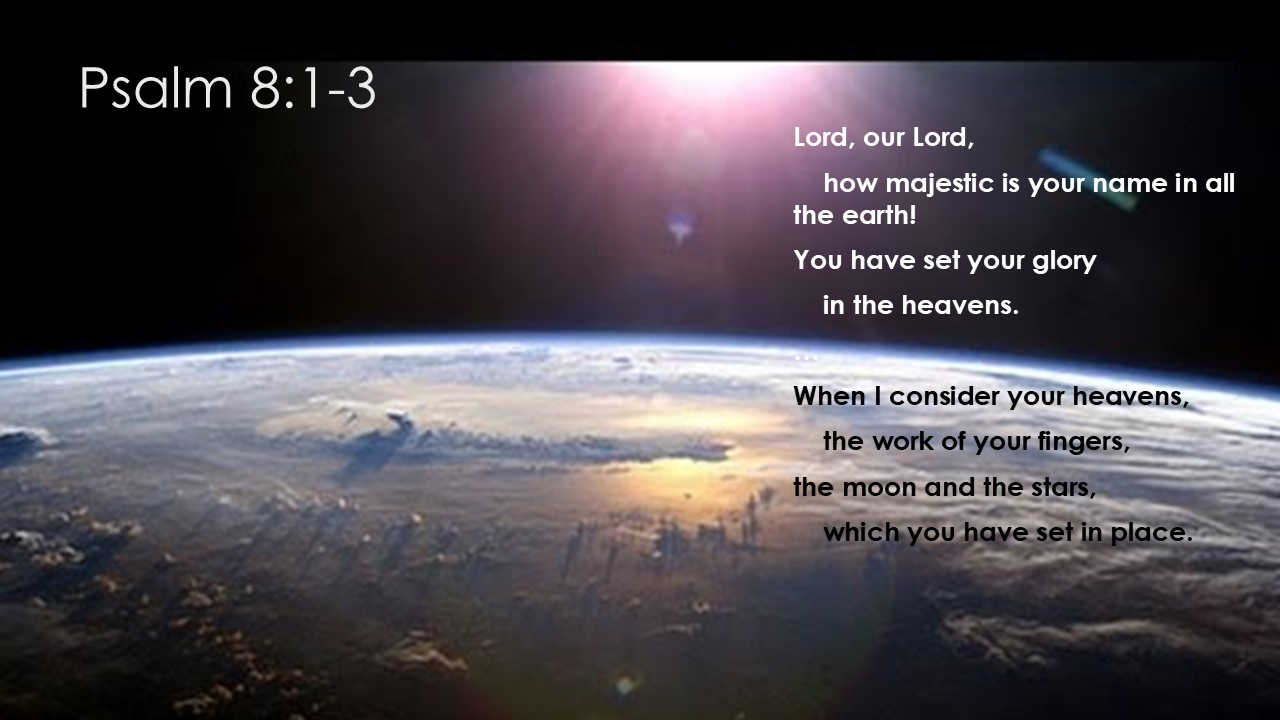
David said it best in Psalm 8:1-3,
Lord, our Lord,
    how majestic is your name in all the earth!
You have set your glory
    in the heavens.
…
When I consider your heavens,
    the work of your fingers,
the moon and the stars,
    which you have set in place.
I love the ocean and the beach, it is spectacular. The vastness of the water, the unrelenting waves, the movement of ocean as it comes up to the sand on the beach and then recedes.
I also love the mountains, how they reach up to the heavens as far as I can see.
I love the plains of Texas, the flatness merging into the hill country. I love summer nights in west Texas where the sky is so black and you can see the milky way and the billions of stars and the moon and even some planets that can be seen with the naked eye. David knew this was a great opportunity for us to consider the Heavens of God, the work of His fingers that He has set in place.
Discussion Question:
How does gathering with other believers help direct your heart and attention back to the Lord?
IV. Psalm 150:2, Praise Him for His Power
The first verse of Psalm 150 tells us where to Praise Him – in church and everywhere – and then the second verse tells us what to praise Him for.
Praise him for his acts of power;
    praise him for his surpassing greatness.
Praise Him for His mighty acts, which we see over and over in the Old Testament. His mighty acts go far beyond just speaking the world into existence.
The mighty acts of God are not based on size or spectacular grandeur. The flood was definitely a mighty act. But the mighty act of the water receding and a rainbow in the sky to mark a covenant never to flood the earth again was a mighty act greater than the flood itself.
Taking a man named Abram who could not have a child with his wife Sara and making a covenant with him that his descendants would be as numerous as the stars was the beginning of a mighty act. Abram’s name was changed to Abraham and He became not only a father of a nation, but the Patriarch of all Patriarchs. God would forever be known as the God of Abraham, Isaac and Jacob; three generations that began with a mighty act of God.
The ten plagues of the Exodus Era were mighty acts of God that even Pharaoh couldn’t deny. The parting of the Red Sea was a mighty act. The Lord broke down the walls of Jericho, gave water from the rock through Moses, delivered Daniel from the lion’s den, brought down fire on Elijah’s sacrifice, and sent chariots of fire to protect Elisha. And God provides rain from heaven and our daily bread and even the very air we breathe.
But we know the mightiest act of all was God sending His only Son, Jesus Christ to live a perfect, sinless life on this earth as a human being. Jesus gave His life on the cross, crucified to death for our sin, buried in a tomb. And then three days later Jesus rises from the dead, conquering sin and death. And He did this so that all who believe in Him would have eternal life. The death and resurrection of Jesus was the mighty act of God based on His love for us. It is a mighty act when God takes sinful, rebellious, complacent people and saves them unto Himself.
Beyond the mighty acts of what God has done, we are to praise Him for His “excellent greatness.”
Sometimes we can be so focused on the acts of God, we forget about the character of God.
The excellent greatness of God is unsurpassed. We praise Him for His sovereignty, His unchanging nature, His omniscience, His omnipotence, His omnipresence, His power, His grace, His mercy, His goodness, His kindness, His holiness, His faithfulness, His justice, His wisdom, and on and on and on.
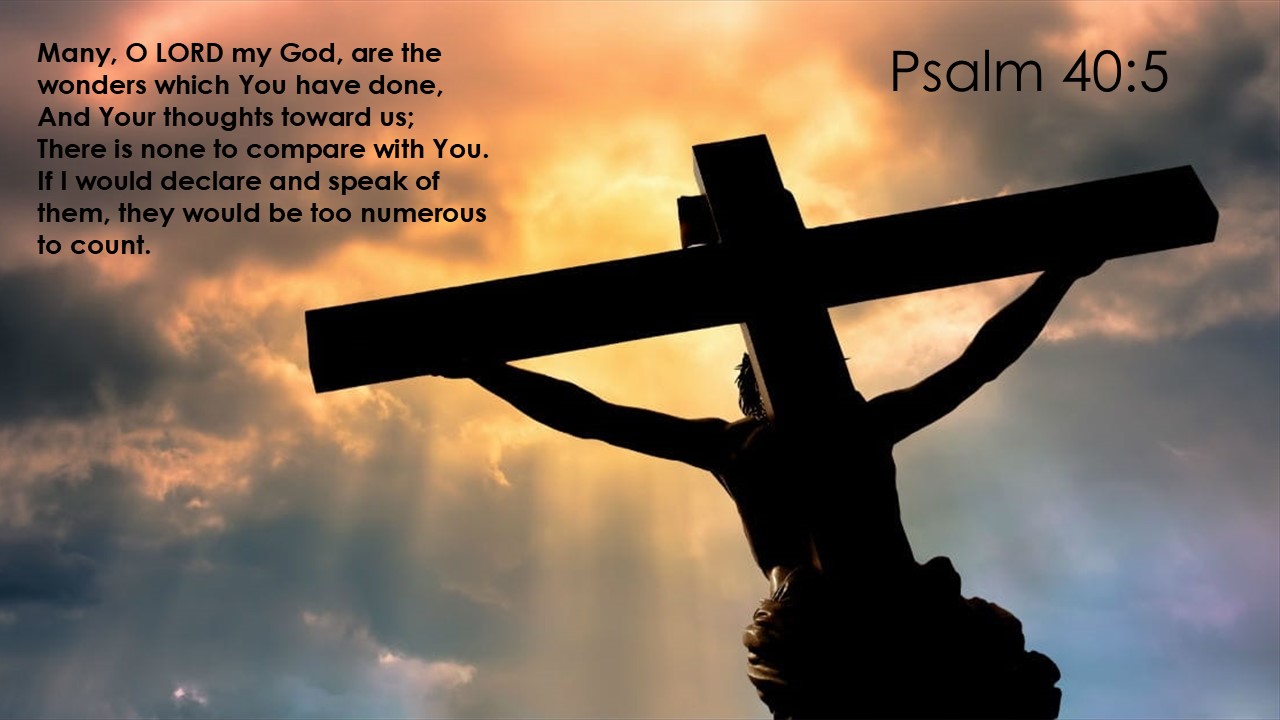
He is great because He rules as sovereign over the universe. He is so sovereign that He can give people real, free choices and still retain full sovereignty. He is good; in fact, He is the good of the universe. He is wise; His wisdom is so high that no one can even grasp His thoughts. He is merciful and just, kind and loving, gracious and tender, yet at the same time holy, just, and the judge of all humanity. His “excellent greatness” deserves praise from all His creation. There is nothing and no one that compares to God’s greatness. David summed it up this way in Psalm 40:5 –
Many, O LORD my God, are the wonders which You have done,
And Your thoughts toward us;
There is none to compare with You.
If I would declare and speak of them,
they would be too numerous to count.
Sometimes in our lives, our prayers, our thoughts we tend to focus on what God wants us to do and what we want God to do. Psalm 150 calls us to praise Him regardless, just because of what He has done and who He is.
Discussion Question:
Is it easier for you to praise God for what He has done, or for who He is? Why?
We have looked at where to praise, what to Praise, and now let’s look at how to praise in verse 3.
V. Psalm 150:3-5, Praise Him with Music
Praise him with the sounding of the trumpet,
    praise him with the harp and lyre,
praise him with timbrel and dancing,
    praise him with the strings and pipe,
praise him with the clash of cymbals,
    praise him with resounding cymbals.
Throughout scripture, music is an integral part of praise and worship. When Moses and the Israelites crossed the Red Sea, the first thing that they did was sing a song, Exodus 15:1-2 –
Then Moses and the children of Israel sang this song to the LORD, and spoke, saying: “I will sing to the LORD, For He has triumphed gloriously! The horse and its rider He has thrown into the sea! The LORD is my strength and song, And He has become my salvation; He is my God, and I will praise Him; My father’s God, and I will exalt Him.
Music is one of the most natural responses to redemption. When God acts, His people sing. Many times, in the Psalms it says to sing to the Lord, though in Psalm 150 it is all about the instruments. Trumpet, lute, harp, tambourine, stringed instruments, flutes, and cymbals. I like to think the euphonium would be included.
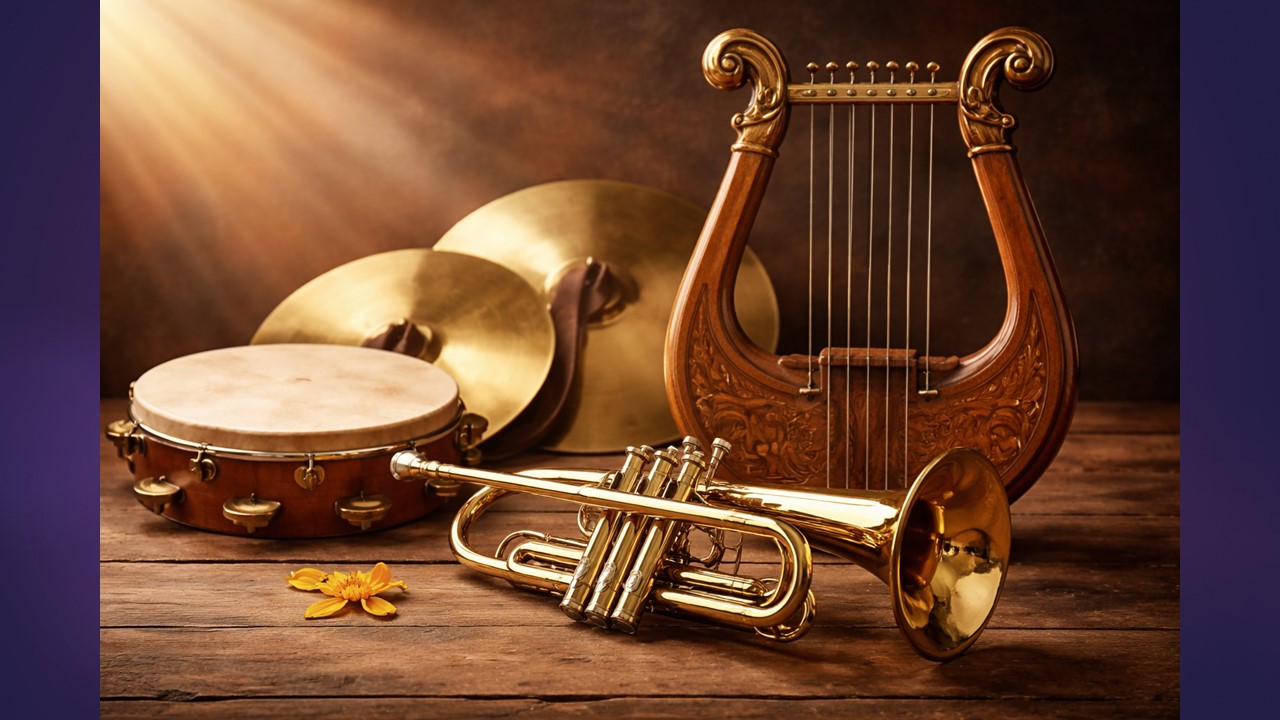
The musical instruments listed also had historical significance and carried memories and meaning. For instance, trumpets announced sacrifices in Jerusalem. Trumpets called people to worship. Trumpets announced the entrance of a King. When you heard the trumpet, something important was happening.
The tambourine and dance were a celebration of joy. Dancing to the tambourine was a way to celebrate the freedom, joy and happiness of who the Lord is and what He has done.
The stringed instruments required skill. They required preparation. Practice. Intention.
The cymbals are a sign of exaltation. They are like an exclamation point. And they’re listed twice in verse 5—“clash of cymbals” and “resounding cymbals.” This is not quiet, hesitant praise. This is audible, unmistakable praise.
If you step back and look at the list, something becomes clear: praise engages the whole person.
The trumpet uses breath.
The strings use the hands.
The dance uses the body.
The cymbals use strength and volume.
Biblical praise is not merely intellectual. It is not merely emotional. It involves the whole person—mind, body, skill, breath, and strength.
And yet, this Psalm is not prescribing one particular musical style. It is not mandating volume levels or tempo. It is saying something bigger: use everything available to you to honor God.
Ultimately, praise is not about the instruments; it is about the heart. The instruments are expressions. They amplify what is already happening inside. Some people praise the Lord through song, through instruments, through writing, through artwork, through serving others, through prayer; there are countless ways to praise the LORD. But in every case, true praise flows from a heart that sees God rightly.
VI. Psalm 150:6, Let Everyone Praise Him
So far, we have seen where to Praise, what to Praise, how to Praise and finally, now we are going to see who does the praising in verse 6.
Let everything that has breath praise the Lord.
Praise the Lord.
If you are breathing, praise the LORD.
That word “breath” should take us back to Genesis 2:7. God formed man from the dust of the ground and breathed into his nostrils the breath of life, and man became a living being.
Your breath is not self-generated. It is given. The very air filling your lungs right now is a gift from God.
The same God who breathed life into Adam is the God who sustains your breathing today.
So when Psalm 150 says, “Let everything that has breath praise the Lord,” it is saying: the gift should return to the Giver. The breath He gives should be used to honor Him.
Regardless of circumstances, relationships, achievements, bank accounts, or anything else that is temporary—praise the Lord.
Praise is the attribute of God’s people, but praise is also the responsibility of every person who has breath. And even beyond humanity, all of creation exists to display His glory. Psalm 19 says the heavens declare the glory of God. Creation testifies without words.
God is seeking worshipers who will “worship Him in spirit and in truth.” God calls all nations to praise Him and to look to Him for their salvation.
He is worthy of the praises of all people everywhere. When the apostle Paul defends his missionary ministry to the Gentiles in Romans 15:11, he quotes Psalm 117:1 to demonstrate that God is seeking praise from all nations.
“And again: ‘Praise the LORD, all you Gentiles Laud Him, all you peoples,’”
One motive for missionary trips is to bring praise to God from all the nations. Praise from every nation will come to pass; John’s vision in the book of the Revelation 5:9 reveals a song sung by people redeemed “out of every tribe and tongue and people and nation.” They join with the angels and the elders in Revelation 5:12 to sing heaven’s sweetest song:
“Worthy is the Lamb who was slain to receive power and riches and wisdom and strength and honor and glory and blessing.”
Psalm 150 ends with “Hallelujah.” Revelation 19 echoes that same word as redemptive history reaches its climax. The Bible ends where Psalm 150 ends—with praise.
God created everything to bring Him praise and commands everything that has breath to praise Him. One day Balaam’s donkey will praise the LORD; one day the great fish who swallowed Jonah will praise the LORD; one day the lions who refused to eat Daniel will praise the LORD. In fact, in Revelation 5:13, John writes,
“And every creature which is in heaven and on the earth and under the earth and such as are in the sea, and all that are in them, I heard saying: ‘Blessing and honor and glory and power be to Him who sits on the throne, and to the Lamb, forever and ever’.”
VII. Conclusion
Psalm 150 ends just as it began: “Hallelujah.” Praise the Lord.
Ten times we are commanded to praise Him who sits upon the throne. Praise Him in the sanctuary. Praise Him in the heavens. Praise Him for His mighty acts. Praise Him for His surpassing greatness. Praise Him with skill. Praise Him with strength. Praise Him with breath.
Praise Him all the time and everywhere and with all we have.
God alone is worthy of this praise.
I learned a lot from Psalm 150 today. I’ve learned to embrace the beauty and the imperative of praising my Creator. There is beauty found in this simplicity. This Psalm is absolutely timeless and a great reminder that whatever we are going through today, this Psalm comes at the right time. Whatever challenges we might have personally or with a family member, this Psalm comes at the right time. If we are having difficulty at work or perhaps finding a job, this Psalm comes at the right time. If we are one of the few where everything is going exactly right in your life on every level without a care in the world, this Psalm comes at the right time.
Because praise is not based on our situation. It is based on who God is.
Halleluiah, praise the Lord.
We end today’s study in Revelation 19:6–7a, the only place in the New Testament that uses the word Halleluiah:
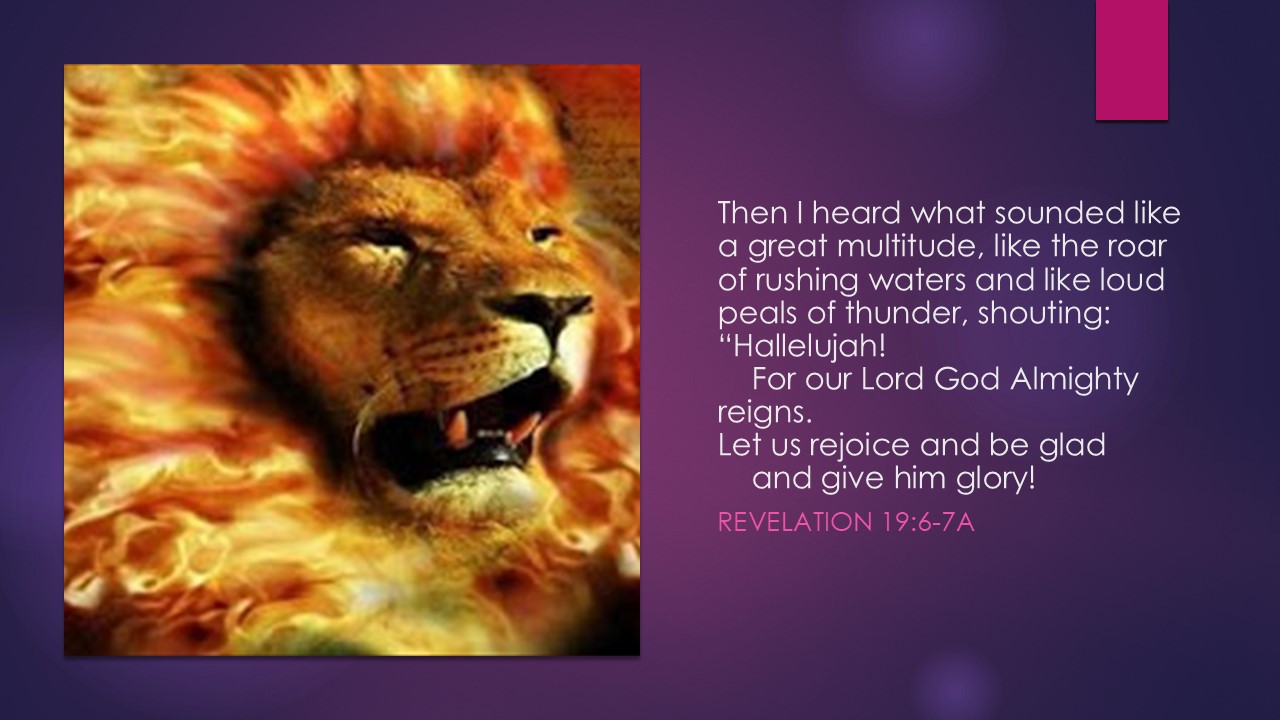
Then I heard what sounded like a great multitude,
like the roar of rushing waters
and like loud peals of thunder, shouting:
“Hallelujah!
    For our Lord God Almighty reigns.
Let us rejoice and be glad
    and give him glory!”
Amen and Halleluiah, praise the Lord almighty.
To God be the glory.

 Chasing the Wind
Leave a comment