
I. Introduction
The Apostle Paul’s letter to the Ephesians is a treasure trove of spiritual wisdom, beginning with a profound declaration of the blessings that believers possess in Christ. Written during his imprisonment in Rome around AD 60-62, Paul’s greeting and opening praise set the stage for the entire letter, emphasizing God’s sovereignty, the riches of His grace, and His eternal plan for His people. Today we’ll begin with Ephesians 1:1-14, focusing on our identity in Christ, the spiritual blessings we enjoy, and God’s redemptive plan that spans from eternity past to eternity future.
II. Paul’s Greeting
Ephesians 1:1,
Paul, an apostle of Christ Jesus by the will of God, To the saints who are in Ephesus, and are faithful in Christ Jesus.

Paul’s Apostleship:
Paul begins by asserting his role as an apostle, emphasizing that this calling is not of his own choosing but by the will of God and Paul’s message is by divine authority. In the Greco-Roman world, authority often came from one’s social status or achievements. However, Paul’s authority is rooted in God’s sovereign will, which contrasts with the world’s view of power and leadership based on personal ambition and human appointment.
Saints in Ephesus:
The term “saints” (ἅγιοι, hagios) is a title for all believers, signifying their sanctified status in Christ. In the New Testament, “saints” consistently refers to those who are in Christ—believers who have been set apart for God’s purposes. For example, in 1 Corinthians 1:2, Paul addresses the church in Corinth as “those sanctified in Christ Jesus, called to be saints.” Here, “saints” clearly refers to all members of the church, not just a select few. Similarly, in Romans 1:7, Paul writes, “To all those in Rome who are loved by God and called to be saints.” Again, “saints” encompasses all believers in Rome. This universal application of the term emphasizes that every believer, through faith in Christ, is set apart and called to live a holy life.
Unlike the Catholic tradition, which reserves sainthood for those who have been canonized after death due to their exemplary holiness, the New Testament usage of “saints” includes all Christians, regardless of their spiritual maturity. Every believer is a saint, not because of their achievements, but because of their position in Christ.
Faithful in Christ Jesus:
Paul identifies the Ephesian believers as “faithful in Christ Jesus,” highlighting their ongoing commitment to live out their faith. Faithfulness here implies both belief and practice. In a world where faithfulness is often conditional or based on convenience, Paul emphasizes that faithfulness in Christ is a steadfast, enduring commitment that reflects God’s own faithfulness to us.
Discussion Question: Why is it important that Paul begins his letter by emphasizing his apostleship and the believers’ identity as saints?
Answer: It establishes the divine authority behind his message and reminds believers of their holy calling in Christ, which is not based on their merit but on God’s grace. This sets the foundation for understanding the rest of the letter, as it points to God’s initiative in salvation and the believers’ response to that grace.
III. Grace and Peace, Spiritual Blessings in Christ
Ephesians 1:2-3 –
Grace to you and peace from God our Father and the Lord Jesus Christ. Blessed be the God and Father of our Lord Jesus Christ, who has blessed us in Christ with every spiritual blessing in the heavenly places.

Grace and Peace:
Paul’s greeting, “Grace to you and peace,” is more than just a pleasantry. “Grace” (χάρις, charis) refers to God’s unmerited favor, the foundation of the gospel message. “Peace” (εἰρήνη, eirene) signifies wholeness, well-being, and reconciliation with God. This combination of grace and peace encapsulates the Christian experience: God’s grace brings us into a relationship with Him, resulting in true peace. The secular world often seeks peace through external circumstances or personal achievements, but true peace, as Paul teaches, comes only through the grace of God.
Spiritual Blessings:
Paul shifts to a doxology, praising God for the spiritual blessings that are ours in Christ. These blessings are “in the heavenly places,” indicating that they are spiritual in nature and have eternal significance. The phrase “in Christ” is key, appearing repeatedly in this passage. It signifies that all these blessings are mediated through our union with Christ, rather than through any merit of our own.
Examples of Spiritual Blessings in today’s passages:
- Election (v4): Chosen by God before the foundation of the world. This refers to God’s sovereign choice to set His love upon us, not because of anything we have done, but according to His own purpose and grace.
- Adoption (v5): Through Christ, believers are brought into God’s family as His children. Adoption in Roman culture meant that a person was given all the rights of a biological child, including inheritance rights. Spiritually, it means that believers are granted full access to God as their Father and are heirs to His promises.
- Redemption and Forgiveness (v7): We have been redeemed through Christ’s blood, meaning we have been bought back from the bondage of sin and given freedom. Forgiveness of sins is the direct result of this redemption.
- Sealing with the Holy Spirit (v.13): The Holy Spirit is given as a seal and guarantee of our inheritance, assuring us of our future in God’s kingdom.
Contrast with Secular Views: In contrast to the world’s pursuit of material blessings, which are temporary and often lead to emptiness, the spiritual blessings Paul speaks of are eternal and fulfilling. They are not dependent on our circumstances but are rooted in our relationship with God.
Discussion Question: How do the spiritual blessings mentioned by Paul differ from the blessings often sought after in the secular world?
Answer: While the world prioritizes material and temporal blessings, the spiritual blessings in Christ are eternal and pertain to our relationship with God, our identity in Christ, and our future inheritance. These blessings bring true fulfillment and are not subject to the changes and uncertainties of the world.
IV. Chosen and Predestined in Christ
Ephesians 1:4-6,
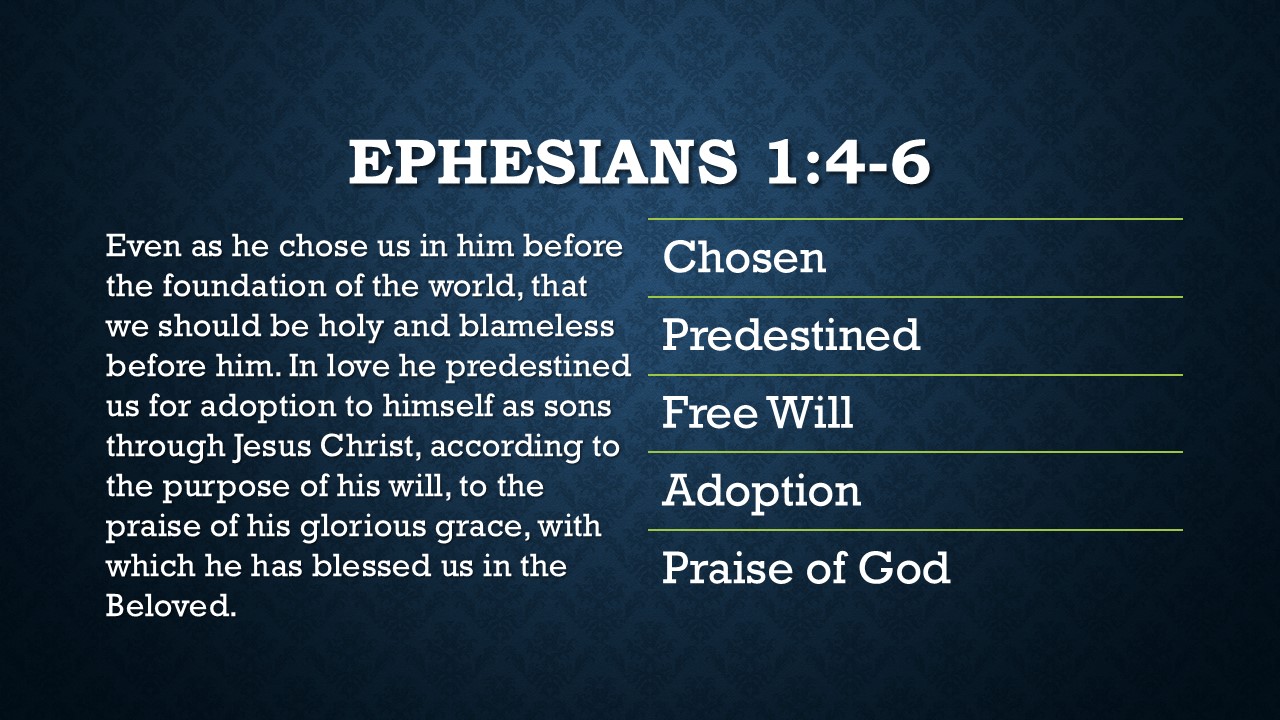
Even as he chose us in him before the foundation of the world, that we should be holy and blameless before him. In love he predestined us for adoption to himself as sons through Jesus Christ, according to the purpose of his will, to the praise of his glorious grace, with which he has blessed us in the Beloved.
Chosen Before the Foundation of the World:
Paul introduces the doctrine of election, stating that God chose us in Christ before the world was created. This choice was not based on foreseeing our faith or good works but was entirely due to God’s sovereign will. The purpose of this election is that we might be holy and blameless before Him. Our salvation is entirely in God’s hands, it is His initiative responsible for our redemption.
Predestination and Free Will:
The concept of predestination (προορίζω, proorizo) has been the subject of much theological debate. While Paul clearly teaches that God predestined us for adoption, the Bible also affirms human responsibility in responding to God’s call. Scriptures such as John 3:16 (“whosoever believes”) emphasize the universal offer of salvation, while passages like Romans 8:29-30 highlight God’s foreknowledge and predestination. From our limited human perspective, these concepts might seem contradictory, but from God’s omniscient viewpoint, they work together perfectly. Predestination assures us of God’s sovereign plan, while free will underscores our responsibility to respond to His grace.
Adoption as Sons:
In the Roman world, adoption was a legal practice that granted the adopted person all the rights and privileges of a biological child. This included the right to inherit. Paul uses this imagery to describe the believer’s relationship with God. We are not merely forgiven sinners but are adopted as sons and daughters, with all the privileges and responsibilities that come with being part of God’s family. This is a radical departure from the secular view of identity, which often ties worth to accomplishments or social status. In Christ, our identity is based on God’s declaration of who we are.
To the Praise of His Glorious Grace:
The ultimate purpose of God’s predestining work is to bring praise to His glorious grace. This phrase reminds us that salvation is not primarily about us, but about God’s glory. Our response to this grace should be one of awe, gratitude, and worship. This is in stark contrast to the world’s focus on self-glorification and achievement.
Supporting Scriptures:
- Romans 8:29-30: This passage outlines the “golden chain” of salvation—foreknowledge, predestination, calling, justification, and glorification—demonstrating that God’s plan of salvation is comprehensive and unbreakable.
- John 1:12-13: “But to all who did receive him, who believed in his name, he gave the right to become children of God, who were born, not of blood nor of the will of the flesh nor of the will of man, but of God.”
Discussion Question: How does understanding predestination and our adoption as God’s children impact our view of God’s sovereignty and our identity in Christ? Were we chosen, or did we choose?
Answer: It reinforces that our salvation and identity are grounded in God’s eternal plan and love, providing assurance and purpose beyond our earthly circumstances. It also challenges us to live in a way that reflects our status as God’s children, bringing praise to His grace.
V. Redemption Through His Blood and the Mystery of God’s Will
Ephesians 1:7-10,
In him we have redemption through his blood, the forgiveness of our trespasses, according to the riches of his grace, which he lavished upon us, in all wisdom and insight making known to us the mystery of his will, according to his purpose, which he set forth in Christ as a plan for the fullness of time, to unite all things in him, things in heaven and things on earth.

Redemption and Forgiveness:
Paul now focuses on the work of Christ, specifically our redemption (ἀπολύτρωσις, apolutrosis) through His blood. Redemption means being set free by the payment of a ransom. This ransom is Christ’s sacrificial death, which provides the basis for the forgiveness of our sins. The concept of redemption was familiar to Paul’s audience, both Jewish and Gentile. For Jews, it recalled the Exodus, where God redeemed Israel from slavery in Egypt. For Gentiles, redemption might have evoked images of freeing slaves or prisoners. In both cases, redemption involves a cost—a cost that Christ paid on our behalf.
The Riches of His Grace:
Paul emphasizes that this redemption is “according to the riches of his grace.” God’s grace is not given sparingly but lavished upon us. This lavish grace is a reflection of God’s character—it is abundant, overflowing, and more than sufficient to cover all our sins. In contrast, the world often views forgiveness as something that must be earned or deserved. Paul, however, presents forgiveness as a free gift, rooted in God’s grace and made possible through Christ’s sacrifice.
The Mystery of God’s Will:
Paul speaks of the “mystery” (μυστήριον, mysterion) of God’s will, which has now been revealed in Christ. In the New Testament, a “mystery” refers to something that was once hidden but has now been made known. The mystery here involves God’s plan to unite all things in Christ—things in heaven and things on earth. This plan is not limited to individual salvation but encompasses the entire cosmos, bringing reconciliation and restoration to all of creation. This contrasts sharply with the secular worldview, which often sees history as random or driven by human forces. Paul teaches that history is moving toward a divinely ordained goal, centered on Christ.
– Examples of the Mystery Revealed in Ephesians:
- Jew and Gentile Unity (Eph. 3:6): A key aspect of the mystery revealed in Ephesians is the inclusion of Gentiles into God’s covenant people, making Jew and Gentile one in Christ.
- Christ as Head of the Church (Eph. 5:32): Another aspect of the mystery is that Christ is the head of the Church, which is His body, comprising all believers.
- The Cosmic Scope of Redemption: The mystery includes God’s plan to bring everything under Christ’s lordship, restoring harmony to the universe.
Discussion Question: How does Paul’s explanation of redemption and the mystery of God’s will challenge secular views on forgiveness and unity?
Answer: It contrasts the world’s transactional approach to forgiveness and human-driven efforts for unity with the biblical view that these are gifts of grace, achieved through Christ’s redemptive work and God’s sovereign plan. The scope of God’s plan is far greater than anything the world can envision, encompassing not just personal reconciliation but the restoration of all creation.
VI. Inheritance and the Sealing of the Holy Spirit
Ephesians 1:11-14,
In him we have obtained an inheritance, having been predestined according to the purpose of him who works all things according to the counsel of his will, so that we who were the first to hope in Christ might be to the praise of his glory. In him you also, when you heard the word of truth, the gospel of your salvation, and believed in him, were sealed with the promised Holy Spirit, who is the guarantee of our inheritance until we acquire possession of it, to the praise of his glory.
Inheritance in Christ:
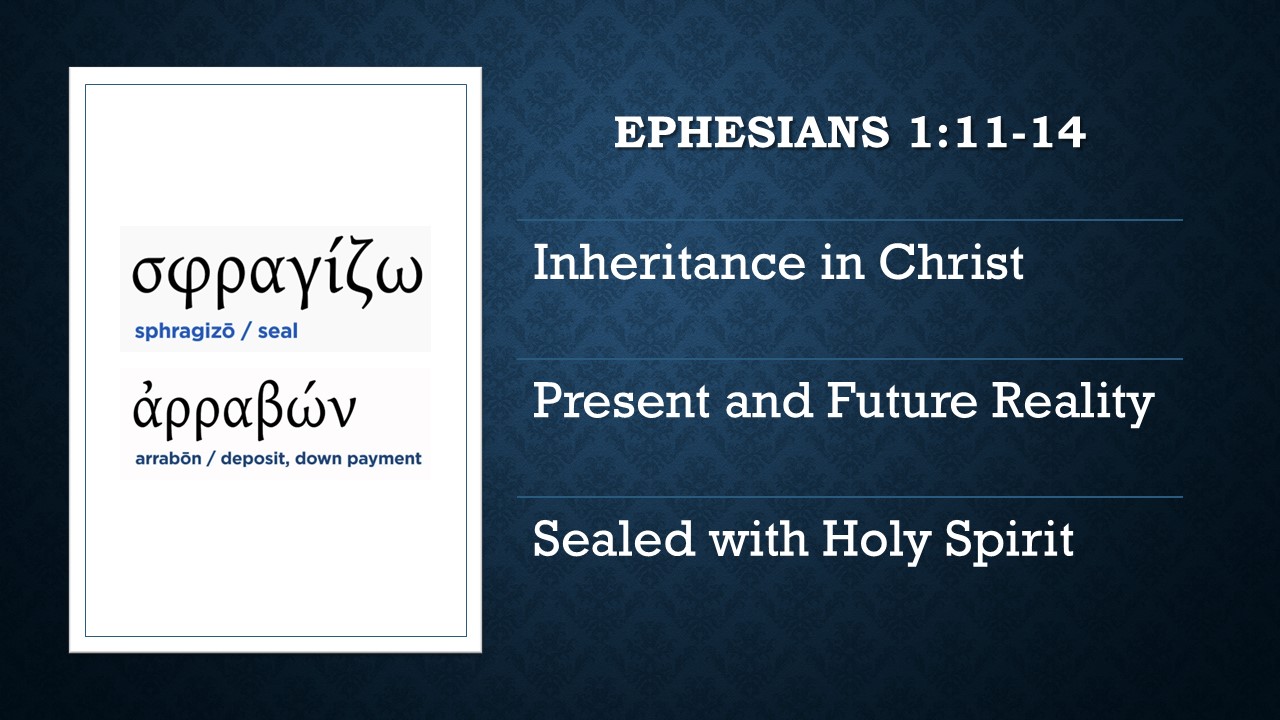
Paul assures believers that they have obtained an inheritance in Christ. In the Old Testament, inheritance often referred to the land of Israel, promised to Abraham’s descendants. In the New Testament, the concept of inheritance takes on a spiritual dimension, referring to the eternal life and kingdom promised to all believers. This inheritance is part of God’s predestined plan, established “according to the purpose of Him who works all things according to His will.” Unlike the secular pursuit of wealth and legacy, which is temporary and uncertain, our inheritance in Christ is eternal and secure.
Present and Future Reality:
Our inheritance is both a present possession and a future hope. While we experience many blessings in this life, the fullness of our inheritance will be realized in the age to come. This dual aspect of inheritance—already but not yet—encourages us to live with an eternal perspective, prioritizing the things of God over the fleeting pleasures of the world.
Sealed with the Holy Spirit:
The concept of being “sealed” (σφραγίζω, sphragizo) with the Holy Spirit is significant. In ancient times, a seal served as a mark of ownership, authenticity, and protection. It indicated that something was legally binding and safeguarded. For believers, the Holy Spirit is the seal that marks us as God’s own and guarantees our inheritance. The Holy Spirit is also described as the “guarantee” (ἀρραβών, arrabon), or down payment, of what is to come. This means that the Holy Spirit’s presence in our lives is a foretaste of the full inheritance we will receive in God’s kingdom.
Implications of the Seal:
- Security: The seal of the Holy Spirit assures us that our salvation is secure. Just as a seal on a legal document makes it binding, the Holy Spirit’s seal on our lives guarantees that God will fulfill His promises.
- Ownership: Being sealed with the Holy Spirit means that we belong to God. This contrasts with the world’s emphasis on self-ownership and independence. As believers, our identity and purpose are found in belonging to God and being part of His family.
- Authenticity: The seal also indicates authenticity. The presence of the Holy Spirit in our lives is the evidence of our genuine faith and relationship with God.
Discussion Question: What does it mean for believers to be sealed with the Holy Spirit, and how does this provide security and assurance in a way that the secular world cannot offer?
Answer: Being sealed with the Holy Spirit means that our salvation is secure and our future inheritance is guaranteed by God’s faithfulness, offering a certainty that the world’s systems of security and assurance cannot match. It also reminds us that we belong to God and that our identity is rooted in His promises, not in our achievements or status.
VII. Conclusion:
Summary of Key Points
- Paul’s Greeting: Establishes his divine authority and the believers’ identity as saints.
- Spiritual Blessings: Highlight the eternal and spiritual nature of blessings in Christ, in contrast to the material focus of the secular world.
- Predestination and Adoption: Demonstrate God’s sovereignty in salvation and our identity as God’s children.
- Redemption and the Mystery of God’s Will: Emphasize the lavishness of God’s grace and His plan to unite all things in Christ, challenging secular views on forgiveness and unity.
- Inheritance and the Holy Spirit’s Seal: Provide assurance and security in our salvation, grounded in God’s promises, unlike the uncertainty of worldly pursuits.
Ephesians 1:1-14 offers a rich and comprehensive understanding of the spiritual blessings that believers have in Christ. These blessings are rooted in God’s sovereign plan, which spans from eternity past to eternity future. In contrast to the secular world’s focus on material wealth, personal achievement, and self-determination, Paul’s teaching directs our attention to the eternal, spiritual realities that define our identity and purpose as believers. Knowing this, we may be filled with gratitude for God’s grace, confidence in His promises, and a renewed commitment to live for His glory.

To God be the Glory, Amen.

 Chasing the Wind
Leave a comment