
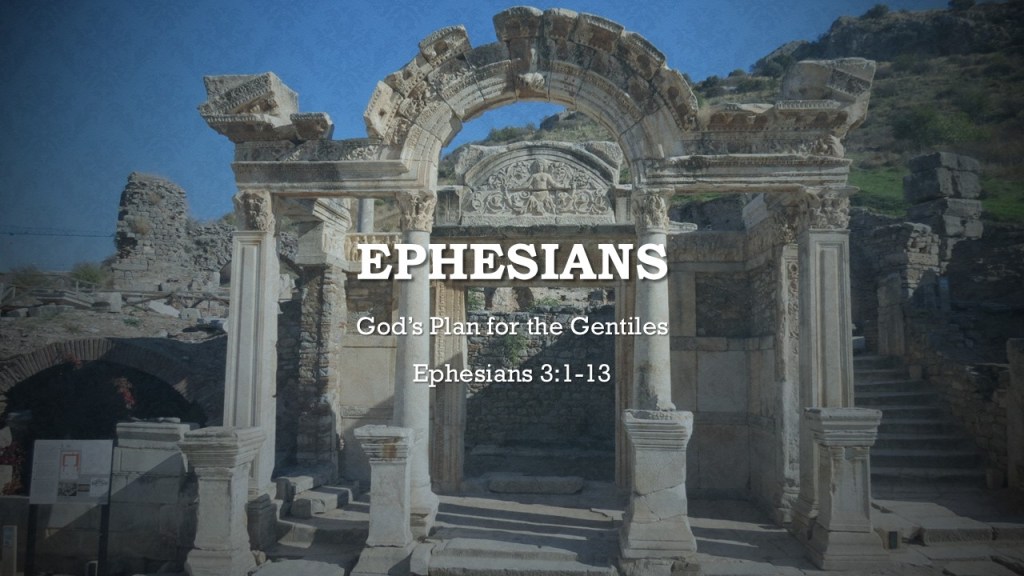
Introduction: God’s Unfolding Plan for the Gentiles
In Ephesians 3:1-13, Paul reflects on his role in revealing the “mystery” that had been hidden for ages—that Gentiles are fellow heirs with Israel in God’s redemptive plan. God’s eternal purpose, beginning with Adam and continuing through Abraham and Israel, culminates in Christ. From the very beginning, God’s plan was to redeem all of humanity, not just Israel. Through Christ, both Jews and Gentiles are brought together into one family—the Church.
Historical Context: It’s helpful to consider the broader historical setting of this letter. Ephesus was a major hub of both Roman and Greek influence, known for the Temple of Artemis, one of the seven wonders of the ancient world. The city’s spiritual and economic life was heavily intertwined with pagan worship, making Paul’s proclamation that the Gentiles would inherit spiritual blessings in Christ a radical message.
Jew and Gentile Division: Understanding the centuries-long division between Jews and Gentiles is key to grasping how monumental this “mystery” was. Jews saw Gentiles as “unclean,” and even Gentiles who converted to Judaism were often relegated to a lesser status. Paul’s declaration that Gentiles are fellow heirs wasn’t just a theological statement; it was revolutionary socially, culturally, and spiritually.
Verse 1: Paul’s Imprisonment and His Mission
For this reason I, Paul, a prisoner of Christ Jesus on behalf of you Gentiles—

- For This Reason: Paul begins by connecting back to the truths outlined in Ephesians 2, especially the unity established between Jews and Gentiles through Christ, breaking down the dividing wall of hostility (Ephesians 2:14-16).
- Prisoner of Christ Jesus: Paul refers to himself as a “prisoner of Christ Jesus,” highlighting that his suffering is for a divine purpose. Though imprisoned by Rome, Paul views himself as spiritually bound by Christ for the sake of the Gentiles, as seen in Acts 9:15. His chains are a result of his obedience to Christ’s commission to preach the gospel to the Gentiles.
- Paul’s Perspective on Suffering: Paul consistently frames his sufferings in the light of Christ’s own suffering. Paul saw his imprisonment not as a sign of failure but as a participation in Christ’s mission. Compare this with his other writings, such as Philippians 1:12-14, where Paul notes that his imprisonment has actually served to advance the gospel.
- Christ’s Example of Suffering: Jesus’ willingness to suffer for humanity is the ultimate demonstration of God’s love and how Paul reflects this in his ministry. Consider Philippians 2:5-8, where Paul describes Christ’s humility in becoming human and obedient to the point of death.
- On Behalf of You Gentiles: Paul’s specific calling is to bring the gospel to the Gentiles. God’s redemptive plan unfolded through Israel, and now, through Christ, extends to all nations. Paul’s mission underscores that God’s salvation is for all people, and his imprisonment reflects his commitment to that mission.
Discussion Question: Paul was willing to suffer for the Gentiles. How should we view suffering for the sake of the gospel? How does God demonstrate this willingness to suffer?

Verses 2-3: Paul’s Stewardship of the Mystery
assuming that you have heard of the stewardship of God’s grace that was given to me for you, how the mystery was made known to me by revelation, as I have written briefly.
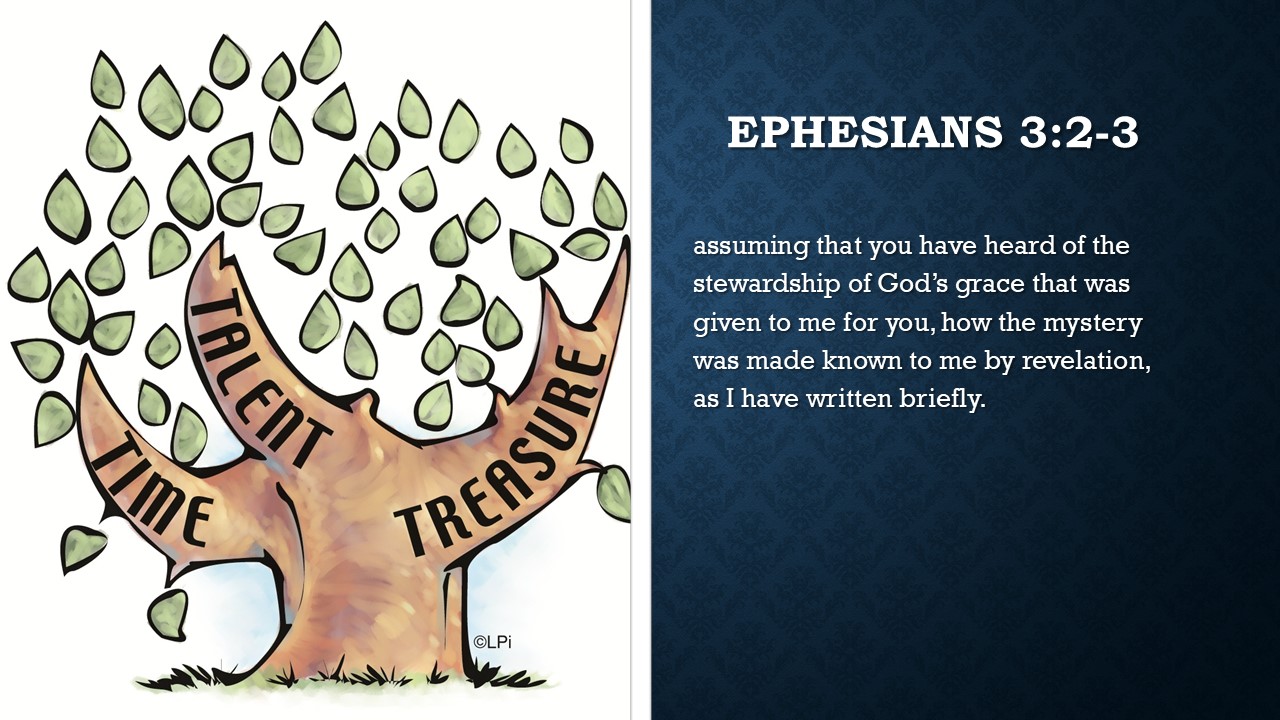
- Stewardship of God’s Grace: Paul describes his apostolic role as a stewardship of God’s grace, entrusted to him for the Gentiles. His mission was not self-appointed but divinely given, and he manages the responsibility of proclaiming God’s grace in alignment with the unfolding of His redemptive plan.
- Stewardship Defined: Let’s look deeper into the concept of “stewardship” in biblical terms. A steward is someone who manages something that belongs to someone else. Paul’s use of this word suggests that he saw himself as a manager of God’s grace—responsible for distributing it faithfully to the Gentiles. This idea of stewardship applies to modern Christians. God has entrusted grace to us that we should share with others.
- Mystery Made Known by Revelation: The “mystery” (μυστήριον, mysterion) Paul refers to is God’s previously hidden plan to include Gentiles as full heirs with Israel. This mystery was not revealed until Christ’s coming and was made known to Paul directly by divine revelation (Galatians 1:11-12), indicating the intentionality of God’s plan from the beginning.
Discussion Question: How do we, as Christians today, steward the gospel? How do we ensure that we remain faithful to what God has entrusted to us, especially in sharing His grace with others?

Verses 4-6: The Mystery Now Revealed—Gentiles Are Fellow Heirs
When you read this, you can perceive my insight into the mystery of Christ, which was not made known to the sons of men in other generations as it has now been revealed to his holy apostles and prophets by the Spirit. This mystery is that the Gentiles are fellow heirs, members of the same body, and partakers of the promise in Christ Jesus through the gospel.

- Not Made Known in Other Generations: The “mystery of Christ”—the inclusion of the Gentiles—was hidden in previous generations. While the Old Testament prophets gave glimpses (Isaiah 49:6), the full revelation came with Christ. Paul, entrusted with this mystery, reveals that Gentiles are now co-heirs with Israel.
- Fellow Heirs: Gentiles now share equally in the inheritance promised by God. In the Old Testament, Israel was seen as the primary recipient of God’s promises, but through Christ, Gentiles are brought into this inheritance. They are fellow heirs of eternal life, blessings, and a relationship with God.
- Members of the Same Body: Gentiles are also fully integrated into the body of Christ, the Church. This metaphor illustrates the unity and interdependence of Jews and Gentiles as one body under Christ. Historically divided, these groups now share in the same spiritual life, breaking down centuries of separation.
C.S. Lewis, Mere Christianity:
“It is easy to think that the Church has a lot of different objects—education, building, missions, holding services. The Church exists for nothing else but to draw men into Christ, to make them little Christs. If they are not doing that, all the cathedrals, clergy, missions, sermons, even the Bible itself, are simply a waste of time. God became Man for no other purpose.”
CS Lewis’ quote underscores the purpose of the Church, which is to bring people into Christ and shape them into His image. Through the gospel, both Jews and Gentiles are transformed through discipleship. This transformation is central to God’s redemptive plan for all who believe.
- Partakers of the Promise in Christ: Both Jews and Gentiles are now “partakers” of the promises made in Christ. These promises include the forgiveness of sins, the indwelling of the Holy Spirit, and the hope of eternal life. The phrase “in Christ Jesus” reminds us that these promises are available only through Jesus and His redemptive work. What was once limited to Israel is now extended to the entire world through the gospel.
Discussion Question: How does Paul’s revelation that Gentiles are fellow heirs and members of the same body challenge our understanding of the Church today? How should this unity affect how we interact with believers from different backgrounds or traditions?

Verses 7-9: Paul’s Role as a Minister of the Mystery
Of this gospel I was made a minister according to the gift of God’s grace, which was given me by the working of his power. To me, though I am the very least of all the saints, this grace was given, to preach to the Gentiles the unsearchable riches of Christ, and to bring to light for everyone what is the plan of the mystery hidden for ages in God, who created all things.
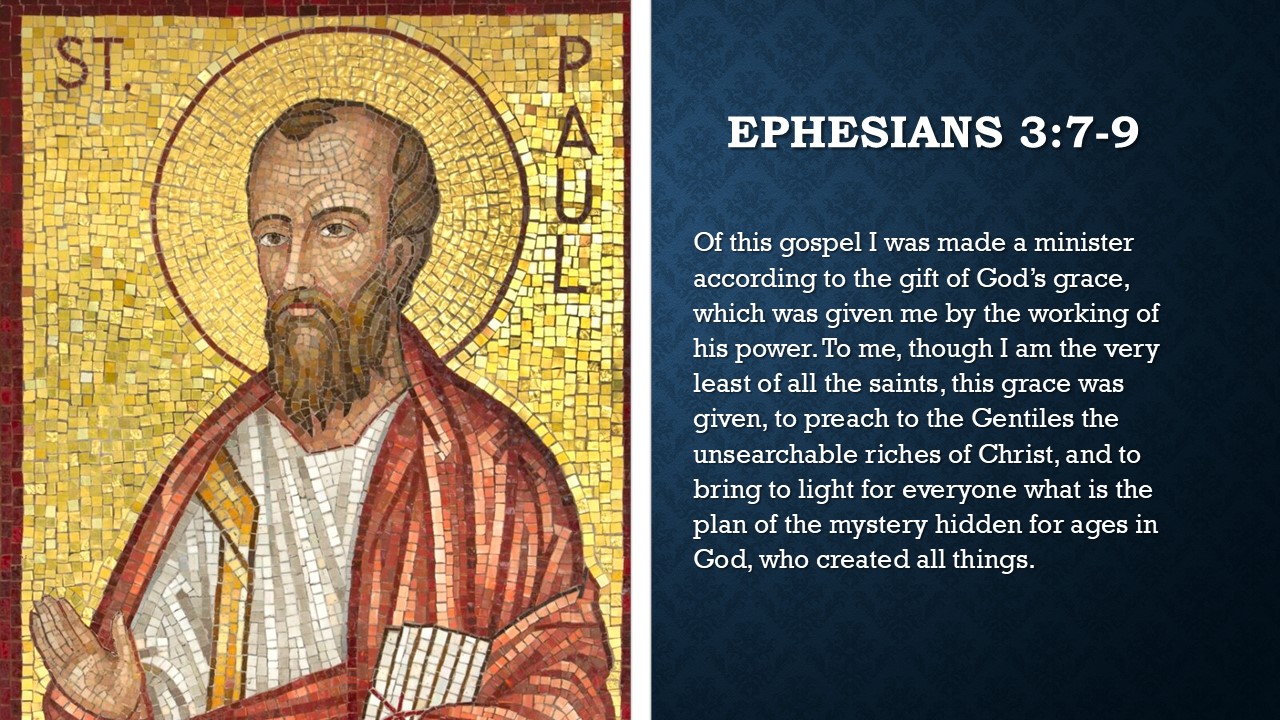
- Minister by God’s Grace: Paul emphasizes that his ministry (διάκονος, diakonos) was not something he earned, but a gift of grace. His calling to the Gentiles was a divine assignment, empowered by God’s work in his life (Acts 9:15).
- Grace in Ministry: Paul viewed his ministry as a gift of grace. Many people think of grace only in terms of salvation, but Paul understood that his calling, abilities, and endurance in ministry were also given by God’s grace. This idea connects to spiritual gifts in the broader Church (Romans 12:6-8; 1 Corinthians 12:4-11). Every believer is given grace for a specific purpose in the Church.
- Least of All the Saints: Paul humbly refers to himself as “the least of all the saints,” recognizing his past as a persecutor of the Church. His selection by grace illustrates that God often chooses the unlikely for His purposes. This isn’t false modesty but a genuine recognition of his past (as a persecutor of the Church). Compare his attitude here to passages like 1 Timothy 1:15, where he calls himself the “chief of sinners.” This emphasizes that no one is beyond God’s grace and usefulness in the kingdom, regardless of their past.
- Unsearchable Riches of Christ: The Greek word for “unsearchable” is ἀνεξιχνίαστος (anexichniastos), meaning “unable to be fully explored.” These riches include forgiveness, eternal life, and the inheritance of God’s kingdom. Paul’s mission is to reveal these boundless riches to the Gentiles, previously excluded from such blessings.
What are these “unsearchable riches of Christ?” I mentioned this quote last time, but I looked it up to get it accurate. That’s important because I think you’ll agree CS Lewis is more eloquentor than me:
C.S. Lewis, The Weight of Glory:
“We are half-hearted creatures, fooling about with drink and sex and ambition when infinite joy is offered us, like an ignorant child who wants to go on making mud pies in a slum because he cannot imagine what is meant by the offer of a holiday at the sea. We are far too easily pleased.”
- Humanity often settles for lesser pleasures, but God offers infinite joy in Christ—riches that are incomprehensible and far surpass anything the world offers. Paul’s message to the Gentiles is that they are now included in these immeasurable riches through the gospel.
Discussion Question: How do we see God’s grace not just in salvation, but in the gifts and opportunities He gives us to serve His kingdom? What might this look like in the life of a believer today?
Verses 10-11: The Purpose of the Church—Displaying God’s Wisdom
so that through the church the manifold wisdom of God might now be made known to the rulers and authorities in the heavenly places. This was according to the eternal purpose that he has realized in Christ Jesus our Lord.
- Through the Church: The Church, made up of Jews and Gentiles, plays a crucial role in revealing God’s wisdom. The unity of the Church serves as a display of God’s multifaceted wisdom to both earthly and spiritual realms.
- Manifold Wisdom of God: The word “manifold” (πολυποίκιλος, polupoikilos) suggests a wisdom that is richly diverse and complex. God’s wisdom in reconciling Jews and Gentiles into one body demonstrates His redemptive power to bring unity out of division.
- The Church as a Witness to the Spiritual Realm: The Church’s unity and existence declare God’s sovereignty and victory to the rulers and authorities in the heavenly places. The spiritual realm observes God’s eternal plan unfolding through the Church.
N.T. Wright, Simply Christian:
“The church exists primarily for two closely correlated purposes: to worship God and to work for his kingdom in the world. The church also exists for a third purpose, which serves the other two: to encourage one another, to build one another up in faith, to pray with and for one another, to learn from one another and to teach one another, and to set one another examples to follow.”
Wright’s description of the Church’s mission aligns with Paul’s teaching that the Church’s unity displays God’s wisdom to both earthly and spiritual realms. The fellowship of the Church is a testimony of God’s redemptive work.
Discussion Question: How does the unity of the Church, made up of Jews and Gentiles, display the wisdom of God to both human and spiritual realms? How should this shape our understanding of the Church’s mission?

Verses 12-13: Boldness and Confidence Through Faith
in whom we have boldness and access with confidence through our faith in him. So I ask you not to lose heart over what I am suffering for you, which is your glory.

- Boldness and Access with Confidence:
Paul emphasizes that both Jews and Gentiles now have bold and confident access to God through Christ. This is a radical shift from the Old Testament system, where only the high priest could enter the Holy of Holies once a year (Hebrews 9:7). Now, through the finished work of Christ, the barrier between humanity and God has been removed. The veil that once separated man from God has been torn (Matthew 27:51), symbolizing the direct and unrestricted access believers now have.- Boldness: The Greek word here, παρρησία (parrēsia), carries the idea of openness, freedom of speech, and confidence without fear of rejection. Believers no longer need to approach God with hesitation or fear of judgment but can come before Him with full assurance of acceptance because of Christ’s work.
- Confidence: This confidence is rooted in the certainty that believers are fully reconciled with God. It’s a confidence not in ourselves, but in what Christ has accomplished. Hebrews 4:16 encourages us to “approach God’s throne of grace with confidence,” knowing that we will receive mercy and grace in our time of need.
- Through Faith in Him:
Paul makes it clear that this bold access is granted through faith in Christ, not by works or status. Faith is the means by which we enter into this new relationship with God. This faith is not just intellectual belief, but trust in Christ’s finished work on the cross. This stands in contrast to the idea that access to God could be earned by following the law or through temple sacrifices.
Historical Insight:
This would have been a revolutionary message for both Jews and Gentiles. For Jews, the temple rituals had symbolized the distance between a holy God and sinful humanity. For Gentiles, who were often viewed as unclean by Jewish standards, the idea of having equal access to God through Christ would have been profoundly liberating. This access is no longer limited to a select few, but is open to all who have faith in Jesus.
- Paul’s Encouragement to the Ephesians:
In verse 13, Paul shifts to address the Ephesians’ potential discouragement over his imprisonment. Paul urges them not to “lose heart” because of his suffering. He reminds them that his imprisonment is not a cause for despair but part of God’s plan to advance the gospel. Paul’s suffering is for their benefit—“for your glory”—because it has resulted in the Gentiles being included in God’s family. Paul sees his suffering as purposeful, not as a setback, but as part of the unfolding of God’s redemptive plan.
Suffering and Glory:
The connection between suffering and glory is a recurring theme in Paul’s letters. In Romans 8:17-18, Paul writes that “we share in His sufferings in order that we may also share in His glory.” For Paul, suffering for the sake of the gospel is never in vain; it always leads to a greater manifestation of God’s glory, both in the present and in the future. By sharing in Christ’s sufferings, Paul and other believers share in the expansion of the kingdom.
- Boldness in Prayer: How often do believers approach God hesitantly, unsure if they are worthy or if God will answer? This passage encourages us to approach God boldly, without fear or doubt, trusting fully in Christ’s work. This boldness in prayer should lead to a more intimate and consistent relationship with God.
- Confidence in Our Access to God: Many Christians struggle with feelings of unworthiness or a fear that God may not fully accept them. Paul’s words remind us that our access to God is not based on our performance but on our faith in Christ. This should radically change the way we think about our relationship with God, leading to deeper confidence in His love and acceptance.
- Suffering for the Gospel: Paul’s example of suffering should challenge us to consider how we view hardships in our own lives, especially those related to our faith. Do we see our struggles as barriers or as opportunities to participate in God’s work? Believers today can endure suffering for the sake of the gospel with the same perspective Paul had.
Discussion Question: What does it mean to have “boldness and access with confidence” before God? How does this truth affect the way we pray and relate to God?
Conclusion
- Paul’s Imprisonment: Paul’s imprisonment isn’t an obstacle but part of God’s plan to reveal the mystery of salvation to the Gentiles. His suffering is not a deterrent but a demonstration of the cost and commitment required to fulfill God’s calling.
- The Mystery Revealed: The full inclusion of Gentiles into God’s family, once hidden, is now fully revealed in Christ. This plan was always in the works, from the very beginning of God’s covenant with Abraham to the culmination of salvation history in Christ.
- Paul’s Ministry: Paul’s ministry is a testimony to God’s grace, using someone who once persecuted the Church to be a messenger of reconciliation. His role as an apostle to the Gentiles shows that God equips and uses unlikely people for significant purposes in His plan.
- The Church’s Role: The Church, comprised of Jews and Gentiles, is a living display of God’s manifold wisdom to both humanity and the spiritual realm. It serves as a model of unity, reconciliation, and God’s eternal purpose.
- Access to God: Through faith in Christ, all believers—regardless of their background—have bold and confident access to God. This access is a gift of grace, not earned, but given freely through faith in Christ.

To God be the glory, amen.

 Chasing the Wind
Leave a comment