I. Introduction – What Do We Do Under Pressure?
It is easy to be a Christian at church. We are in our safe place, surrounded by brothers and sisters who encourage us. However, in a less-friendly environment, do we still profess Christ? There are good, biblical reasons to share our faith; first and foremost is because Christ Himself calls us to do so. Matthew 28:19 states, “Therefore go and make disciples of all nations.” We share the gospel because God first loved us and continues to love and forgive us despite our many failings. It’s our calling to share that love and forgiveness with the world.
When in the world, there are less-flattering words to describe our faith: reluctance, shyness, embarrassment. We care too much about what people think. Many of us struggle with demonstrating our faith openly. Many of us learn this lesson the hard way, experiencing a crisis of faith that brings us to our knees, realizing our own shortcomings and the necessity of truly trusting God.
II. Jesus’ Prophecy and Peter’s Denial (Matthew 26:57-61)
Matthew 26:57-61 describes Jesus being taken to Caiaphas, the high priest, where the teachers of the law and elders had assembled. This setting is crucial for understanding the gravity of Peter’s denial. Jesus’ trial was a high-stakes environment, charged with hostility towards Him and His followers.
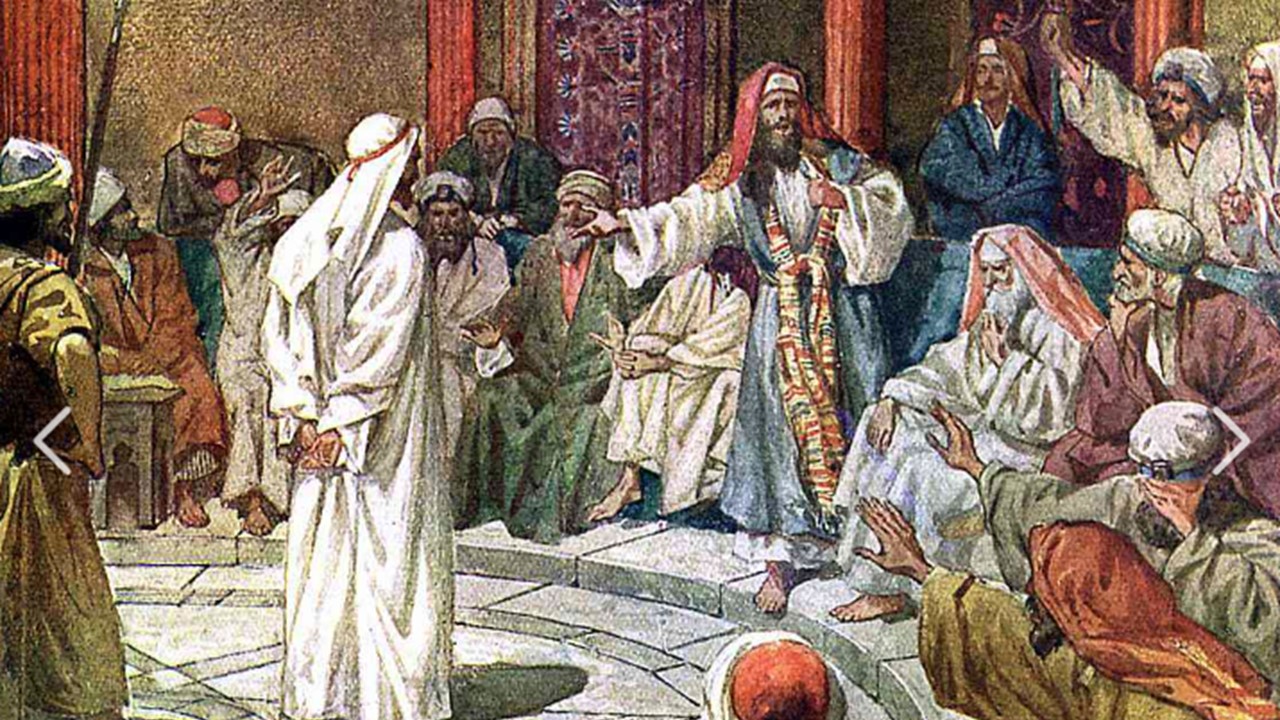
I had presumed when I first read this passage long ago that it was a casual setting, but here’s a video I think illustrates what’s going on.
Verses 57-58:
Those who had arrested Jesus took Him to Caiaphas, the high priest, where the teachers of the law and the elders had assembled. But Peter followed Him at a distance, right up to the courtyard of the high priest. He entered and sat down with the guards to see the outcome.
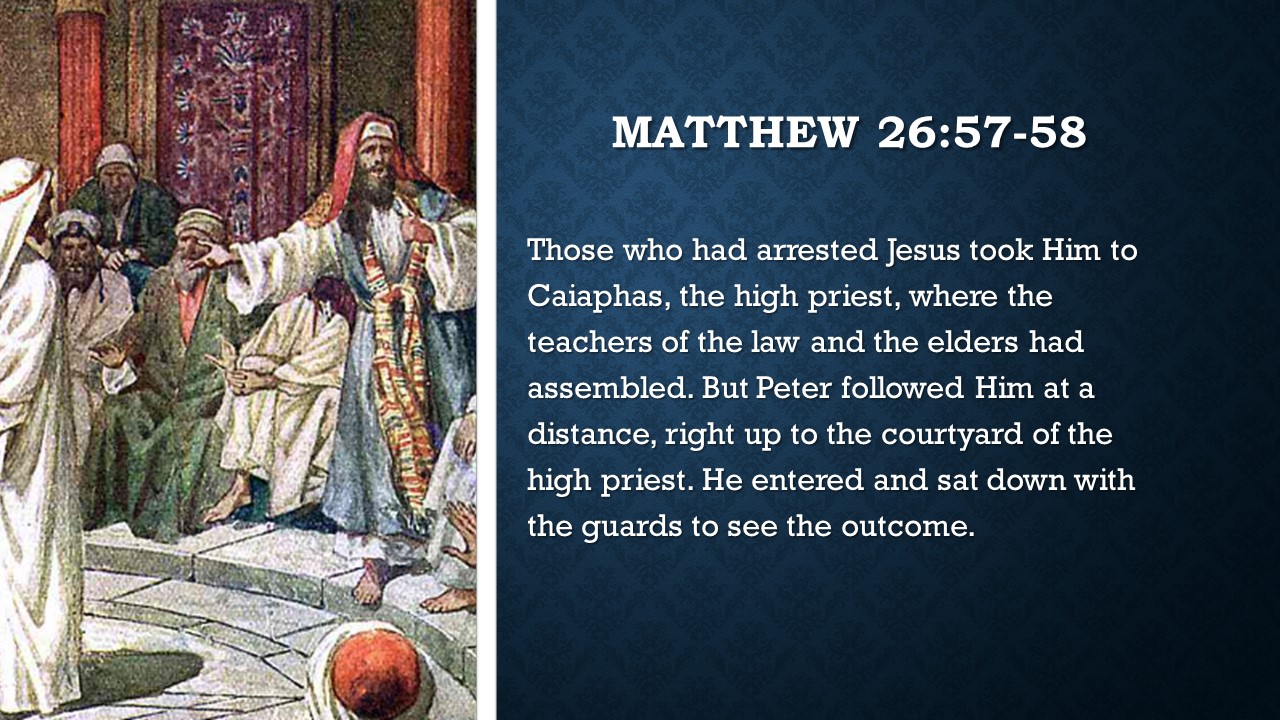
Peter, following Jesus at a distance, finds himself in a precarious position, torn between his loyalty to Jesus and his fear for his own safety. This tension sets the stage for his subsequent denial.
Discussion Question: Why do you think Peter followed Jesus “at a distance”?
Peter’s actions reflect a mix of fear and loyalty, showing his internal conflict.
III. False Testimonies Against Jesus (Matthew 26:62-64)
Verses 59-61:
The chief priests and the whole Sanhedrin were looking for false evidence against Jesus so that they could put Him to death. But they did not find any, though many false witnesses came forward. Finally, two came forward and declared, ‘This fellow said, “I am able to destroy the temple of God and rebuild it in three days.”‘
The religious leaders’ desperation to convict Jesus is evident in their reliance on false witnesses. This illustrates the extent of their opposition to Him and sets the backdrop for Peter’s fear.
Verses 62-64:
Then the high priest stood up and said to Jesus, ‘Are You not going to answer? What is this testimony that these men are bringing against You?’ But Jesus remained silent. The high priest said to Him, ‘I charge You under oath by the living God: Tell us if You are the Messiah, the Son of God.’ ‘You have said so,’ Jesus replied. ‘But I say to all of you: From now on you will see the Son of Man sitting at the right hand of the Mighty One and coming on the clouds of heaven.’
Jesus’ bold declaration of His identity as the Messiah, despite knowing it would lead to His death, contrasts sharply with Peter’s denials. Jesus’ unwavering commitment to His mission highlights the cost of discipleship.
Discussion Question: How does Jesus’ response to the high priest demonstrate His understanding of His mission?
Jesus’ response shows His acceptance of His role and the fulfillment of prophecy.
IV. Peter’s Denial (Matthew 26:69-75)
Let’s consider the three denials Peter made, each a strike against his loyalty to Jesus.
Denial Strike One:
Verses 69-70:
Now Peter was sitting out in the courtyard, and a servant girl came to him. ‘You also were with Jesus of Galilee,’ she said. But he denied it before them all. ‘I don’t know what you’re talking about,’ he said.
In this first denial, Peter is confronted by a servant girl and denies knowing Jesus, likely out of fear and a desire to protect himself.

Denial Strike Two:
Verses 71-72:
Then he went out to the gateway, where another servant girl saw him and said to the people there, ‘This fellow was with Jesus of Nazareth.’ He denied it again, with an oath: ‘I don’t know the man!’
Peter’s second denial is more vehement, as he swears an oath that he does not know Jesus. The pressure is mounting, and Peter’s fear is driving him further away from his professed loyalty.
Denial Strike Three:
Verses 73-75:
After a little while, those standing there went up to Peter and said, ‘Surely you are one of them; your accent gives you away.’ Then he began to call down curses, and he swore to them, ‘I don’t know the man!’ Immediately a rooster crowed. Then Peter remembered the word Jesus had spoken: ‘Before the rooster crows, you will disown Me three times.’ And he went outside and wept bitterly.
Peter’s third and final denial is the most intense. He calls down curses and swears he does not know Jesus. Immediately after this, the rooster crows, fulfilling Jesus’ prophecy. Peter’s realization of his failure leads him to weep bitterly.
Peter’s three denials reflect his human weakness and fear. His reaction is a powerful reminder of our own struggles with faith under pressure. The fulfillment of Jesus’ prophecy about Peter’s denial underscores the omniscience of Jesus and the inevitability of human frailty.
V. Peter’s Emotional Turmoil and Our Own Struggles
Peter’s emotional turmoil after his denial can be likened to our own experiences of failure and remorse. The Greek word used for “wept bitterly” in verse 75 is “κλαυθμός” (klauthmos), which conveys a sense of deep, agonizing sorrow. This word choice emphasizes, not just sadness, but immense regret Peter felt.
Peter’s denial and subsequent sorrow remind us that failure is part of the human experience, but it’s not the end of the story. Scripture provides numerous examples of God’s people facing failure and finding redemption.
Consider the apostle Paul, who wrote in Romans 7:15-20 about his struggle with sin:
“For I do not understand my own actions. For I do not do what I want, but I do the very thing I hate. Now if I do what I do not want, I agree with the law, that it is good. So now it is no longer I who do it, but sin that dwells within me. For I know that nothing good dwells in me, that is, in my flesh. For I have the desire to do what is right, but not the ability to carry it out. For I do not do the good I want, but the evil I do not want is what I keep on doing.”

Paul’s admission of his struggle with sin echoes Peter’s denial and our own struggles with faith and obedience. It’s a reminder that even the most dedicated followers of Christ are not immune to failure.
John C. Maxwell once said, “Pride deafens us to the advice or warnings of those around us.” This encapsulates Peter’s predicament as he refused to heed Jesus’ warning about his impending denial.
VI. Pride and Its Consequences
Peter’s pride is a significant factor in his denial of Christ. He boldly declared in Matthew 26:33, “Even if all fall away on account of you, I never will.” This statement reflects an overestimation of his own strength and an underestimation of his human frailty.
Proverbs 16:18:
“Pride goes before destruction, a haughty spirit before a fall.”

Peter’s story is a powerful illustration of this proverb. His pride led to his downfall, but it also set the stage for his redemption. C.S. Lewis, in “Mere Christianity,” describes pride as “the complete anti-God state of mind.” This perspective highlights the destructive nature of pride and its ability to separate us from God.
In contrast to biblical teachings on humility and dependence on God, secular values often emphasize self-sufficiency and personal achievement. While self-confidence and ambition are not inherently negative, they can lead to pride if not balanced with humility and recognition of our dependence on God.
Discussion Question: How does pride impact our relationship with God and others?
Pride can create a barrier between us and God, as well as between us and other people, leading to isolation and a lack of authentic relationships.
VII. Redemption and Restoration
Despite Peter’s failure, his story does not end with his denial. After Jesus’ resurrection, He appears to Peter and the other disciples, offering forgiveness and restoration.
John 21:15-17:
“When they had finished eating, Jesus said to Simon Peter, ‘Simon son of John, do you love me more than these?’ ‘Yes, Lord,’ he said, ‘you know that I love you.’ Jesus said, ‘Feed my lambs.’ Again Jesus said, ‘Simon son of John, do you love me?’ He answered, ‘Yes, Lord, you know that I love you.’ Jesus said, ‘Take care of my sheep.’ The third time he said to him, ‘Simon son of John, do you love me?’ Peter was hurt because Jesus asked him the third time, ‘Do you love me?’ He said, ‘Lord, you know all things; you know that I love you.’ Jesus said, ‘Feed my sheep.’”
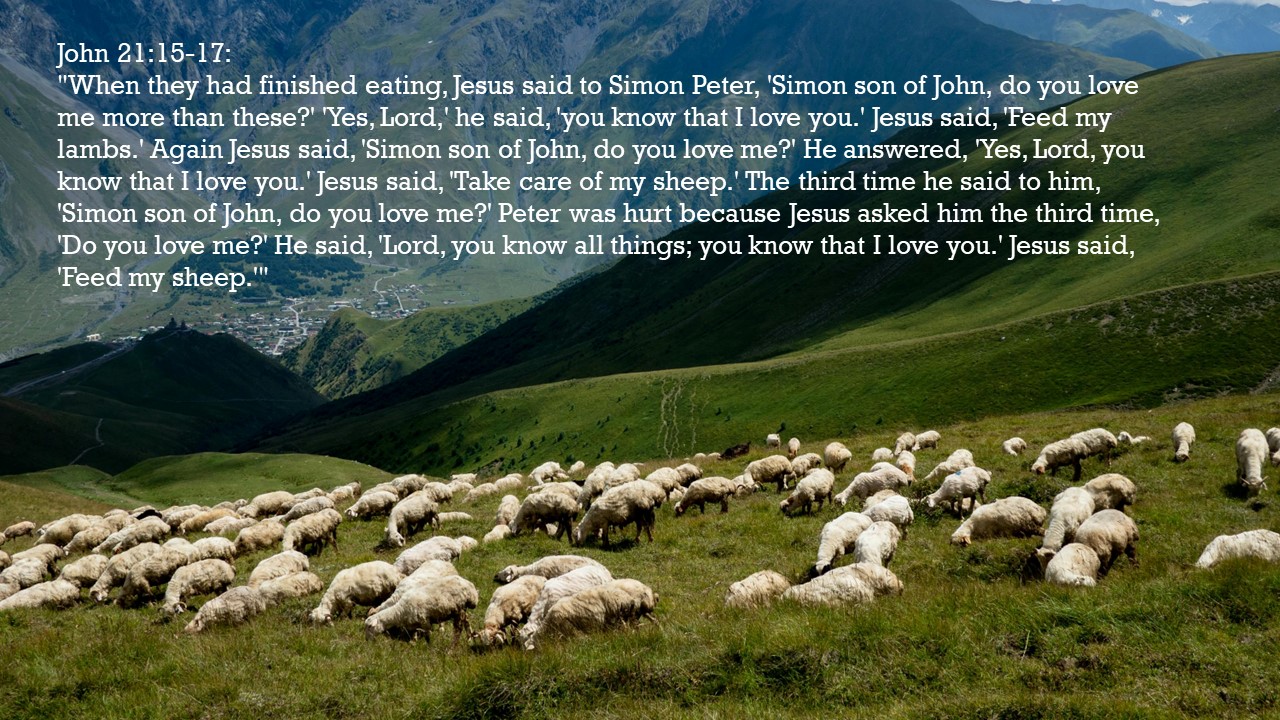
This passage illustrates Jesus’ willingness to forgive and restore Peter, reaffirming his role in the early church. It demonstrates that our failures do not disqualify us from serving God. Notice that Jesus asks Peter three times if he loves Him, mirroring Peter’s three denials, which highlights the complete restoration and forgiveness Jesus offers.
2 Corinthians 12:9:
“But he said to me, ‘My grace is sufficient for you, for my power is made perfect in weakness.’ Therefore I will boast all the more gladly about my weaknesses, so that Christ’s power may rest on me.”

Paul’s words remind us that God’s grace is sufficient for us, even in our weaknesses. Our failures and shortcomings are opportunities for God’s power to be displayed in our lives.
Discussion Question: How does Jesus’ restoration of Peter encourage us in our own failures?
It shows that God’s forgiveness is available to us and that our failures do not define us.
VIII. Comparing Biblical and Secular Values
The themes of humility, forgiveness, and restoration in Peter’s story contrast sharply with secular values that often emphasize personal success, self-reliance, and pride. While the world may value independence and achievement, the Bible teaches us the importance of recognizing our dependence on God and the need for His grace.
James 4:10:
“Humble yourselves before the Lord, and He will lift you up.”
This verse encapsulates the biblical principle that true exaltation comes from humility and submission to God, not from our own efforts or achievements.
In contemporary culture, pride and self-promotion are often seen as necessary for success. Social media platforms, for example, can encourage a focus on self-image and personal branding, which can lead to pride and a lack of authenticity. However, the Bible calls us to a different standard, one that values humility, honesty, and dependence on God.
Discussion Question: How can we navigate the tension between secular values of pride and self-promotion and biblical values of humility and dependence on God?
We can strive to live authentically, prioritizing our relationship with God and seeking to honor Him in all we do, rather than seeking the approval of others.
IX. Conclusion – Peter’s Journey and Our Own
Peter’s journey from pride and denial to remorse and restoration is a powerful testament to the transformative power of God’s grace. It encourages us to persevere in our faith, even when we fall short, trusting in His unwavering love and mercy.
Peter’s story reminds us that failure is not the end. Through repentance and God’s grace, we can be restored and continue to serve Him. This lesson encourages us to reflect on our own lives, recognize our need for God’s grace, and strive to live humbly and faithfully, trusting in His promise of forgiveness and restoration.
To God be the glory. Amen.

 Chasing the Wind
Leave a comment