
I. Introduction
Think about all the doors you passed through today.
You probably didn’t think about a single one of them. You just walked through. That’s what doors do when they’re working correctly — they’re invisible. You don’t think about a door until it’s locked and you don’t have the key, or someone slams it in your face, or you try one that turns out not to be yours.

A door creates a boundary. It tells you there is an inside and an outside. It tells you access exists, but not unlimited access.
And some doors matter more than others. The door to your house is one thing. The door to a hospital ICU is another. A prison door is yet another. The door of Noah’s ark in Genesis was not decorative — it was the difference between judgment and rescue. The blood-marked doorposts in Egypt at Passover marked the difference between death and deliverance. When God told the Israelites to put the blood of the lamb on the doorframe, He wasn’t giving them an art project. He was telling them exactly where safety was.
So when Jesus says in John 10, “I am the door,” He isn’t giving us a cozy pastoral image. He’s making a claim about salvation, about access to God, and about who gets in and who doesn’t.
We’re continuing our series through the seven “I AM” statements of Jesus in the Gospel of John:
- I AM the Bread of Life
- I AM the Light of the World
- I AM the Door
- I AM the Good Shepherd
- I AM the Resurrection and the Life
- I AM the True Vine
- I AM the Way, the Truth, and the Life
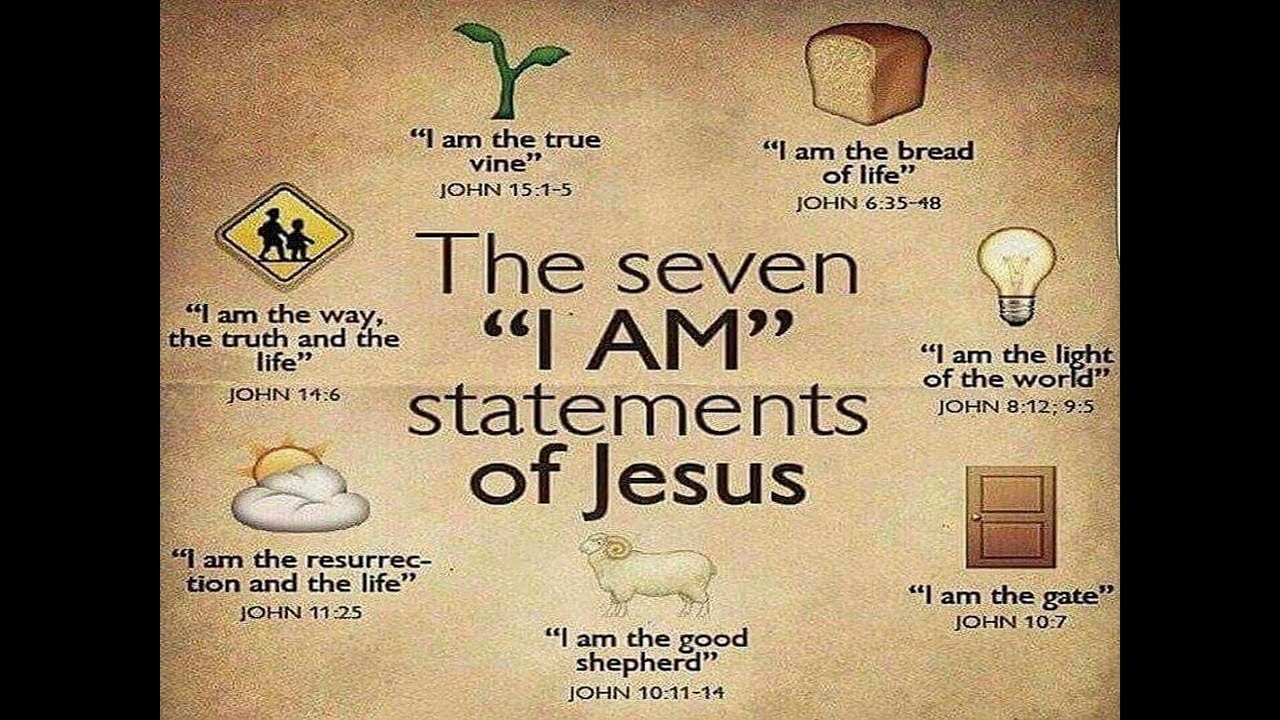
These aren’t random metaphors. Each one reveals something essential about who Jesus is. When Jesus says “I AM,” He’s using the same words God used when He revealed Himself to Moses in Exodus 3:14: “I AM WHO I AM.” Jesus isn’t saying He knows God, or that He’s close to God, or that He speaks for God. He’s identifying Himself as the God of Israel.
So: Bread tells us Jesus is necessary for life. Light tells us Jesus reveals truth. The Door tells us Jesus is the only access point into salvation and fellowship with God.
That last one is what makes people uncomfortable.
Discussion Question: Why do people often like the idea of Jesus as a teacher or helper, but resist the idea that He is the only door?
II. The Setting — Don’t Skip John 9
John 10 does not start fresh. John didn’t write the Gospel of John with chapter numbers, those were added later in the 1200s AD. According to my advanced theological studies, John 10 follows directly after John 9; I hope I’m not going too fast.
The point is, John 10 is not a brand-new scene. It is a continuation of the story in John 9.
Back in the previous lesson, Jesus said, “I am the Light of the World.” And John 9 shows us what that looks like in real life. Jesus heals a man who had been blind since birth. The man had never seen color, never seen his parents’ faces, never seen the sky. And Jesus gives him sight.
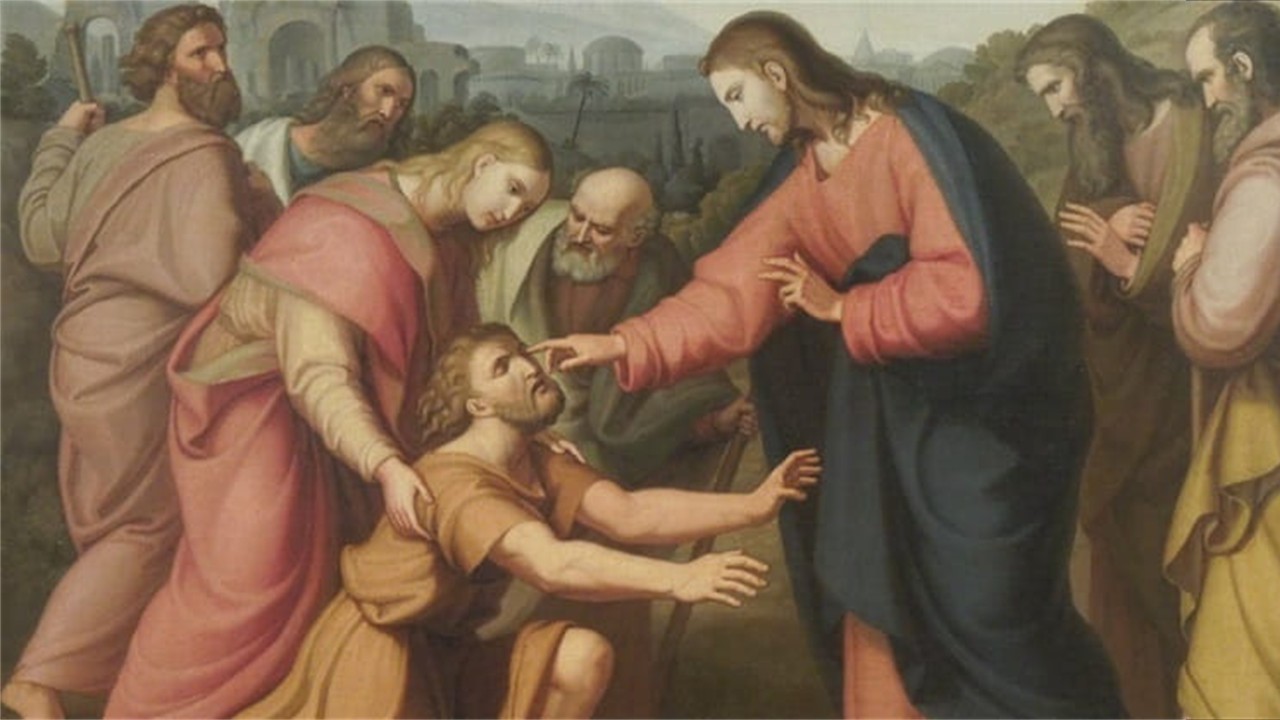
You would think everyone would celebrate. They do not.
The Pharisees interrogate the man. They interrogate his parents. They’re not interested in the miracle. They’re upset because Jesus healed on the Sabbath. Instead of rejoicing that someone who was blind can see, they become hostile because Jesus doesn’t fit their system.
John puts two kinds of blindness side by side. The man born blind receives physical sight and, over the course of the chapter, recognizes exactly who Jesus is — first “the man called Jesus,” then a prophet, then someone from God, and finally, when Jesus reveals Himself, the man says, “Lord, I believe,” and worships Him. Meanwhile the Pharisees move in the opposite direction. The Light is standing right in front of them, and they resist it.
At the end of John 9, Jesus says: “For judgment I came into this world, that those who do not see may see, and those who see may become blind.” The Pharisees ask, “Are we also blind?” Jesus answers: “If you were blind, you would have no guilt; but now that you say, ‘We see,’ your guilt remains.”
That’s the immediate background. Jesus is not changing subjects when He moves into John 10. He’s still talking about the same situation. The Pharisees were supposed to be shepherds of Israel. They were supposed to lead God’s people toward God. Instead, they cast the healed man out. They didn’t protect the sheep — they expelled him.
Ezekiel 34 is the key background passage here. God condemns the shepherds of Israel in pretty strong terms. They fed themselves instead of the flock. They ruled harshly. They didn’t search for the lost. And then God makes a promise — He says He Himself will come and shepherd His people. He will seek the lost. He will bind up the injured.
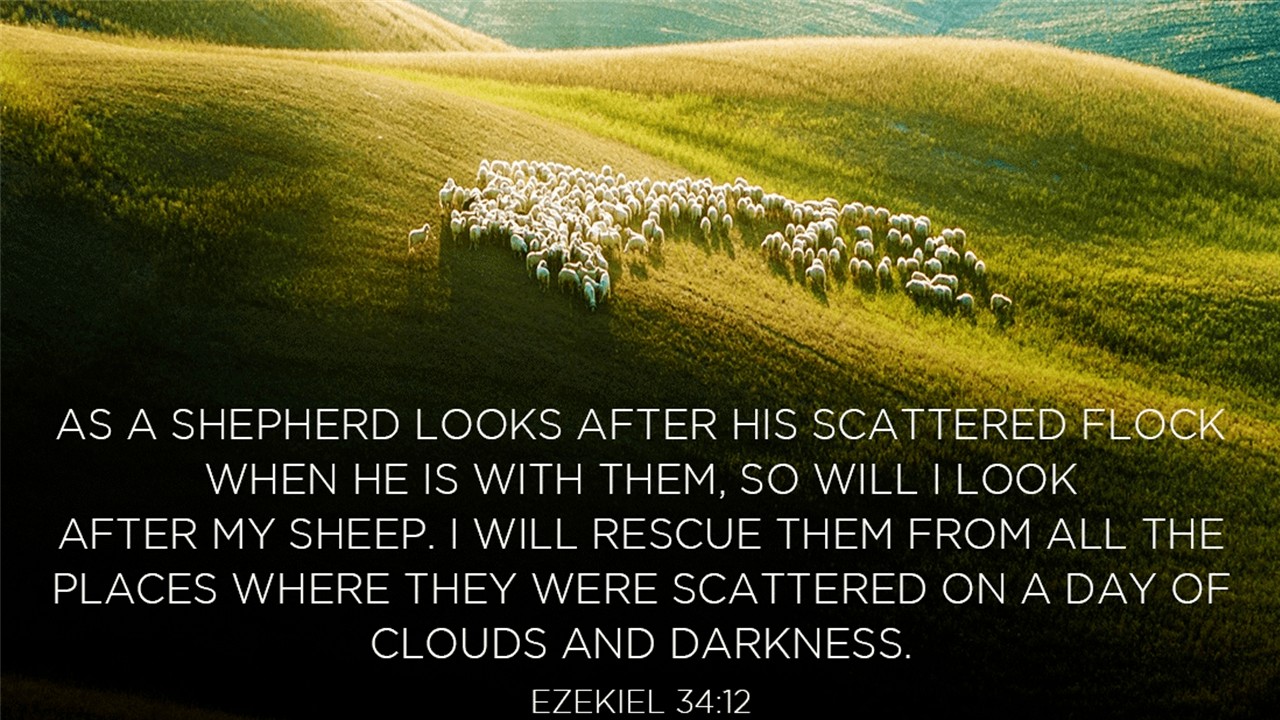
That promise is behind John 10. Jesus is identifying Himself as the fulfillment of Ezekiel’s prophecy. He is the Shepherd God promised to send. And the Pharisees, who should have recognized that, are instead acting like gatekeepers of their own system — casting out the sheep instead of caring for them.
So when Jesus starts talking about thieves and robbers and the door of the sheepfold, He’s not giving a random farming illustration. He’s explaining exactly what just happened.
Discussion Question: What are some ways religious leaders today can fall into the same pattern as the Pharisees — protecting the system instead of caring for people?
III. The Door — And the People Who Climb Over the Wall
John 10:1–2:
“Truly, truly, I say to you, he who does not enter the sheepfold by the door but climbs in by another way, that man is a thief and a robber. But he who enters by the door is the shepherd of the sheep.”
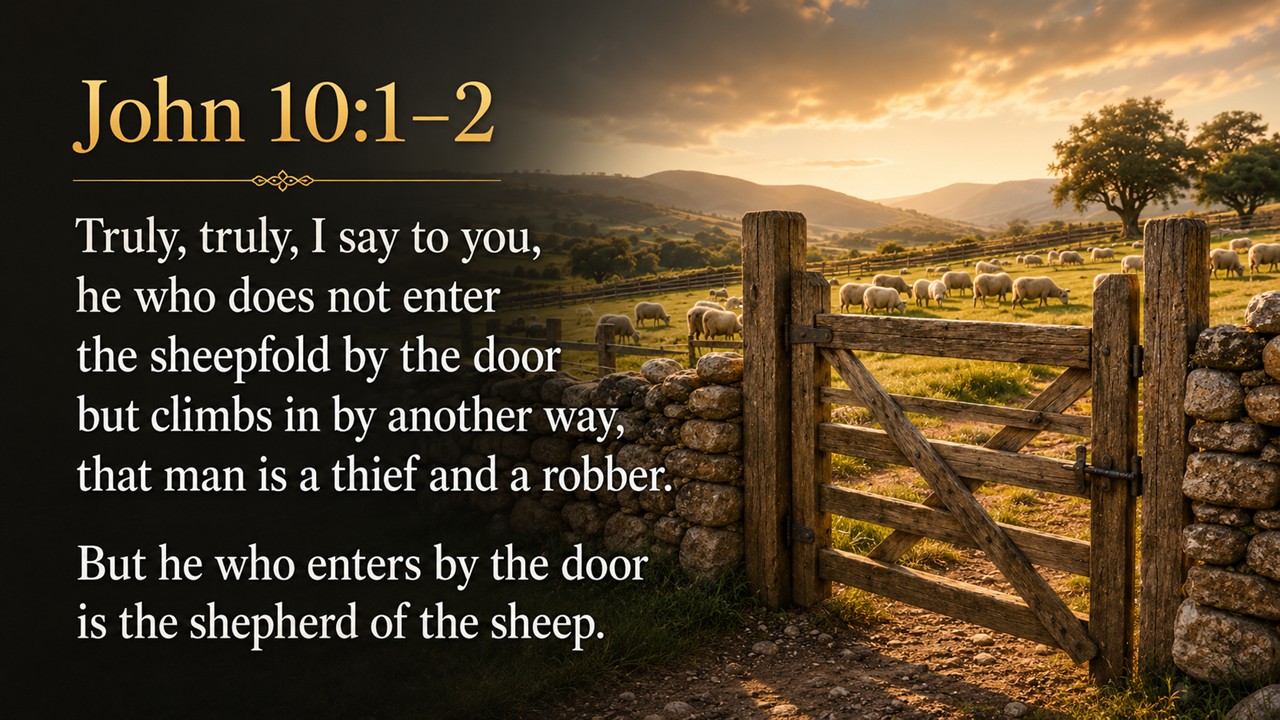
The phrase “Truly, truly” is Jesus signaling that what follows is serious. Not casual teaching. He’s drawing a line.
There is a legitimate way into the sheepfold, and there are illegitimate ways. The shepherd enters through the door. The thief climbs over the wall. That means not everyone who is interested in sheep has good intentions toward them.
Then in verses 7 and 9, Jesus explains the image plainly:
“Truly, truly, I say to you, I am the door of the sheep… I am the door. If anyone enters by Me, he will be saved and will go in and out and find pasture.”
He says it twice. That’s deliberate. The Door is not a system, not a religion, not a set of practices, not an ethnicity, not a family background. The Door is a Person.
The Greek word is thyra — a door, gate, entrance. Jesus isn’t standing near the door. He is the door.
And that means the question isn’t “Are you religious?” or “Are you sincere?” or “Are you a decent person?” The question is whether you’ve entered through Christ.
Because there are plenty of other ways people try to get in. People climb over the wall of morality: “I’m a good person.” People climb over the wall of heritage: “My parents were Christians.” People climb over the wall of church attendance, or theological knowledge, or feeling spiritual, or doing charitable things. None of those are the door.
Now, that sounds exclusive. It is exclusive. But think about it from this angle: if a building is on fire and there’s one exit, the loving thing is not to say, “Find your own path, every direction is equally valid.” The loving thing is to point to the door and say, “This way. Go through here.”
Jesus says, “I am the door. If anyone enters by Me, he will be saved.” That’s not arrogance. That’s mercy.
Discussion Question: What are some “other ways” people try to enter a relationship with God besides Christ Himself?
IV. The Sheep Hear His Voice
John 10:3–5:
“To him the gatekeeper opens. The sheep hear his voice, and he calls his own sheep by name and leads them out. When he has brought out all his own, he goes before them, and the sheep follow him, for they know his voice. A stranger they will not follow, but they will flee from him, for they do not know the voice of strangers.”
This is a beautiful image. Shepherds in that part of the world didn’t drive the sheep from behind like cattle. The shepherd went ahead, and the sheep followed because they recognized his voice. Several flocks could be in the same pen, but when a shepherd called, his sheep knew him.
Notice the personal language: “He calls his own sheep by name.” Jesus doesn’t save categories. He saves people. The healed man in John 9 was treated like a problem by the Pharisees. Jesus treated him like a sheep. He found him after he was cast out.
Christian faith, at its center, is this: the sheep know the Shepherd’s voice. Not merely agreeing that certain doctrines are true — though doctrine matters. Not merely belonging to a church — though the church matters. Knowing His voice.
And there are a lot of other voices.
The voice of the world says your identity is something you create and protect. The voice of pride says you don’t need repentance. The voice of shame says you’re beyond grace. The voice of fear says God can’t be trusted. The voice of false religion says Jesus is helpful but not sufficient. The voice of prosperity teaching says following Jesus leads to comfort and ease.
None of those is the Shepherd’s voice.
The Shepherd’s voice says, “Come to Me.” It says, “Follow Me.” It says, “Your sins are forgiven.” It says, “I am the Door.”
This is why Scripture matters so much. I don’t know any other way to learn the Shepherd’s voice. If we spend six days listening to everything else and five minutes in the Word, we shouldn’t be surprised when our spiritual hearing gets dull. The world is forming us whether we notice it or not. The question is whose voice is doing the forming.
Jesus says the sheep hear His voice and follow. Follow, not admire. Biblical hearing isn’t passive. To hear Christ rightly is to respond to Him. Not perfectly. Not without stumbling. But with real allegiance.
The comfort here is that the Shepherd goes before them. He doesn’t send His sheep into territory He hasn’t entered. He leads through suffering, rejection, and even death. He never asks them to walk a road He hasn’t walked first.
Discussion Question: What voices are most effective at pulling Christians away from simple trust and obedience to Christ?
V. Thieves, Robbers, and Counterfeit Doors
John 10:8 and 10:
“All who came before Me are thieves and robbers, but the sheep did not listen to them… The thief comes only to steal and kill and destroy.”
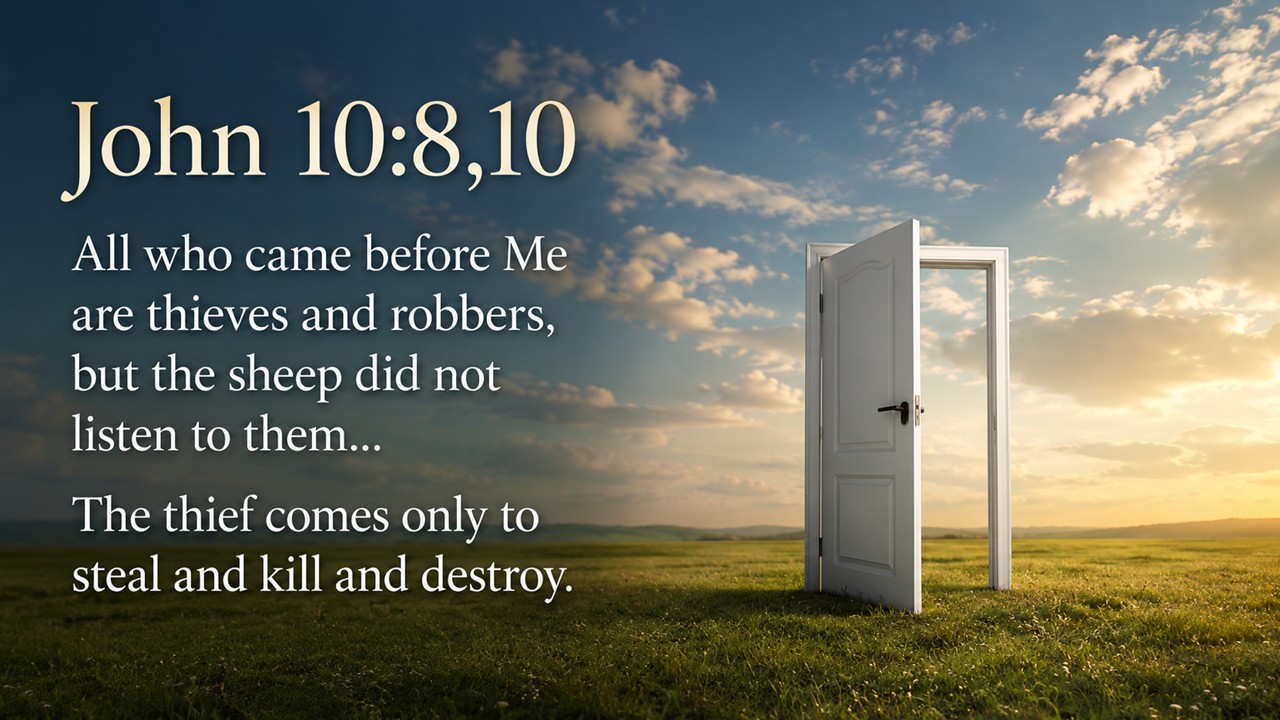
Jesus isn’t saying every prophet before Him was a thief. Moses wasn’t a thief. Isaiah wasn’t. John the Baptist wasn’t. The faithful messengers pointed forward to Christ. Jesus is talking about false messiahs and self-appointed spiritual authorities who claimed access to the sheep apart from God’s appointed way. They didn’t enter through the door. They climbed over the wall.
False teaching usually doesn’t begin by denying Jesus outright. That would be too obvious. More often it just moves Jesus out of the center. He becomes useful but not necessary. Inspirational but not sovereign. Loving but not holy. Helpful but not exclusive.
It works a little like phishing emails. A phishing email does not usually arrive saying, “Hello, I am here to steal your password and ruin your afternoon.” It uses a real logo. It borrows familiar language. It looks close enough to something legitimate that you might trust it. But the link does not take you where it claims. It leads somewhere designed to steal from you.
False teaching often works the same way. It uses biblical words — blessing, faith, grace, victory, abundance, freedom — but the link does not lead to Christ. It leads somewhere else. Maybe to pride. Maybe to performance. Maybe to money. Maybe to emotional comfort. Maybe to a version of Jesus who never confronts sin and never requires repentance.
That is how counterfeit doors are built.
One counterfeit door is moralism. Be a good person and God will accept you. Sounds respectable. Bypasses the cross entirely. If good behavior could save us, Jesus didn’t need to die.
Another is religious performance. Do enough religious things and you’ll be safe. Attend, serve, give, volunteer, keep up appearances. None of that is the door. Religious activity can become a wall people climb over while never entering through Christ.
Another is cultural Christianity. “I’m part of the Christian world. I believe Christian things.” Standing near the sheepfold is not the same as entering through the door.
Another is self-defined faith. “My Jesus would never…” — and then the person fills in the blank with whatever they already wanted to believe. The real Jesus doesn’t submit to our editing. We are clay in His hands, not the other way around.
Jesus says the thief comes to steal and kill and destroy. That’s strong language. False teaching isn’t merely inaccurate. It’s destructive. It wounds sheep. It leaves people outside the door while convincing them they’re safe inside. That’s why it’s dangerous.
A real door keeps out what doesn’t belong inside. That’s part of its goodness. A sheepfold without a door isn’t more welcoming — it’s more dangerous. So when Jesus says He is the Door, He’s not only opening access for the sheep. He’s also protecting them from everything that would harm them.
The test for any teaching is always Christ. Does it lead me to Christ as sufficient? Does it keep the cross central? Does it call me to repentance and faith? Does it treat Jesus as the Door, or as decoration on some other door?
Discussion Question: What counterfeit doors are most tempting today — not just for unbelievers, but also for church people?
VI. “That They May Have Life” — What Abundant Life Actually Means
John 10:9–10:
“I am the door. If anyone enters by Me, he will be saved and will go in and out and find pasture. The thief comes only to steal and kill and destroy. I came that they may have life and have it abundantly.”
Jesus doesn’t just say “I am the Door” and leave us standing at the threshold. He tells us what is on the other side, and it matters — because not every door leads somewhere good. Some doors look promising from the outside. Step through them and you find out too late they were false. That is exactly the contrast Jesus is making. The thief promises access but takes life. Jesus is the Door who gives it.
This is one of the most quoted verses in John’s Gospel, and one of the most misused. When Jesus says He came to give abundant life, He is not promising a nicer car, a smoother schedule, better health, and children who consistently make reasonable decisions. If that were the promise, the apostles clearly missed the memo. Paul was beaten, imprisoned, shipwrecked, and eventually executed. That is a strange marketing campaign for the prosperity version of abundant life.
Abundant life doesn’t mean life without suffering. It means life with Christ.
The Greek word translated “abundantly” is perisson — beyond measure, overflowing, more than enough. Jesus is speaking of fullness of life, not fullness of comfort. He’s not promising that every circumstance will be easy. He’s saying that the life He gives is real life — life reconciled to God, life under His care, life that cannot be taken away by suffering, aging, disappointment, or death.
And this life is not only future. Eternal life in John’s Gospel is not merely living forever — everyone will exist forever somewhere. Eternal life is knowing God through Christ. It begins now. Sins forgiven, judgment answered, access to God opened.
A person can have comfort and not have life. Money and not have life. Religion, reputation, success, and strong opinions about everything under the sun — and still not have life.
That’s why every counterfeit door is so destructive. Each one promises some version of life. Moralism promises approval. Religious performance promises safety. Cultural Christianity promises belonging without surrender. Prosperity teaching promises comfort. But false doors don’t give what they promise. They steal. They kill. They destroy. Jesus is the Door who gives what He promises, because He is also the One whose blood opens the door.
The Passover doorposts were marked by the blood of the lamb, and those inside were safe from judgment. Christ is that Lamb. The blood on the Door is not decoration. It is the reason the Door is open.
Eden began with life in the presence of God. Sin closed the way. The ark had one door, and God shut it behind Noah. Passover had blood on the doorframe, and death passed over. The tabernacle had a veil, and you didn’t walk past it casually. Every one of those is pointing somewhere.
Then Jesus says, “I am the Door.”
At the cross, the veil tears from top to bottom. The Lamb’s blood is shed. The way is open. And Revelation shows where this all ends up: the dwelling place of God is with man, and His people are with Him forever.
The Bible begins with access lost. It ends with access restored. And Jesus is the Door.
So the question isn’t whether we admire Him. It’s whether we’ve entered through Him. Not stood near the Door. Not studied it. Not told other people about it while staying outside ourselves. Entered.
Next week we’ll look at the very next verse, where Jesus says, “I am the Good Shepherd” — and we’ll see what that means for the sheep who’ve come through the Door.
“I am the door. If anyone enters by Me, he will be saved and will go in and out and find pasture.”

To God be the glory.
Discussion Question: Where are you most tempted to look for “abundant life” apart from Christ — comfort, approval, control, success, security, or something else?

 Chasing the Wind
Wow, this is wonderful!
LikeLike
thanks for the encouragement 🙂
LikeLiked by 1 person