
I. Introduction
Think about the last time you asked someone for help and they couldn’t come.
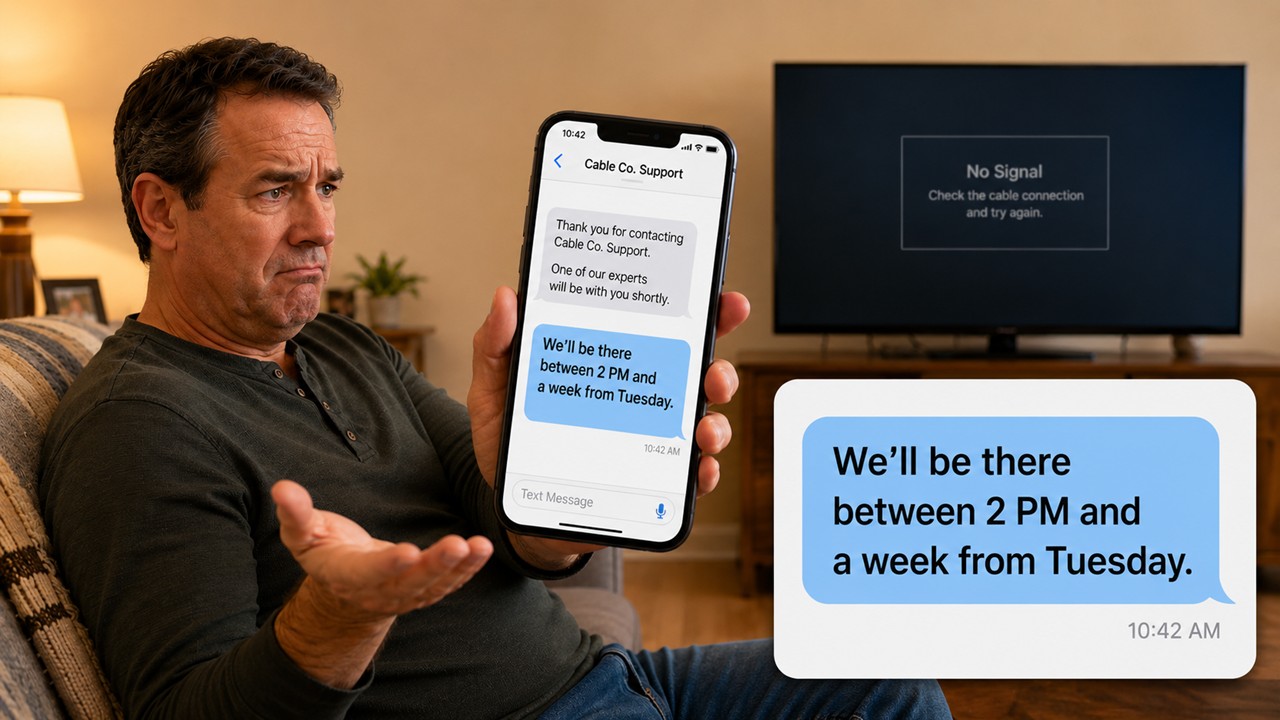
Maybe a repairman said he’d be there Wednesday — he wasn’t. Maybe a doctor said “we’ll schedule something” and meant three weeks from now. Maybe a friend said “I’ll be right there” and you were still waiting an hour later. We understand that help usually requires presence. If you’re going to fix it, you generally have to be standing next to it. We’ve all developed a healthy skepticism about remote promises. This is possibly why we all have trust issues with the cable company.
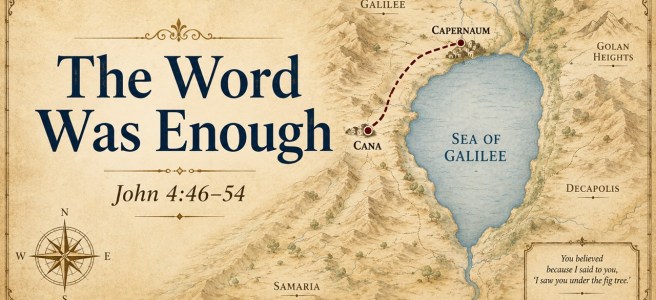
That assumption runs very deep in us. It runs so deep that when a royal official came to Jesus in John 4 with a dying son, he said exactly what any of us would say: “Come down before my child dies.” He needed Jesus to travel twenty miles from Cana to Capernaum. He needed a house call. He needed Jesus there.
Jesus didn’t go.
He sent the man home with a sentence instead.
“Go. Your son will live.”

That’s the whole passage, really. A father who needed Jesus to come with him, and a Jesus who sent him away with a word. The question John is asking us is whether that word was enough — and whether ours is the kind of faith that can walk home on it.
Discussion Question: Think of a time you needed help and the person you called either couldn’t come or couldn’t fix it. What did you do next?
II. Back to Cana — John Didn’t Pick This Location by Accident
John 4:46–47 —
So he came again to Cana in Galilee, where he had made the water wine. And at Capernaum there was an official whose son was ill. When this man heard that Jesus had come from Judea to Galilee, he went to him and asked him to come down and heal his son, for he was at the point of death.
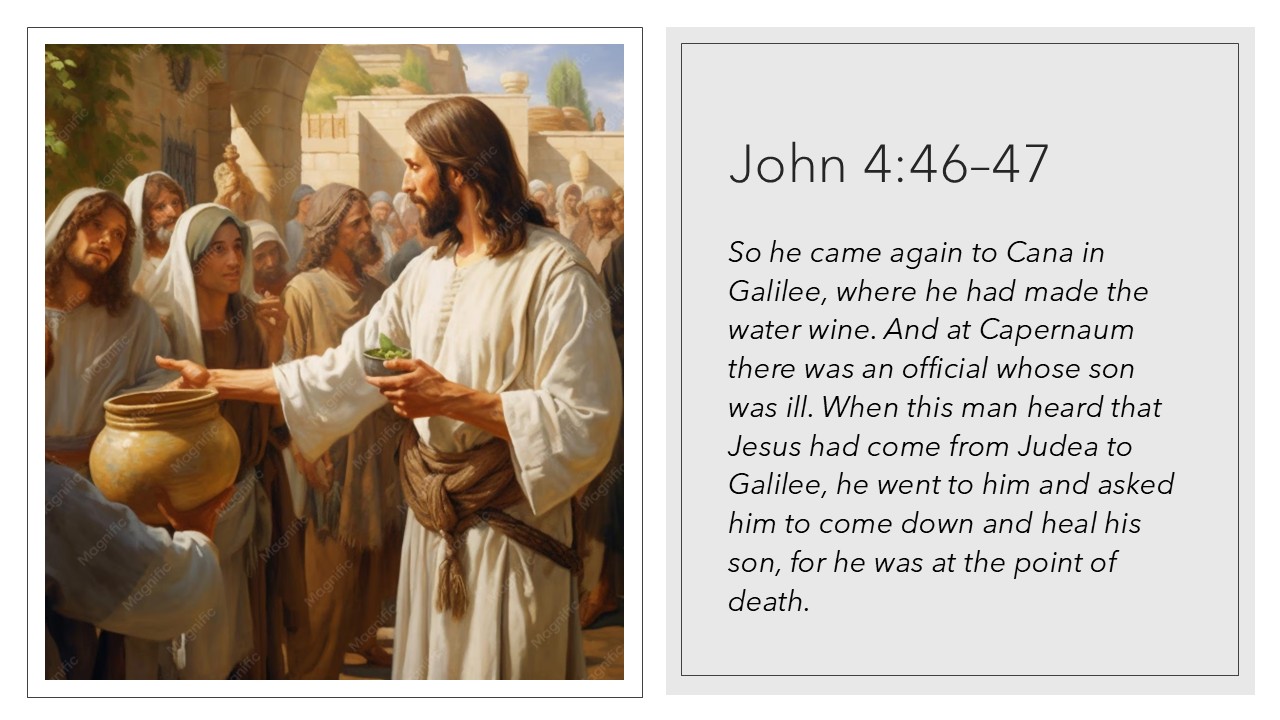
John brings us back to Cana deliberately. This is where Jesus performed His first sign — water into wine at a wedding. That sign revealed His glory, John tells us, and the disciples believed in Him. Now Jesus returns, and John is setting up another sign. Same location. Very different situation.
The first sign happened at a wedding celebration, when the wine ran out. This one happens when life is running out. Jesus is Lord over both. He is the One you want at the party and the One you need in the crisis. John is not showing us a Jesus who appears only in religious moments. He is Lord over the whole of life.
The man who comes to Jesus is described as a “royal official” — someone in royal service, likely under Herod Antipas, the ruler of Galilee. He isn’t poor. He isn’t powerless. He has access and influence and resources. And none of it matters.
Status doesn’t change need. A royal official can command servants. He cannot command his son’s body to recover. A royal official with a dying son is still a father with a dying son. The royal official has every advantage except the one that matters right now.
So he goes to Jesus. Faith is not passivity. The official does not sit at home and call it trust. He goes to Jesus. He brings the need to the only One who can meet it. Faith does not mean we stop acting; it means we act in a way that shows where our trust really is.
And when he gets there, he asks for exactly what we would ask for:
“Come down.”
He assumes healing requires presence. He assumes Jesus works the way everyone else works — locally, physically, within the limits of distance. That’s not a theological error. It’s just where his faith is at that moment.
He’s not wrong to ask. He’s about to learn something larger than he asked for.
Discussion Question: The royal official may have relied on his status to solve problems. What are the things we tend to rely on until a crisis proves they are not enough?
III. “Unless You See Signs and Wonders” — Jesus Addresses the Room
John 4:48 —
So Jesus said to him, “Unless you see signs and wonders you will not believe.”
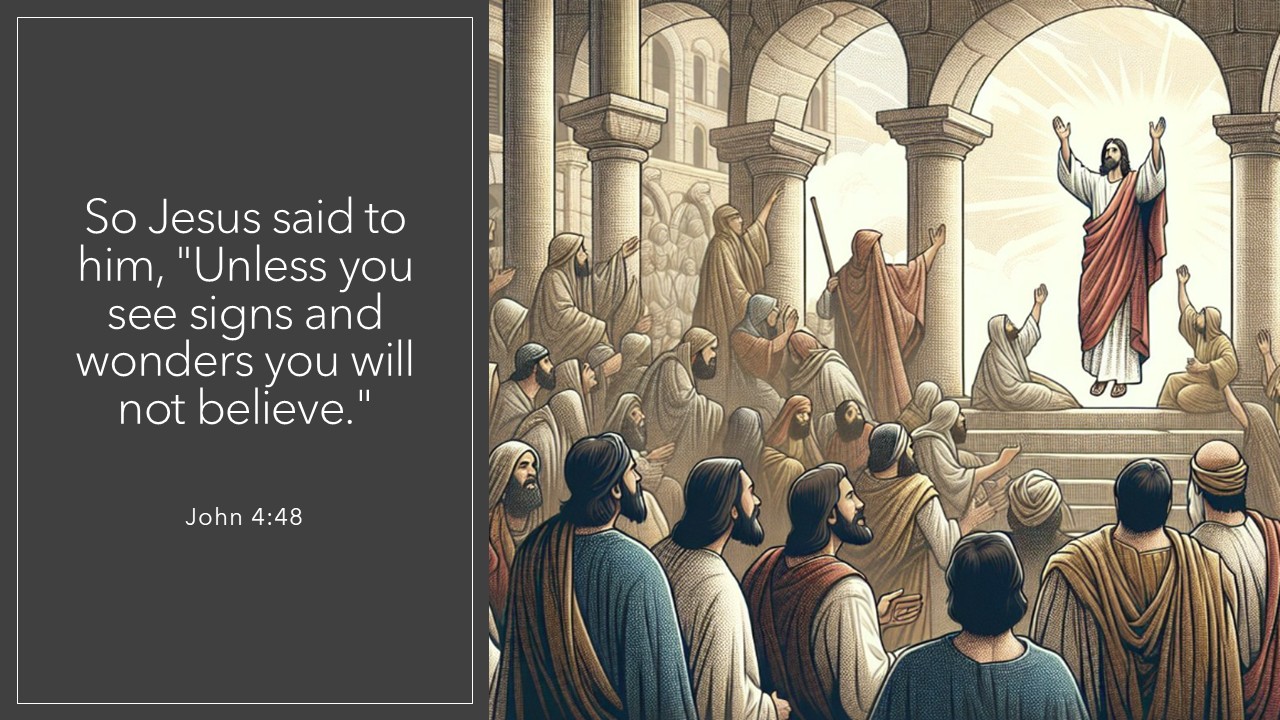
This is the line that can feel like a speed bump. A man’s son is dying, and Jesus responds with what sounds like a critique. But in the original Greek, the “you” is plural. Jesus isn’t only speaking to this one father. He is speaking to the Galilean crowd around him.
And the contrast John is building here is deliberate. Look at what just happened. Jesus was in Samaria, where He spoke to a woman at a well, and she told her village, and the Samaritans came out to hear Him. John tells us many of them believed because of what the woman said. Then they asked Jesus to stay, and He stayed two days, and more believed. And at the end of it they said,
“We have heard for ourselves, and we know that this is indeed the Savior of the world.”
They believed because of His word.
Now Jesus crosses back into Galilee — His own home region — and John notes that the Galileans welcomed Him. But that welcome had a particular flavor. They had seen what He did in Jerusalem at the Passover festival. They were excited about Him. They were hoping for more. In chapter 2, John tells us that many people believed in Jesus when they saw His signs, but Jesus didn’t entrust Himself to them because He knew what was in them. There is a kind of response to Jesus that looks like faith but is really just enthusiasm for what He can do.
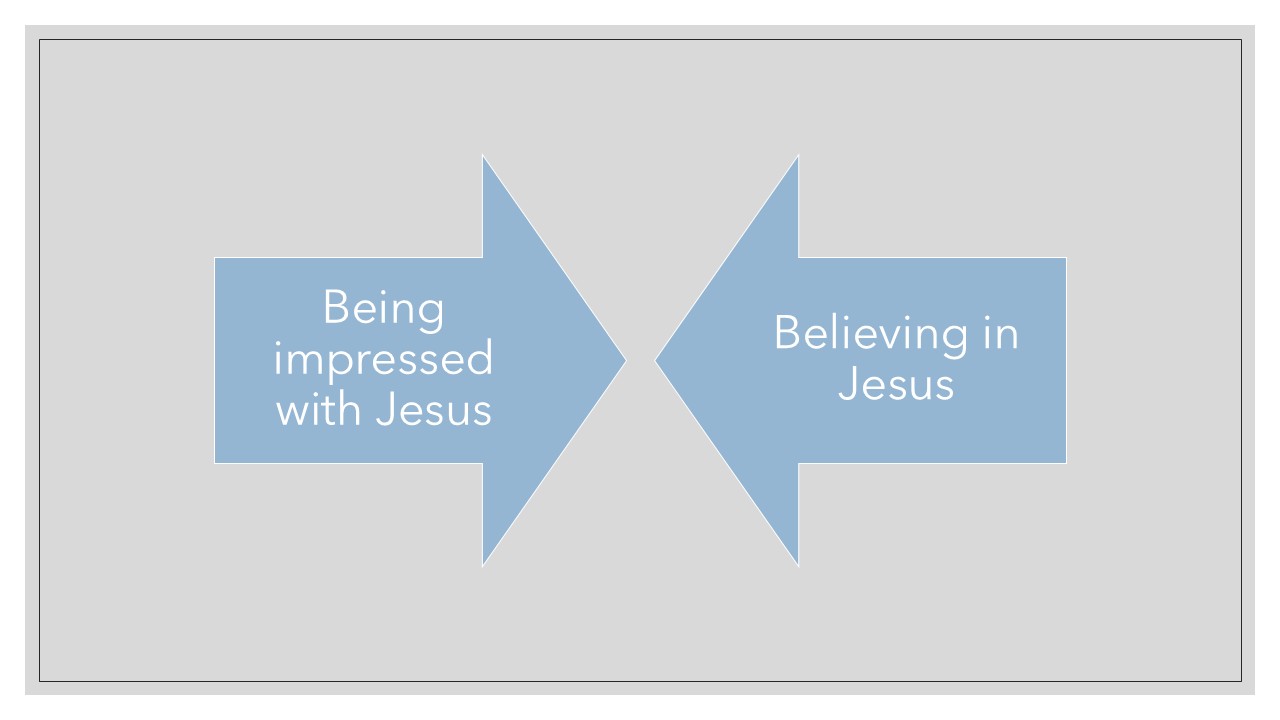
That’s the tension Jesus is naming in verse 48: being impressed with Jesus is not the same thing as believing in Jesus.
It is a fair warning, and it’s not only a first-century problem. People still want a Jesus who handles the emergency but does not claim the whole life. We bring Him the crisis — the sick child, the failing marriage, the impossible situation — and if He fixes it, great. But that’s not the same as surrender. You can want Jesus to solve your problem without wanting Jesus Himself. You can follow Him to Cana for a miracle without following Him to the cross for salvation.
The signs in John’s Gospel are not the point. They point to the point. John tells us at the end of the book exactly why he wrote it:
“These are written so that you may believe that Jesus is the Christ, the Son of God, and that by believing you may have life in His name.”
The miracles are road signs. The danger is pulling over to admire the sign instead of going where it points.
So Jesus isn’t being cold toward this desperate father. Jesus is not turning the man away. Sometimes Christ does not merely give us what we ask; He removes the misunderstanding that would keep our faith shallow. He is doing what He always does — He sees the immediate need, and He also sees the deeper one. He is going to heal the boy. But He is also going to call this man to a faith that doesn’t require seeing first. He is going to move him from the Galilean crowd’s sign-dependent enthusiasm to the kind of trust the Samaritans showed — believing because of the word. And the official, to his great credit, is about to receive it.
Discussion Question: What is the difference between wanting Jesus to solve a problem and trusting Jesus Himself?
IV. “Sir, Come Down Before My Child Dies”
John 4:49 —
The official said to him, “Sir, come down before my child dies.”
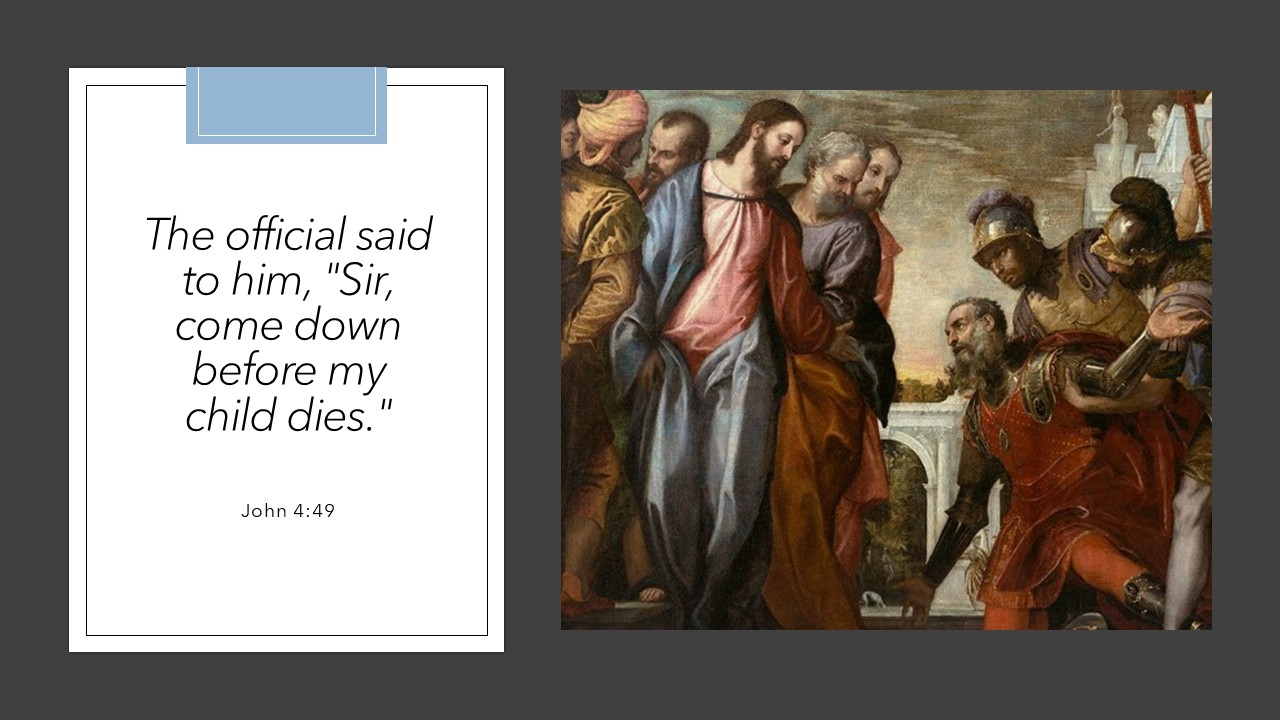
He doesn’t argue. He doesn’t push back on the critique of sign-seeking faith. He doesn’t give a speech. He just repeats the burden that brought him twenty miles: Come down before my child dies.
That’s a father talking.
The word John uses here for “child” tells us something the English doesn’t fully carry. John actually uses a specific Greek word here — paidion — which I mention not to show off, because I definitely did not look it up three times to make sure I was pronouncing it correctly. It’s a term of affection, closer to “my little one” or “my little boy” than a formal reference to a household member. This man is not thinking about theology. He is thinking about one small boy in a room in Capernaum, and every hour he stands in Cana is an hour farther from him.
The phrase “before my child dies” tells us something about the limits of his faith at this point. He believes Jesus can heal sickness. He’s not sure Jesus can do anything about death. He thinks there’s a closing window, and he needs Jesus to move before it shuts. He believes Jesus is powerful — powerful enough that he made a twenty-mile trip on the strength of that belief — but he doesn’t yet understand the scope of that power. In his mind, Jesus has to race death to Capernaum and get there first.
That’s understandable. We live under time. We race against deadlines. We say things like “Lord, hurry” and “before it’s too late” and “if You had just been here sooner.” Those prayers are not wrong. They are honest. Jesus receives honest prayer, even when it’s built on incomplete understanding of who He is. The official is not being rebuked for what he said. He is about to be taught by what Jesus does.
What this man doesn’t yet know is that Jesus is not racing against the same clock the rest of us are on. He isn’t trying to get to Capernaum before death does. He is the One who has authority over death. The window doesn’t close on Him.
That does not mean Jesus always answers according to our preferred timing. It does not mean every sickness is healed in this life or every crisis resolves the way we ask. We know it doesn’t. Some of us have sat at bedsides where we prayed sincerely, and the healing did not come the way we asked. This passage does not erase that grief, and it does not answer every question raised by it.
But it does tell us something true about Jesus. He is not limited by the deadlines that terrify us. He is not weak because the hour is late. He is not absent because He does not answer in the way we hoped. The official thought the window was closing, but Jesus was never trapped by that window. Our urgency is real, and Jesus is compassionate toward it. But His authority is greater than the moment that frightens us.
The official came to Jesus with nowhere else to turn — with his best human options powerless in the face of death, with nothing left but to ask this teacher from Nazareth to come down and do something. And Jesus is going to answer him. Just not the way he expected.
Discussion Question: Have you ever prayed with a deadline attached — “Lord, if You’re going to act, it has to be now”? What was that like?
V. “Go. Your Son Will Live.”
John 4:50 —
Jesus said to him, “Go; your son will live.” The man believed the word that Jesus spoke to him and went on his way.
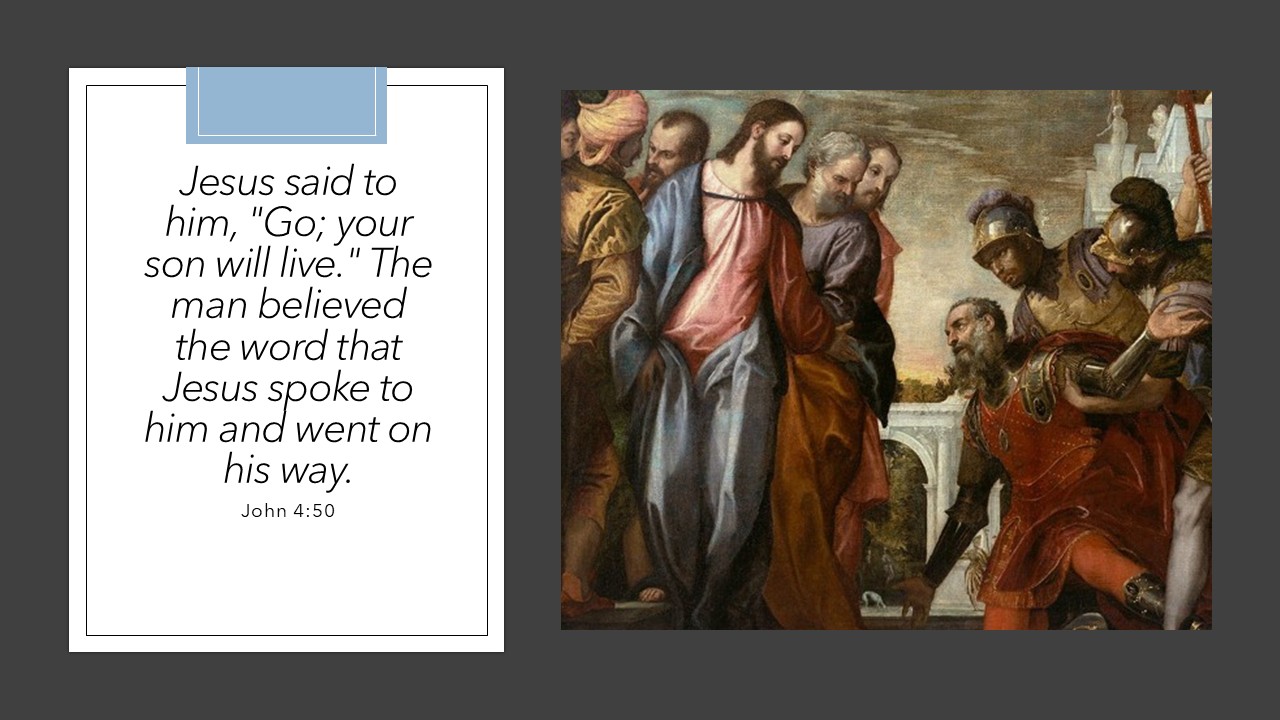
That’s the turning point.
The official said, “Come down.” Jesus said, “Go.” The father wanted Jesus to make the trip with him. Jesus sent him away with a sentence.
Five words, if you’re counting in English. “Go; your son will live.” No prayer. No ritual. No laying on of hands. No visit to Capernaum. No dramatic moment with a crowd watching. Jesus speaks, and life obeys. He is declaring reality. The boy lives because the Son has spoken.
That should remind us who Jesus is in this Gospel. John opened with it:
“In the beginning was the Word, and the Word was with God, and the Word was God.”
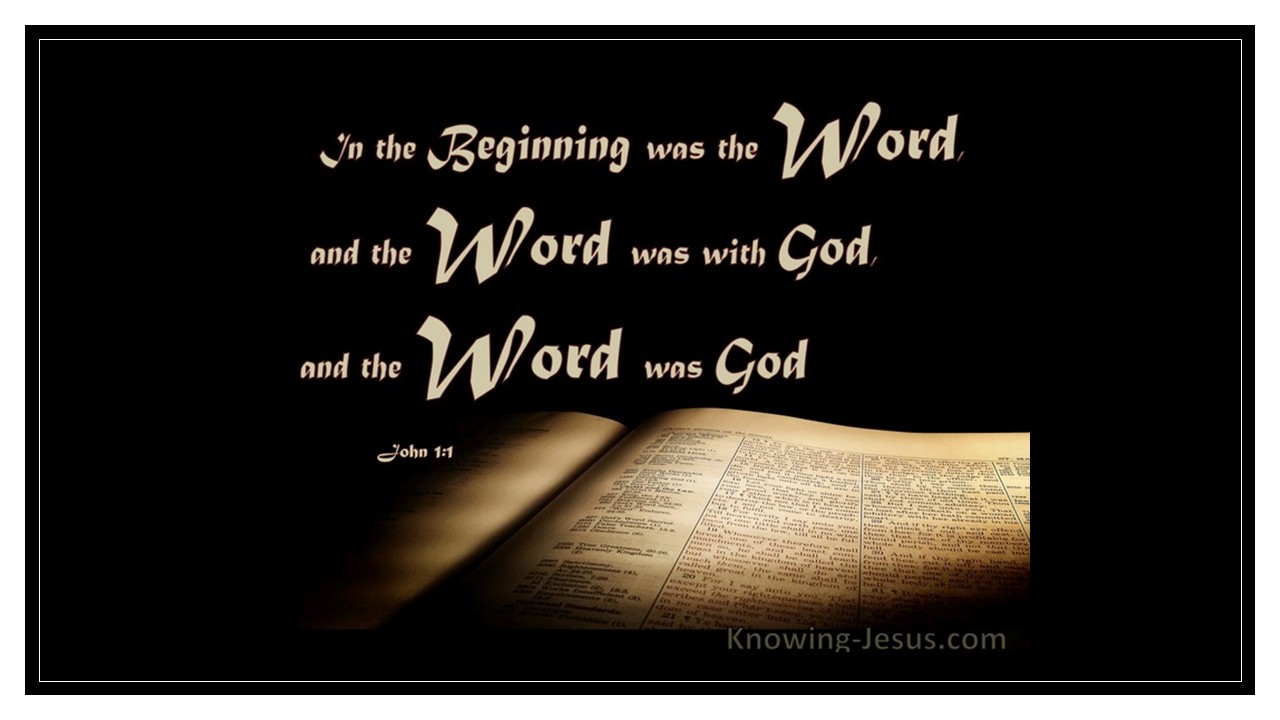
Creation came into being by divine speech. God said “let there be light” and there was light. Not because the conditions were right. Not because light was already forming and God encouraged it along. God spoke, and it was so. Now the Word made flesh says “your son will live,” and a dying boy lives. Jesus doesn’t describe reality. He creates it.
Then John gives us the most important line in the passage:
“The man believed the word that Jesus spoke to him and went on his way.”
He believed before he saw.
He had no report from home. No confirmation. No evidence that anything had changed in Capernaum. No messenger had arrived. He couldn’t call ahead. He didn’t know whether the fever had broken or whether the boy had died in the hours since he left. All he had was the word Jesus spoke. And he walked away from Cana.
Think about that walk. Cana sits at roughly 1000 feet above sea level. Capernaum, down by the lake, sits below sea level. The road descends about twenty miles. The official would have had hours to think on that road. Hours to wonder whether he had believed something foolish. Hours to rehearse what he would find when he arrived. He had no evidence to work with except five words spoken by a man who hadn’t moved from where He was standing.
That road would have been very quiet. No one to ask. No way to know. Just the sound of his own feet on the descent toward Capernaum, and a sentence he was either going to trust or wasn’t.
And he went. But here is what John doesn’t tell us, and what the timing in verse 51 quietly reveals: he didn’t rush. A royal official — a man of means, a man who could have commandeered a horse or a mule, a man whose son was dying — was still on the road the next day when the servants found him. He wasn’t racing death to Capernaum. He was walking. And that unhurried pace is itself a form of testimony. The word had quieted something in him that nothing else could have reached. He believed Jesus, and his feet showed it — not by running, but by simply, steadily going home.
That is faith in motion. Not feeling — faith. He may have felt afraid the entire walk home. John doesn’t tell us he felt peaceful. He doesn’t tell us his doubts evaporated at the city gate. He tells us the man believed and went. Faith is not measured by emotional intensity or the absence of fear. It is measured by the object of trust and whether we act on it. The man’s feet walking toward Capernaum were the clearest evidence he had believed Jesus. He could have turned back. He didn’t.
This is where the passage presses hardest on us. There are times when Jesus gives us His word, and nothing visible has changed yet. The circumstances still look the same. The problem is still there. The diagnosis is the same. The door is still closed. The relationship is still broken. The thing we are afraid of hasn’t moved. And all we have is what He has said.
But that is not the same as having nothing. The word of Christ is not a placeholder until the real answer arrives. It is the real answer. What the official didn’t know on that road — what he couldn’t know — was that the fever was already gone. The word had already done its work. He was walking toward a living son while he was still rehearsing his doubts.
For some of us, that is exactly where you are right now. You have heard what Christ has said — in Scripture, in the Gospel, in the promises you have carried for years — and you have not yet seen the confirmation. The road is long and it is quiet. But the word of Christ is already at work before we can see it. The question is not whether it is powerful enough to cover the distance. We have seen that it is. The question is whether we will keep walking.
That word is enough because of who spoke it. Jesus didn’t heal the boy by trying harder or caring more than other healers. He healed him by speaking, because He is the Son of God and His authority over life is absolute. Distance didn’t dilute it. Time didn’t weaken it. Death itself had no answer to it. What the official was learning to trust on that road — and what John wants us to understand — is not merely that Jesus is compassionate, though He is, but that He has authority over everything that frightens us. The word was enough because the One who spoke it holds all authority in heaven and on earth.
Discussion Question: Has there been a time when you were waiting on a promise from God and couldn’t see anything happening — and later realized He had been at work all along?
VI. The Servants on the Road — The Timing Was Not Coincidence
John 4:51–53 —
As he was going down, his servants met him and told him that his son was recovering. So he asked them the hour when he began to get better, and they said to him, “Yesterday at the seventh hour the fever left him.” The father knew that was the hour when Jesus had said to him, “Your son will live.” And he himself believed, and all his household.
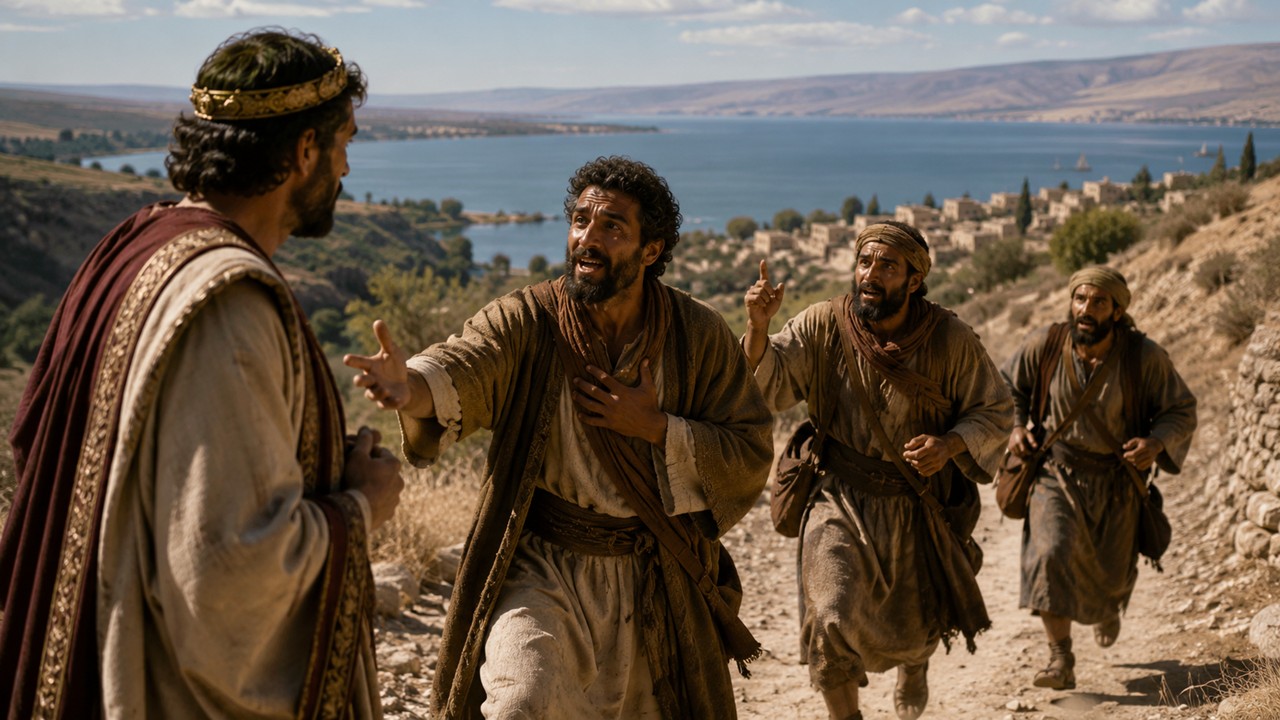
On the road home, his servants meet him. His son is recovering.
John doesn’t stop the story there. He keeps going, because the detail John wants us to see is not just that the boy recovered — it’s when.
The father asks what hour. The servants say the seventh hour — yesterday afternoon, around 1 p.m. The father does the math. That’s the hour Jesus spoke. Not “around that time.” Not “sometime that afternoon.” The fever left at the exact moment Jesus said, “Your son will live.”
Distance did not dilute His authority. Twenty miles didn’t reduce the power of His word by a single degree. The official had assumed Jesus needed to make the trip. Instead, the word of Jesus made the trip. Jesus spoke in Cana and a fever broke in Capernaum, and they happened at the same instant.
John doesn’t want us to read it as coincidence. This healing came by the direct command of Christ. Not by natural recovery that happened to coincide with a conversation. Not by the fever running its course. The word went out and life responded to it — across twenty miles, through stone walls, into a room where a small boy was dying. That is the authority of the Son of God.
Now — John already told us in verse 50 that the man believed the word Jesus spoke. So why does verse 53 say he believed again? Because faith deepens. These are not two separate acts of faith, as if the first one didn’t count. The first belief was real — it got him down the road. But the second is faith that has been enlarged. He believed the promise before he saw the confirmation. When the confirmation came, with the exact hour, with the servants’ faces, with the news of his son’s recovery — he understood more fully who Jesus was. He had walked home trusting a word. He arrived home knowing more clearly who Jesus was.
The miracle did what John’s signs are meant to do. It did not leave the man merely impressed with Jesus’ power; it brought him to a deeper trust in who Jesus is. And then it spread.
His whole household believed. John doesn’t tell us exactly what that looked like — the conversations, the telling of the story, what the servants said to one another, what the boy himself understood. But an entire household, from that day forward, believed because one man made the decision to trust the word of Christ and walk home on it.
Think about that, especially in this room. Most of us have lived long enough to watch faith — or the absence of it — ripple through families across generations. We have seen what it does when a parent or grandparent trusts God in a crisis, genuinely trusts Him, and the family watches. The children are watching. The grandchildren are watching. Not always the sermon we preach — but the faith we live when we are afraid. The people closest to us are not just observers of our trials. They are potential recipients of the testimony our trust creates.
The official didn’t go to Cana to become a witness. He went to save his son. But the way he responded to Jesus — believing the word and walking home on it — became the door through which an entire household entered faith. He came back with more than a living son. He came back with a believing family. Somewhere in that house, a boy who had been dying was sitting up. And the man who had walked home slowly, trusting a word he couldn’t yet verify, got to tell his family what Jesus had said — and watch them believe it too.
Discussion Question: How has seeing God’s faithfulness in hindsight — looking back at a hard road you had to walk by faith — deepened your trust in Him? And have you told that story to the people around you?
VII. The Second Sign — What John Is Actually Pointing To
John 4:54 —
This was now the second sign that Jesus did when he had come from Judea to Galilee.
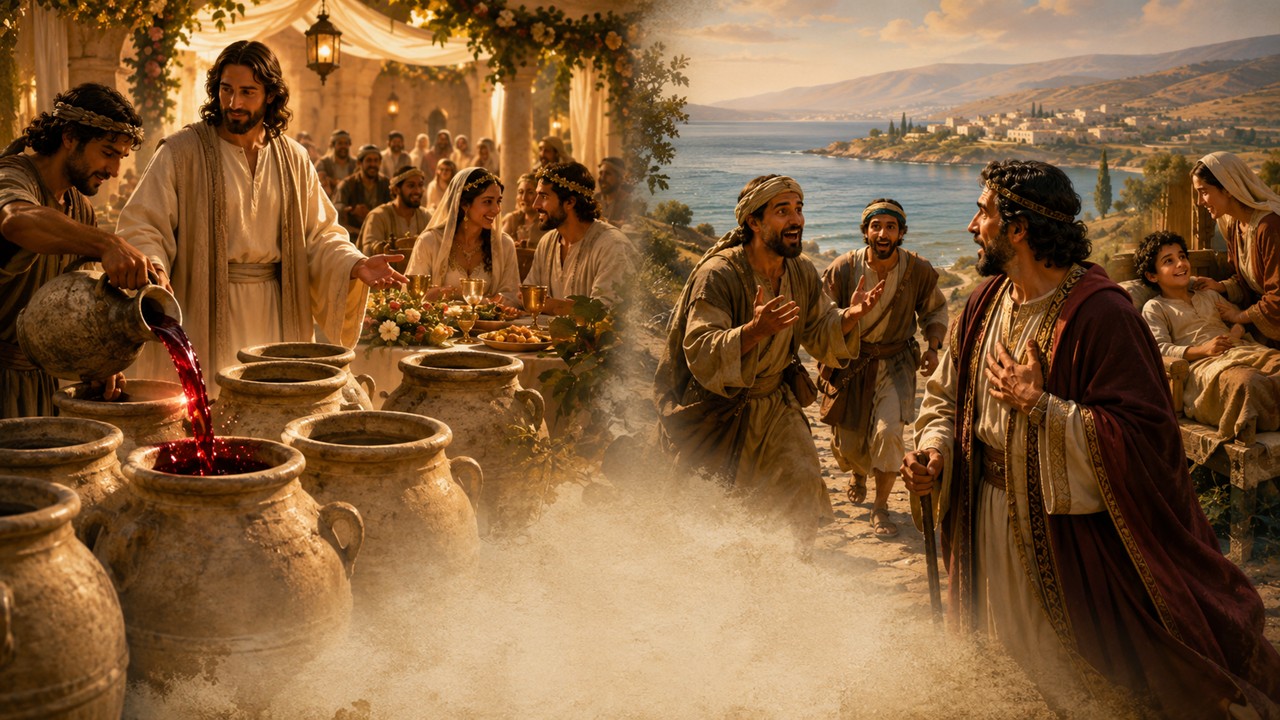
John labels this the second sign, and he labeled the first one too. He’s keeping count, and he’s doing it for a reason. He is building a case. The whole Gospel is organized around this: Jesus is the Christ, the Son of God, and these signs are the evidence. Each one reveals something about who He is that words alone cannot carry.
The two Cana signs belong together. At the wedding, the need was social — the wine ran out, an embarrassing moment for a family, a manageable crisis. Jesus turned water into wine, and John says the disciples believed. Here, the need is mortal. A child is dying. Jesus speaks a word from twenty miles away, and an entire household believes. The first sign revealed His glory in a moment of ordinary celebration. The second revealed His authority over life and death in a moment of desperate fear.
John is showing us that the scope of Jesus’ lordship is total. Nothing is too small to bring to Him, and nothing is too large for His authority. He is Lord over the wedding and the deathbed, over the wine jar and the fever, over the celebration and the crisis.
We need to be careful about application, because it would be easy to land in the wrong place. The most common misreading of a passage like this is to turn it into a formula: if you have enough faith, Jesus will heal your sick child. That is not what John is teaching. Jesus certainly can heal. We should pray for healing with full confidence that He hears us and that He is able. But the Gospel does not guarantee that every fever breaks in this life, and anyone who has spent long years in the faith knows this.
John tells us at the end of the book why he wrote it, and the reason is not so that our medical prayers will always be answered. He wrote it
“so that you may believe that Jesus is the Christ, the Son of God, and that by believing you may have life in His name.”
The official’s son received physical life. John wants his readers to receive eternal life. One ends. The other doesn’t.
Physical healing, even a healing as dramatic and immediate as this one, is temporary. The boy who was healed that afternoon in Capernaum would one day grow old and die. Every physical healing in the New Testament — and there are many glorious ones — was still temporary unless it was resurrection into glorified life. Lazarus was raised from the dead, and Lazarus died again. The man born blind received his sight and would one day lose everything else to age and death. The sign in John 4 is real, and it is wonderful, but it is not the destination.
The sign points to something the official could not yet see from where he was standing. The boy’s restored life is a glimpse of what Christ ultimately came to give — not a postponement of death, but a conquest of it.
John the Baptist said it the moment he saw Jesus coming:
“Behold, the Lamb of God, who takes away the sin of the world.”
That takes us all the way back to Egypt, where God’s people were sheltered by the blood of a Passover lamb. Judgment passed over every house marked by blood because the lamb had died in their place. That was not just an isolated moment in Israel’s history. It was the shape of the whole Gospel drawn in advance.
The official came to Cana asking Jesus to come down before his child died. And the larger story of Scripture is exactly that — Jesus came down. Not from Cana to Capernaum, but from heaven to earth. He became the Lamb. He bore our sin and our judgment. He died so that we could live, and He rose so that our living would never end. The official’s son received life because Jesus spoke a word. We receive eternal life because Jesus went to the cross.
The official walked away from Cana before he saw the miracle. He did not walk away empty. He walked away with the promise of Christ, and the promise of Christ was already at work in Capernaum before his feet found the road home. The word was enough. It held. The story ended with a living son and a believing household, and none of it required Jesus to make the trip.
Now the question comes around to us.
Most of us in this room are somewhere on a road. There is something we have brought to Jesus — a fear, a grief, a diagnosis, a person we love, a door that hasn’t opened, a promise we have carried so long we have almost stopped expecting an answer. The road is quiet. No servants have met us yet with good news.
The boy was healed before the father arrived. The road felt like waiting, but the word of Christ was already at work in a room the father couldn’t see, in a situation he couldn’t control, at the exact hour he was still making his way home on nothing but a promise.
The lesson John 4 puts before us is not that the servants will always meet us at a certain mile marker. It is that the word of Christ was trustworthy before the confirmation came — and it is still the same word, spoken by the same Son of God, who has since proven His authority over the one thing the official feared most. On the third day after His crucifixion, the tomb was empty and the grave clothes were folded. He walked out. He is not racing against death. He has already defeated it.
So the word He gives us is not a lesser thing than presence. It is not a consolation while we wait for the real answer. It is the word of the One who spoke creation into being, who healed a dying boy from twenty miles away, who gave His life and took it back again. That word does not lose its authority between the moment He speaks it and the moment we see it land.
It was enough for a father on a long road to Capernaum with nothing in his hands but a promise. It is enough for us now.
To God be the glory.

 Chasing the Wind
Powerful! Faith matters. ✨🍃💚
LikeLiked by 1 person